
BS in Chemical Engineering
Build Practical Solutions with a Chemical Engineering Degree from Liberty
How can raw materials, energy, and chemistry be used to help solve real-world problems? Liberty University’s Bachelor of Science (BS) in Chemical Engineering gives you a residential path into a field that connects science, math, and engineering design. In this program, you’ll examine how materials change, how systems operate, and how processes can be improved. That kind of study matters in industries that depend on safe, efficient, and thoughtful engineering work.
Chemical engineering connects classroom theory with practical questions about production, materials, reactions, and energy use. Through this chemical engineering major, you will study topics that support process design, laboratory work, and technical problem-solving. You can also engage with engineering as a form of service, stewardship, and care for the world God created.
At Liberty, this bachelor’s degree in chemical engineering is offered in a residential setting where academic study and Christian community are connected. Our program includes technical coursework, laboratory experiences, and engineering design concepts that support your growth in the field. You can be part of a campus where faith, service, and academic discipline are treated as part of the same calling. Within that environment, you can prepare to approach engineering questions with both skill and purpose.
Credit Hours
View CoursesNext start date: Jan 18, 2027
Liberty University is accredited by SACSCOC
Highlights
Highlights of Our Bachelor’s Degree in Chemical Engineering
Institutional Accreditation
Liberty University is accredited by the Southern Association of Colleges and Schools Commission on Colleges (SACSCOC).
This institutional accreditation applies to Liberty as a whole, including our residential degree programs. This distinction provides an important academic foundation to consider when comparing chemical engineering programs.
Biblical Worldview Integration
At Liberty, engineering study is connected to a Christian worldview rather than treated as separate from faith.
You’ll be encouraged to consider how science points to order, design, stewardship, and responsibility. In the classroom and laboratory, questions about creation, ethics, and service can shape how technical work is understood. This approach supports Liberty’s mission of Training Champions for Christ.
Experienced Faculty Leadership
Our School of Engineering includes faculty who bring academic and technical preparation into the classroom.
Through their guidance, you can study engineering principles in a setting that values careful thinking and clear communication. Their instruction can help connect chemical engineer schooling with broader industry expectations.
Vibrant Campus Community
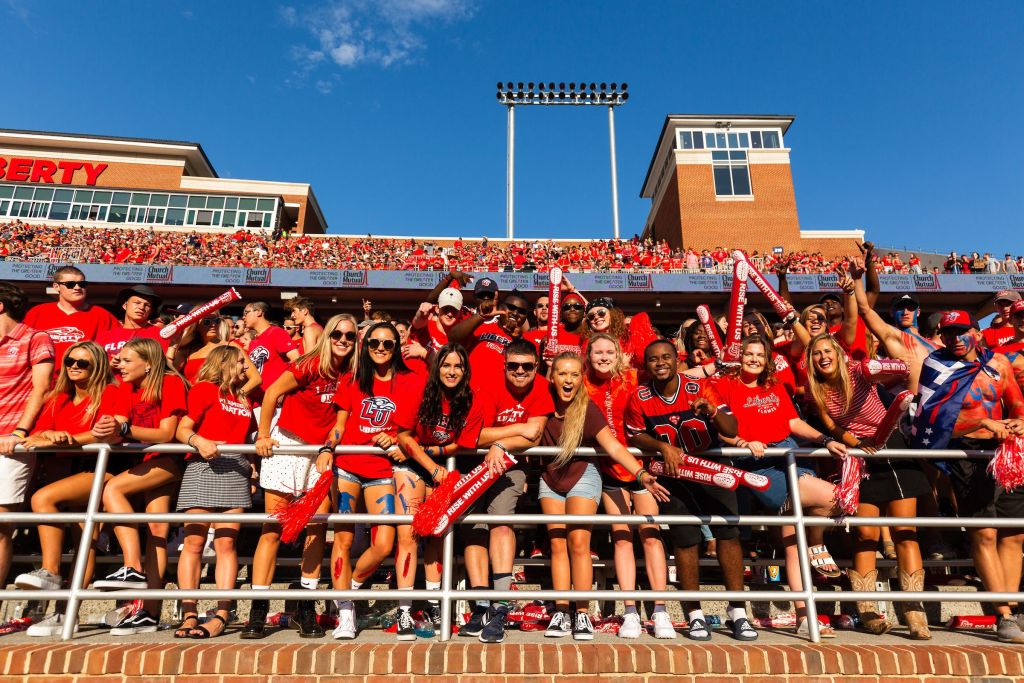
On Liberty’s campus, your academic life will be part of a larger residential experience. You can attend Convocation, join student organizations, serve with others, and take part in campus events throughout the year.
These opportunities can help you build friendships and practice responsibility outside the classroom. For many students, that community is an important part of growing in faith and maturity while making lifelong memories and friendships.
Hands-On Laboratory Experience
This program includes laboratory-based study connected to chemistry and engineering concepts. You will engage with applied work tied to topics such as thermal fluids, chemistry, material behavior, and process analysis.
These experiences can help you connect chemical engineering classes with the systems and tools used in real-world environments.
Career Potential
What Can You Do with a Bachelor of Chemical Engineering Degree?
Liberty University’s Bachelor of Science (BS) in Chemical Engineering can help prepare you to pursue the following occupations:
- Chemical engineer
- Manufacturing engineer
- Materials engineer
- Process engineer
- Product engineer
- Project engineer

Among the Top 5 College Campuses in America
At Liberty, you’ll find an affordable, high-quality education designed to help equip students like you for the real world. Our commitment to excellence has earned us recognition as one of the Top 5 College Campuses in America by Niche.com for 2027.
Earning your degree from a nonprofit university with state-of-the-art resources like ours can help set you apart from your peers.
Courses
What Will You Study in Liberty’s Chemical Engineering Curriculum?
In Liberty’s chemical engineering curriculum, you will study the scientific and mathematical foundations that support engineering work. Your coursework will include chemistry, physics, calculus, and other quantitative methods that are used to analyze systems and solve problems. You’ll also explore thermodynamics and how energy and matter behave under different conditions. Together, these areas create a framework for understanding how engineering systems operate.
Alongside these foundations, you’ll examine how chemical substances interact and change. You will study organic chemistry concepts as well as how materials move and transform within engineered systems. Topics related to material and energy balances will help you consider how inputs and outputs are tracked and managed. These studies can help you connect scientific principles to real-world processes.
Engineering-focused topics will guide you through how systems are designed, controlled, and improved. You will engage with areas such as fluid behavior, heat transfer, and process systems. You’ll also explore how reactions occur within controlled environments and how those processes are evaluated. This work can help you approach engineering challenges with both skill and confidence.
Because this is a residential program, applied learning will be part of your academic experience. You will take part in laboratory work and design-focused projects that connect your studies to practical scenarios. Technical electives can also allow you to explore related areas within engineering or mathematics. These opportunities can support a broader understanding of the type of knowledge and degree needed for chemical engineering roles while keeping your studies focused and manageable.
Featured Chemical Engineering Classes
CHEM 301 – Organic Chemistry I
ENGH 241 – Material and Energy Balances
ENGH 406 – Chemical Reaction Engineering
ENGR 320 – Thermodynamics
Degree Information
- This program falls under the School of Engineering
- View the Degree Completion Plan (coming soon)
- Check out our course catalog
- Transfer in up to 75% of the degree total
BENEFITS
Why Choose Liberty’s BS in Chemical Engineering Program?
Engineering Teams and Clubs
Beyond required coursework, Liberty offers engineering-related teams and clubs that can connect you with other students who enjoy design, problem-solving, and building. You can take part in collaborative environments where classroom concepts are discussed and applied in student-led settings. These experiences can help you practice communication, teamwork, and discipline. They also give you a way to stay connected to the School of Engineering community outside class.
Creationeering Perspective
“Creationeering” reflects Liberty’s effort to connect engineering study with a Christian understanding of creation. Through this perspective, you can consider how design, science, and innovation relate to God’s world. This emphasis can help frame engineering work as purposeful service rather than only technical achievement.
Service in Lynchburg
Liberty’s residential setting gives you access to service opportunities in Lynchburg and the surrounding community. You can volunteer through campus ministries, local outreach, and service-focused student activities. These opportunities can help you practice compassion, responsibility, and neighbor-focused leadership while pursuing your degree. For engineering students, service can also shape how technical skills are viewed and used.
Campus Events and Community
Life on campus includes worship gatherings, athletic events, student activities, and academic events that support a full residential experience. You can build relationships with classmates while staying connected to Liberty’s Christian mission. This community can help make your BS in Chemical Engineering studies part of a well-rounded college experience.
Admissions
How Do You Become a Bachelor’s in Chemical Engineering Student?
Every application is reviewed by the admission committee on a case-by-case basis, meaning there are no set minimums for acceptance. However, all applicants must submit the following documents* for admission:
- Admission application
- Official high school transcripts
- Official college transcripts (if applicable)
- Champion Story
Results from the CLT, SAT, or ACT are not required for admission, but may be used in consideration for merit-based aid.
*Note that additional documentation may be requested by the admission committee after your application has been received.
Have Questions?
We’ll make sure you have the information you need to take your next step.