Friday, November 13, 2026
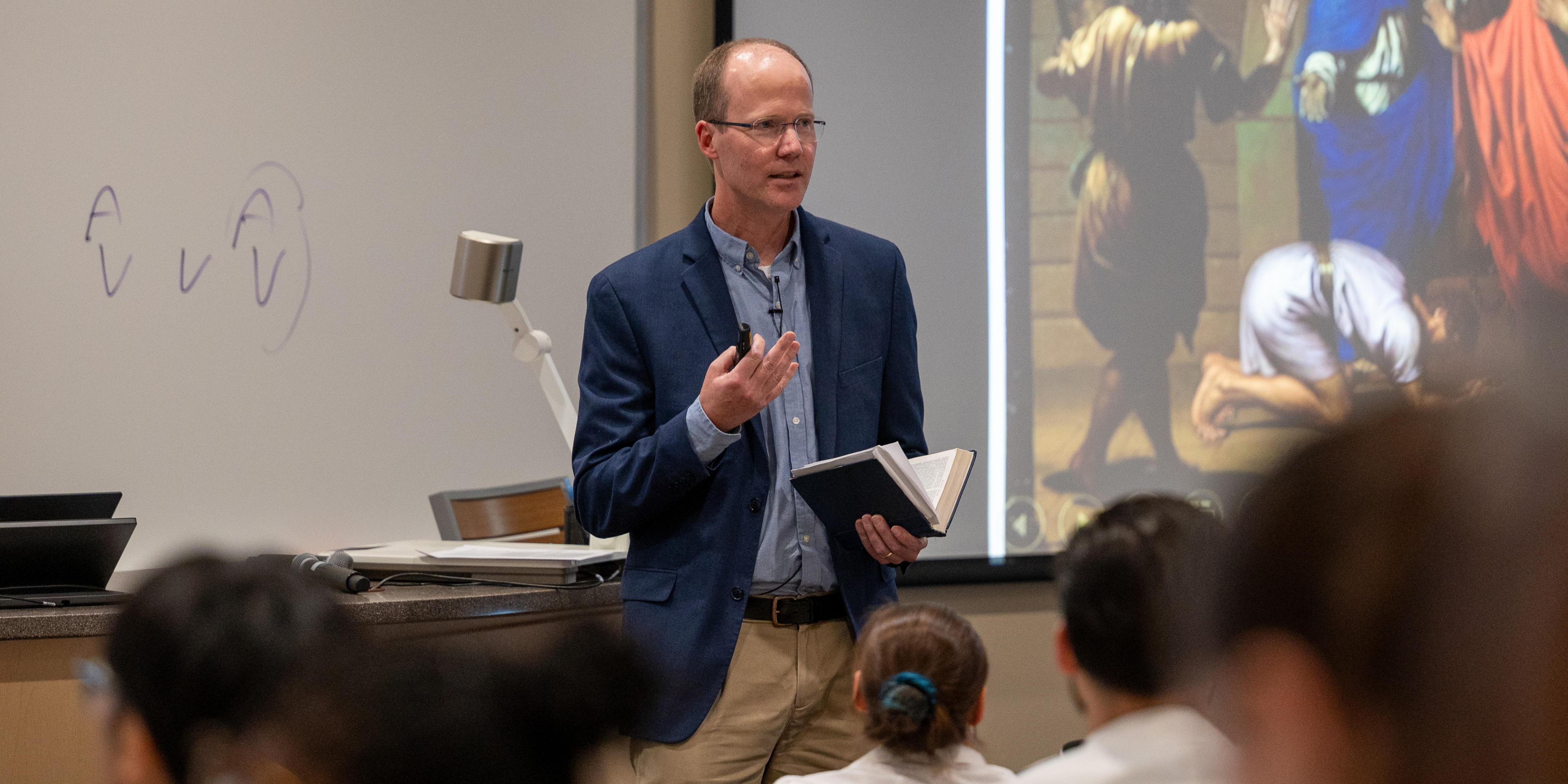
We Are All Here: Understanding and Preventing Suicide with Warren Kinghorn, M.D., Th.D.
On Friday, October 30, the Liberty University College of Osteopathic Medicine (LUCOM) Medical Library hosted its 12th annual Medical Bioethics Symposium with guest speaker Warren Kinghorn, M.D., Th.D., to speak on Understanding and Preventing Suicide
Kinghorn makes his second appearance as a guest at the LUCOM Medical Bioethics Symposium after speaking to students about Moral Injury in Healthcare Professionals in 2024.
Kinghorn currently serves as an Associate Professor of Psychiatry at Duke University Medical Center. He also serves as an Associate Professor of the Practice of Pastoral and Moral Theology at Duke Divinity School; co-director of the Theology, Medicine, and Culture Initiative at Duke Divinity School; and is a staff psychiatrist at the Durham VA Medical Center.
He is a leading voice at the intersection of medicine, ethics, and mental health. As a Christian psychiatrist working with military veterans, his unique background in both medicine and theology equips him with a profound perspective on moral injury, burnout, and its relation to Post-Traumatic Stress Disorder, with strikingly similar symptoms seen in military vets and medical professionals.
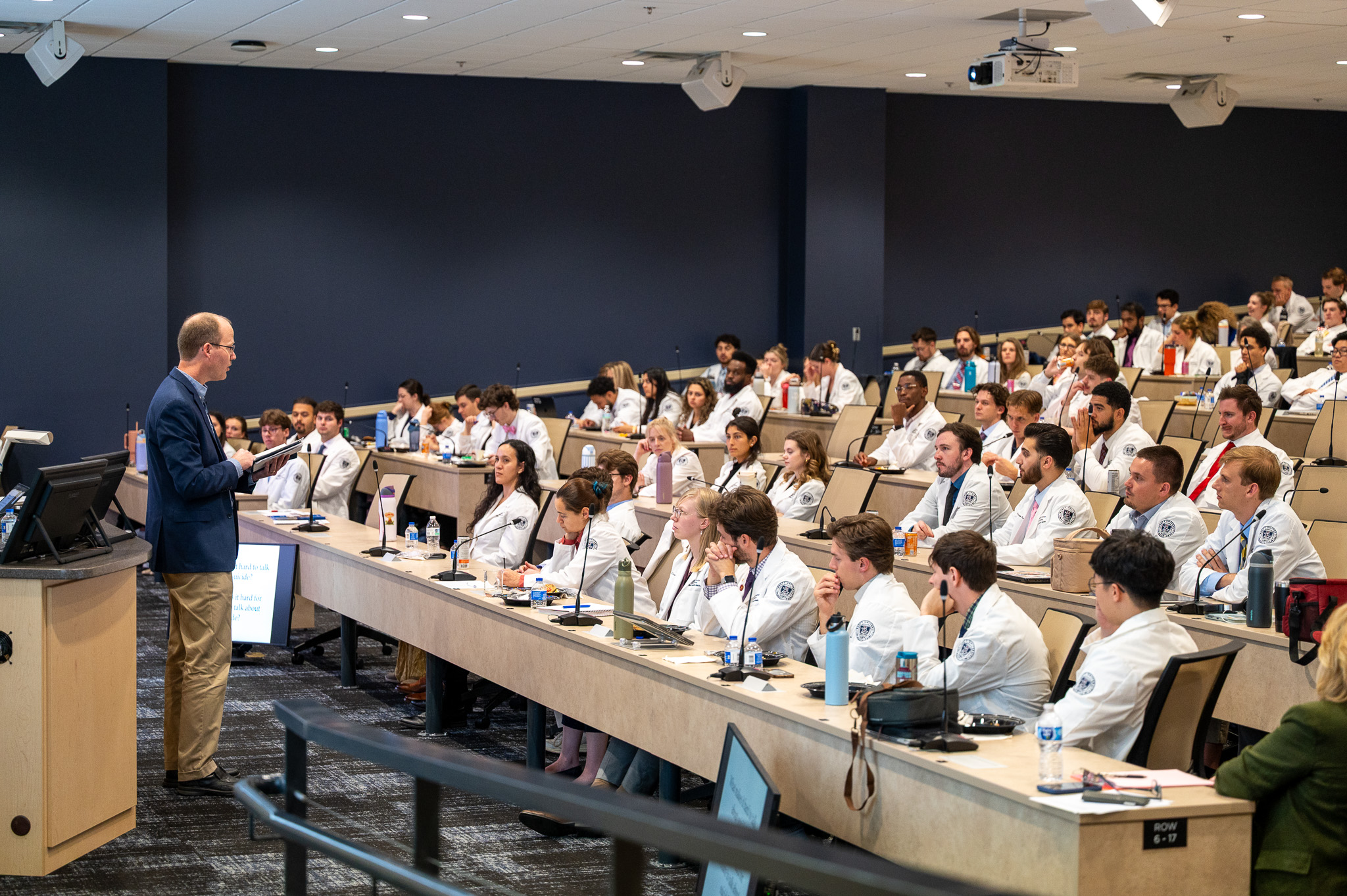
After a welcome address from Dr. Linda Mintle, PhD., who helped with the organization and planning of the symposium, Kinghorn began his presentation on suicide prevention to many LUCOM professors and all the first-year medical students, as well as other students from Liberty University’s Law, Nursing, and Health Science programs.
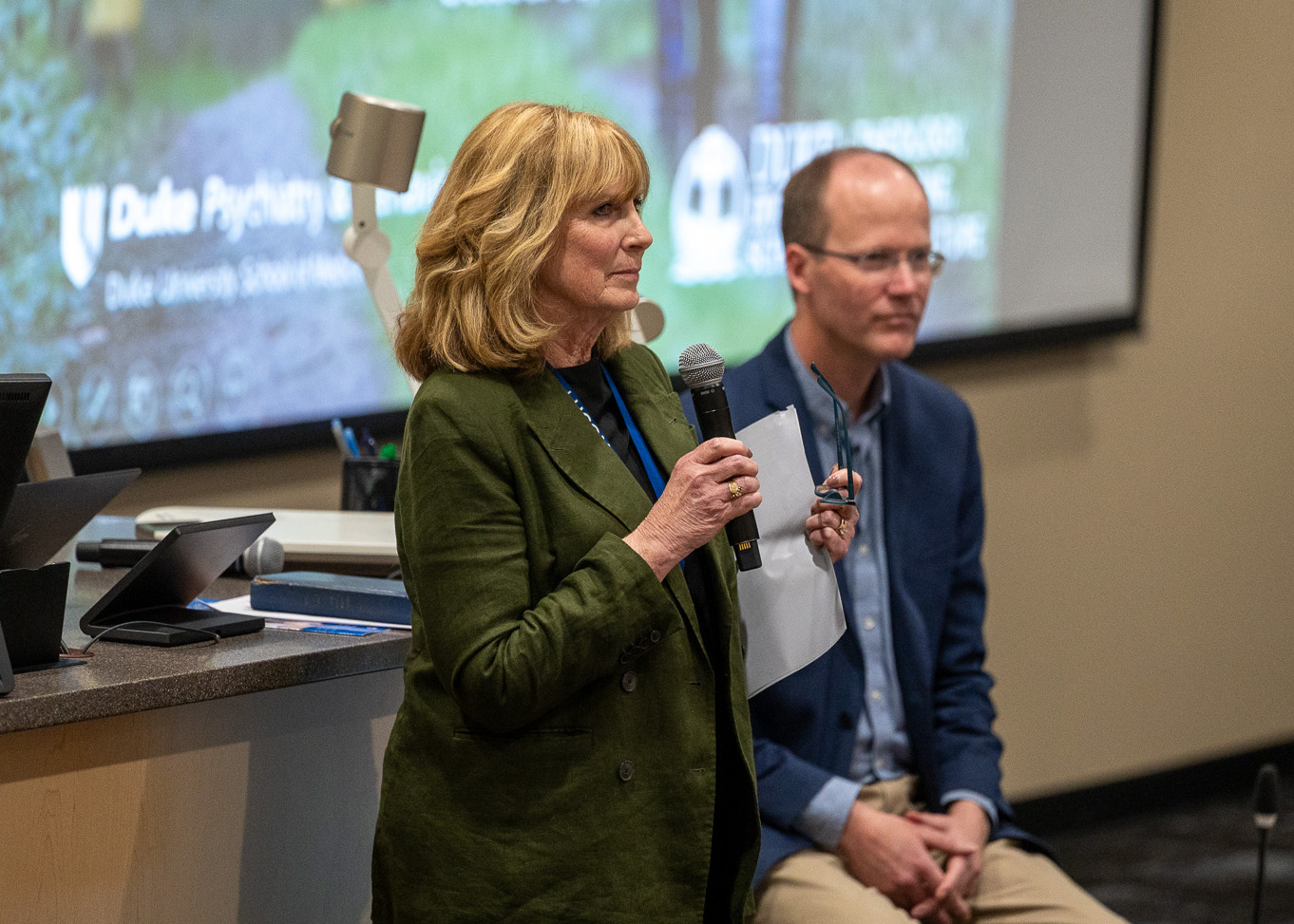
“This is a difficult topic to discuss because it is all around us,” Kinghorn opened. “Many of you know someone that has been affected by suicide. There are so many resources that anyone or any of your loved ones can utilize. They are not alone.”
After his opening statement, he had the students discuss among themselves and answer the questions, ‘what makes it hard to talk about suicide and what makes it hard for Christians to talk about suicide?’
A few students gave answers that included the cultural norms of people who never talk about mental health struggles, the stigma around people who commit suicide are normally silent, and Christians might see suicide as a way of not trusting God.
Dr. Kinghorn explained that all of these are crucial when answering that question. He went on to talk about the integration of clinical medicine, ethics, and biology around suicide.
He debunked four myths about suicide, which are: suicide is almost always associated with active mental illness, suicide is always preventable, asking someone about suicide will increase their risk of death by suicide, and suicide is a problem of individuals. He also acknowledged the complicated history of Christian reflection on suicide and pointed out various suicides throughout the Bible.
Dr. Kinghorn noted throughout his seminar four Christian affirmations that relate to mental health care. The first is that humans are deeply and fully known and loved by God, and the second is that humans are living creatures on the Earth – both of which were created by God. He put an emphasis that we grow and love in relationship with each other and with God. The final two points were that humans are wayfarers and that humans find their deepest fulfillment not in control, but in wonder.
He closed his thoughts with learning how to prevent suicide from Biblical figures, Paul and Silas, along with more affirmations and action items for someone who may be considering suicide, including how they are loved by God and others.
“Our hope was that participants would leave better equipped to recognize risk, communicate compassionately with patients and families, and work collaboratively toward appropriate intervention, referral, and follow-up,” Director of Medical Library and Associate Professor, Diane Garber said. “Dr. Kinghorn taught us how Biblical reflection and evidence-based medicine can come together in caring for the whole person. He used the story of the Philippian jailer who drew a sword to kill himself after the miraculous earthquake that loosed the chains of Paul and Silas in Acts 16:28. Paul said to the jailer, “Do thyself no harm: for we are all here.”
The annual Medical Bioethics symposium aims to unite healthcare professionals, students, faculty, and community members to discuss critical ethical issues in medicine. It serves as a platform for learning, reflection, and engagement with complex bioethical topics, fostering dialogue and understanding around the challenges healthcare professionals face.
“The importance of bringing together medical students, physicians, nurses, legal professionals, faculty, and community members cannot be overstated,” Mintle stated. “Suicide awareness and physician-assisted suicide raise profound questions that extend beyond clinical practice into the realms of law, ethics, humanity, and social responsibility. As educators and healthcare professionals, we must prepare the next generation to approach these difficult conversations with knowledge, compassion, humility, and an unwavering respect for human dignity. Dr. Kinghorn did a masterful job doing just that.”
For more information about LUCOM, follow @LibertyMedicine on Instagram and X or Liberty University College of Osteopathic Medicine on Facebook.