History

Get Your History Degree From a Christian University
Prepare for a successful career while earning your bachelor’s, master’s, doctoral, associate, or minor in the area of History from Liberty University’s Department of Humanities. With our history, social sciences, and military studies degree programs, your knowledge of these fields will be enriched as you explore exciting career options.
Courses are taught from a Christian worldview by experienced professors who share your passion for history and are grounded in their faith. Interested in a career in politics, education, or communications? A degree from our Department of Humanities will get you ready for these career opportunities and more.
History Featured Areas of Study



View all History Degrees
- Earn a bachelor’s and master’s degree with our History dual degrees
- Enhance your degree with a History minor
- View history certificate programs offered by the Humanities Department
- For advising, contact history@liberty.edu
Featured History Faculty


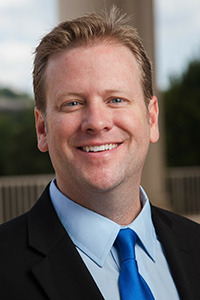


Dr. David Snead
Area Coordinator, Director of History Graduate Programs | Professor of History
View BioStudent Opportunities
Public History Projects
- Chaplains Museum
Open Monday through Friday 12:00 p.m.-4:30 p.m. and Saturday 10:00 a.m.-2:00 p.m. on the terrace level of the JF Library. Summer hours vary.
- New London Projects
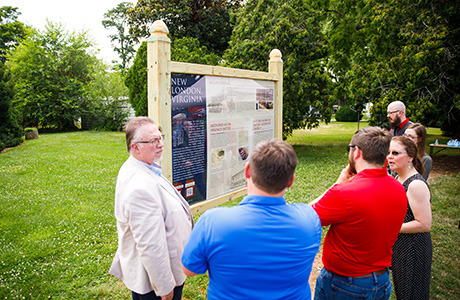
The New London projects give students hands-on opportunities in archaeology, historical architecture, historical interpretation, and much more.
- 250th Commemorative Conference
In honor of the 250th anniversary of the founding of the United States, the Department of History invites scholars, students, and researchers to participate in our commemorative conference, America’s Founding: Legacy and Influence. Join us as we reflect on the story of a nation and the faith, courage, and convictions that continue to shape it. Liberty University is proud to be a Commemorative Partner of VA250—Virginia’s American Revolution 250 Commission.

Start Your Journey as a Student at Liberty
What Our Alumni Say:
Fill out our Alumni Survey
Bringing history to life in HIUS 221: Survey of American History I! Dr. Jones is stepping into the shoes of George Washington to make the founding of our nation a little more memorable. 📜🦅
Oct 12


Columbus Day commemorates the difficult voyage of Christopher Columbus, who landed in the Americas in 1492 aboard the Niña, Pinta, and Santa María. The holiday has long been associated with both Columbus`s journey and the heritage of Italian Americans, honoring their achievements and contributions. Although the day had been observed previously, it did not become a federal holiday until 1937. Originally celebrated on October 12, it was moved in 1971 to the second Monday of October.
Over time, the holiday has become increasingly controversial. Many Native Americans and others oppose its celebration because of its association with European colonization, the transatlantic slave trade, and other conflicts and developments that followed Columbus`s arrival in the Americas. In response, Indigenous Peoples` Day was established to recognize and honor Native American cultures and traditions. In 2021, President Joe Biden became the first U.S. president to issue an official proclamation recognizing Indigenous Peoples` Day. While it is not a federal holiday, many communities now observe Indigenous Peoples` Day alongside Columbus Day.
Oct 12

Looking back on history can sometimes feel like navigating a map on the interstate. There are connected exits and off-ramps until you wonder, “How do I get where I’m going?” The start of the Second World War can also feel like this. It’s not as straightforward as we’d like it to be. So how did the Second World War come about?
German resentment over the Treaty of Versailles, the rise of Fascism and militarism, and policies of appeasement on the part of Britain and France converged into one of the deadliest global conflicts in human history. A humiliated Germany was reeling from the defeat of the First World War and a global economic depression. The “National Socialist German Workers Party,” or Nazis, became the largest party in the Reichstag, and Adolf Hitler was appointed chancellor in 1933, enabling their program of dismantling democratic institutions.
Fueled by Nazi beliefs in racial and national superiority, Hitler’s efforts to expand the boundaries of Germany met with a policy of appeasement, which resulted in the annexation of the Sudetenland in 1938. But that was not enough for Hitler’s vision of a future world power. German expansion continued with the annexation of Austria in 1938 and the occupation of the Czech lands in 1939. But when Germany invaded Poland in September 1939, Britain and France declared war.
The road to war is never a straight one and is often arrived at through more than one avenue. There was no single, isolated cause for the start of the Second World War, but rather a web of circumstances, ambitions, and fears that would ultimately cause the global conflict to unfold in the way we know it today.
Oct 5

📚 Meet Dr. Snead!
Get to know one of our History professors and learn more about his favorite areas of history, what inspired him to teach, and a few fun facts along the way! 👋
Stay tuned for more in our Meet the Professor series!
Sep 30

Contact
(434) 592-4366
history@liberty.edu
DeMoss Hall 4334
Connect

