Budgeting According to Your Values: LGOG

By: Manuel Perez, CFL GSA & Peer Financial Coach
Consider these quotes…Notice a common theme?
“A budget is telling your money where to go instead of wondering where it went” –Dave Ramsey1
“Don’t tell me what you value, show me your budget, and I’ll tell you what you value” – Joe Biden2
“If you buy things you do not need, soon you will have to sell things you need” – by Warren Buffett3
Answer: You said it!!! All three of these quotes highlight the importance of a budget.
If these people think a budget is important, then what are you waiting for? Keep reading to discover a budgeting framework that has helped +1,000,000 individuals achieve financial freedom while prioritizing alignment between their values and their finances. This framework will allow you to control your money instead of letting your money control you!
But first, a little bit about me. I was a freshman at Liberty University when I got my first job as an on-campus student recruiter, aka Tour Guide. Everything was going great until I made it home for Christmas break. That’s when my father asked about the money I earned and how I had been using it. Honestly, I had a really hard time answering. I found myself embarrassed, having no plan, goal, or purpose behind my financial decisions.
Following the break, I decided to book a session with a peer financial coach from the Center for Financial Literacy at Liberty. My coach, Spencer, walked me through my spending habits. I was shocked by how mindlessly I was spending money and came to the conclusion that I needed a plan. Spencer introduced me to LGOG, a money management model that separates the uses of money into 4 categories: Live, Give, Owe, Grow.
The following image illustrates the model well!
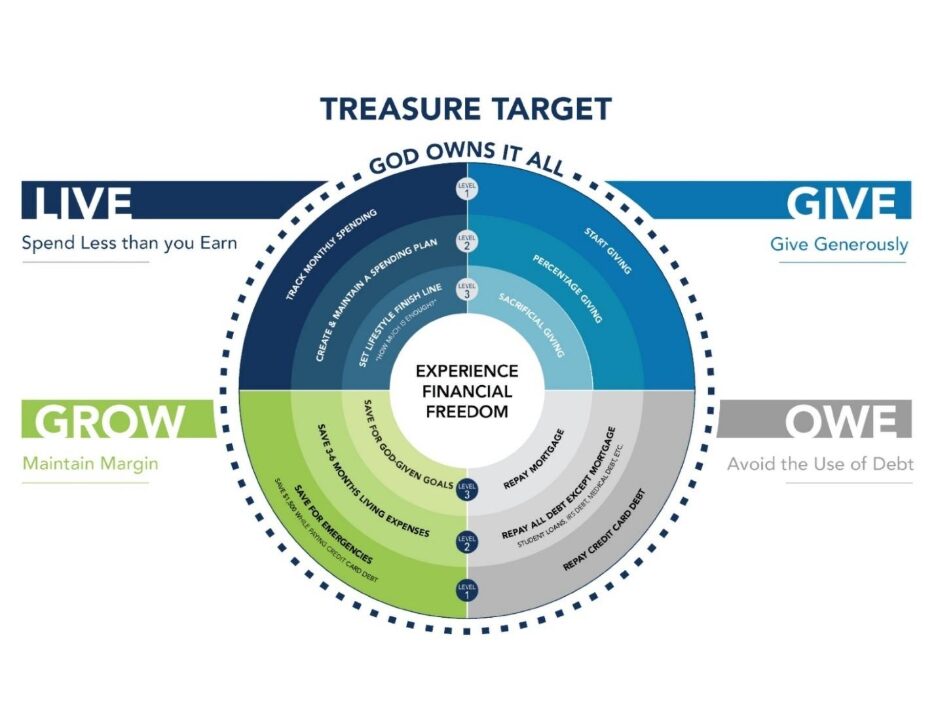
This budgeting framework has saved me and many others from making directionless financial decisions. The purpose of this blog is to help you turn plan into action by building a purposeful budget that you will be able to integrate into your day-to-day life. Let’s get going!
The LGOG Budgeting Framework:
LIVE
- Key focus: Spend less than you earn!
- This is where all the basic needs are met, including Dave Ramsey’s “Four Walls” – food, utilities, shelter, and transportation.
- Discretionary spending is included here as well. Just remember that, according to Ron Blue, there are no independent financial decisions. So, money spent on momentary desires will have a lasting impact on other financial areas of your life.
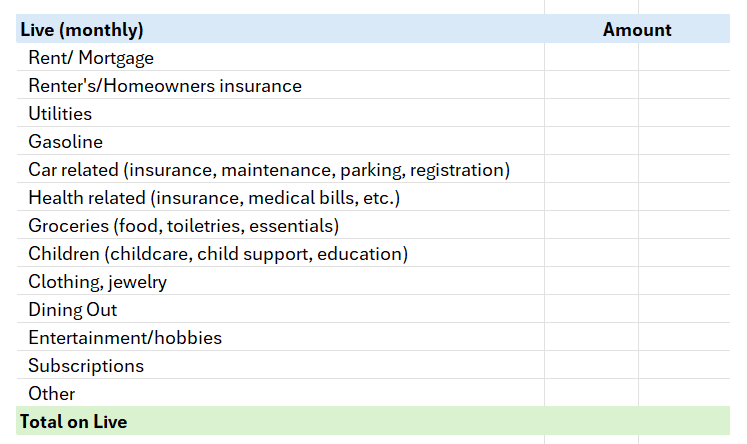
- I’ve included a sample “Live” budget below, but like the other categories, yours can be as simple or general as you’d like.
GIVE
- Key focus: Give generously!
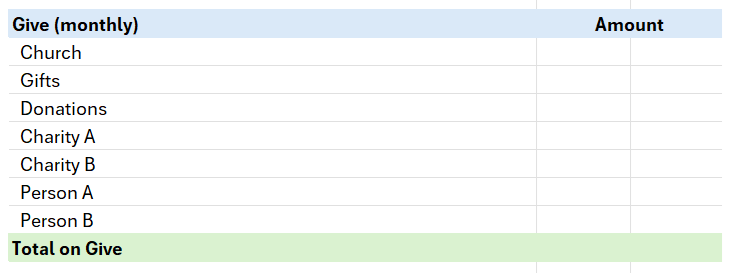
- This could include giving to charities, churches, individuals, causes, or more.
- The Old Testament speaks to the importance of giving back through the implementation of the 10% tithe, but the New Testament focuses more on the heart behind such generosity.
- “Each of you should give what you have decided in your heart to give, not reluctantly or under compulsion, for God loves a cheerful giver” (2 Corinthians 9:7).
.
- Open your hands to release God’s resources. He wants your heart to be connected to the story of His Kingdom.
OWE
- Key focus: Avoid the use of debt!
- Some examples of debt include credit card debts, car loans, student loans, mortgages, etc.
- Paying off short-term, high-interest debt is actually the first step toward investing successfully. This alleviates the weight of owing money, freeing you up to focus more on the other financial priorities in your life.
- While the Bible does not refer to borrowing as sin, it does include 21 verses that warn us about the implications of debt.
- Psalm 37:21 – “The wicked borrow and do not repay, but the righteous give generously.”
,
- Proverbs 22:7 – “Just as the rich rule the poor, so the borrower is servant to the lender.”
GROW
- Key focus: Maintain margin (aka financial wiggle room)!
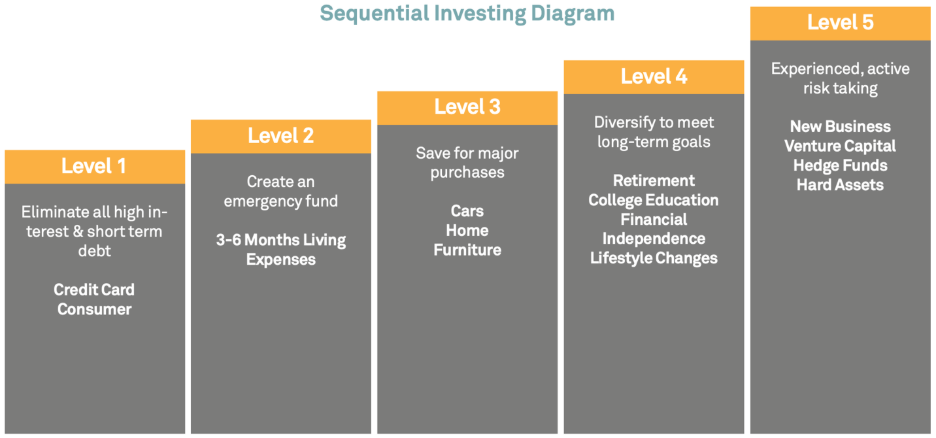
- The ‘Sequence of Investing’ diagram below, developed by Ron Blue and Kingdom Advisors, recommends the following stages as an approach to investing:
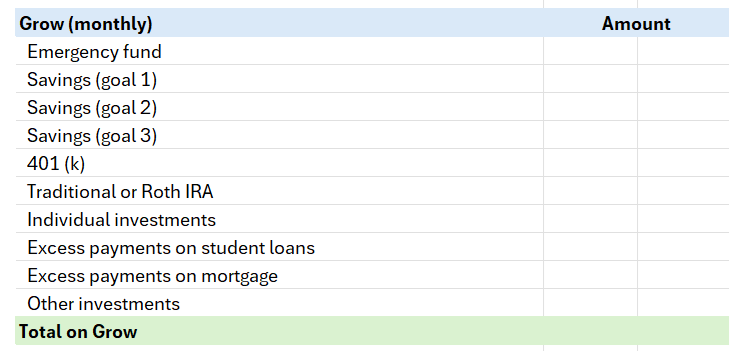
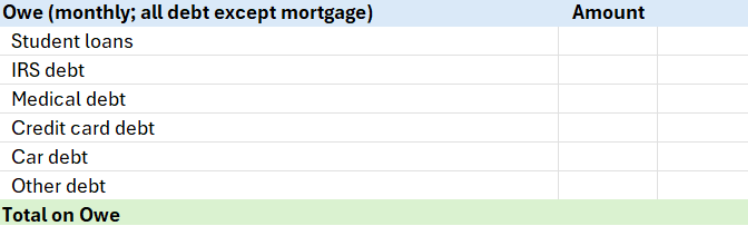
And here’s what funding this category might look like on a budget:
In conclusion, the LGOG budgeting framework is a way to target your necessities and accomplish your goals. Prioritization here is key because whatever gets prioritized last gets cut first. Another thing worth noting is that your behavior follows your beliefs. So, I’m here to ask you: what are you going to do? How are you going to budget? I challenge you to assess your own financial circumstances and see if it is aligned with your goals and your priorities. Are you up for the challenge?
If at any point in your financial journey you need guidance or a listening ear, feel free to contact our Center for Financial Literacy (cfl@liberty.edu) or visit our website (here), where you can learn more about our center and/or book a session with a Peer Financial Coach. I wish you the best in your endeavors and the biggest of blessings from our Most High God!
Additional/Optional Resources
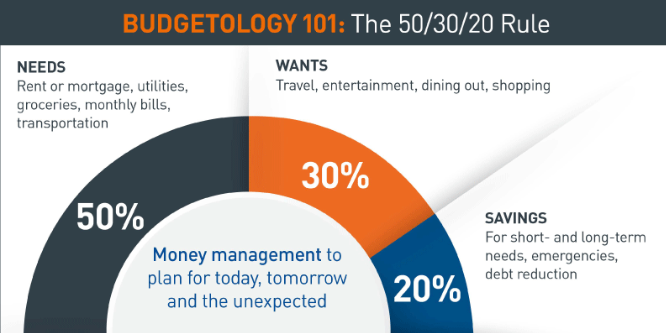
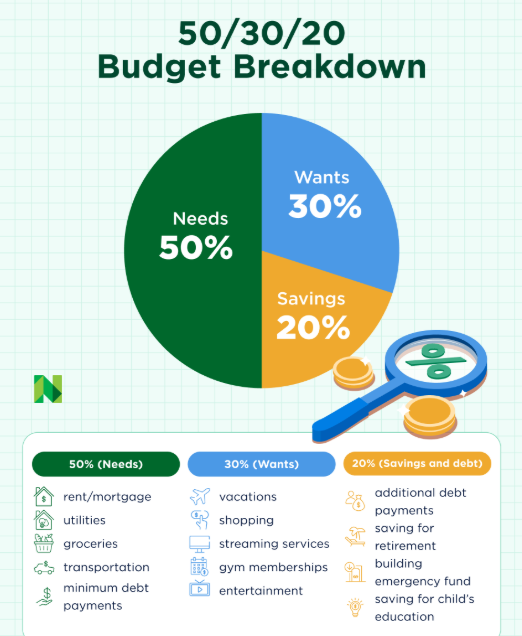
To approach the live, owe, and grow categories under the LGOG framework, some people use the 50/30/20 budget breakdown. Just know that it does not include the giving portion of LGOG. Here are some resources that outline this complementary tool.
To approach your financial life with a holistic, biblical mindset, see the Four Hs of Financial Wisdom provided by the Ron Blue Institute. The LGOG framework is part of the health section.
Sources:
Dave Ramsey Quote | Joe Biden Quote | Warren Buffett Quote | Live Give Owe Grow (Article 1) | Live Give Owe Grow (Article 2) | Treasure Target Dave Ramsey’s 4 Walls | 2 Corinthians 9:7 | Psalm 37:21 | Proverbs 22:7 | Sequence of Investing (Blue Trust) | Sequence of Investing (image)