Experts take part in first summit hosted by Liberty’s Global Center for Human Flourishing
February 17, 2026 : By Ryan Klinker - Office of Communications & Public Engagement


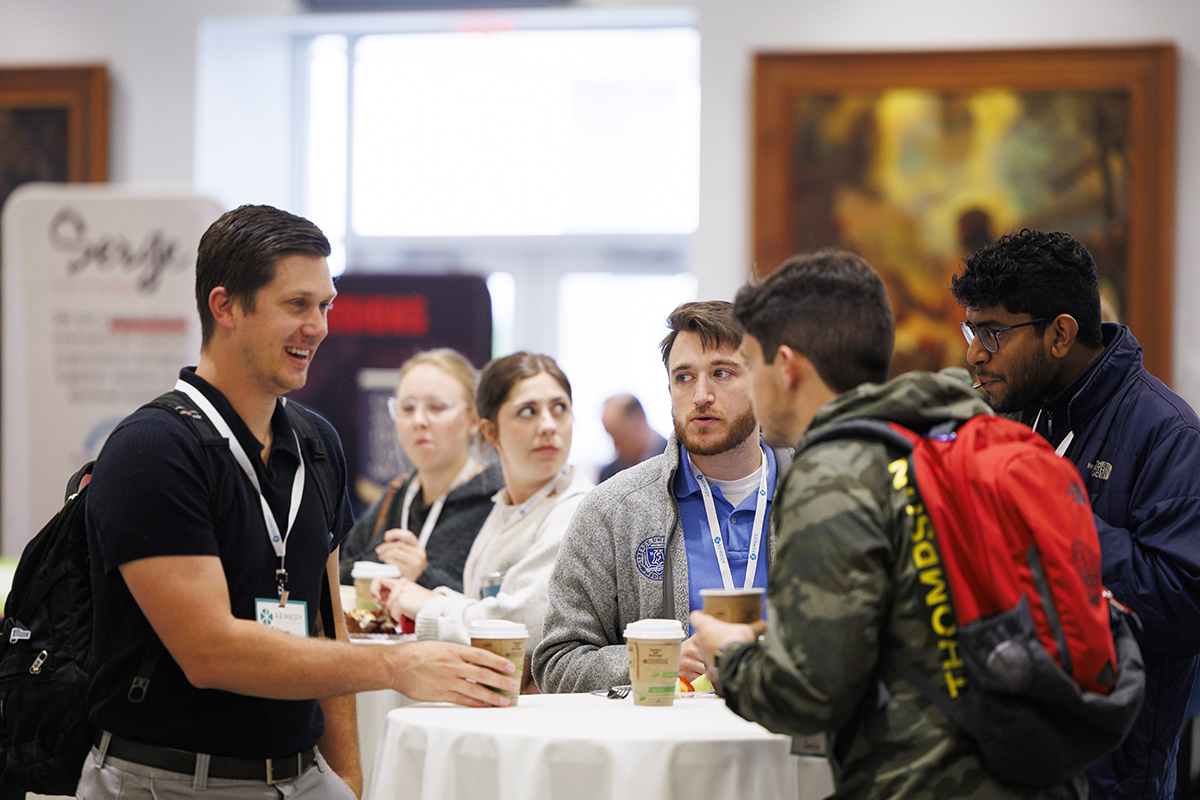
Liberty University held the Human Flourishing, Resilience, and Well-Being Summit on Feb. 6-7, bringing together renowned professionals, faculty, and students to discuss how to help others live an abundant life in light of academic findings that can work hand-in-hand with faith to face life’s challenges.
The summit was the first event hosted by the Global Center for Human Flourishing. Launched last spring, the center focuses on advancing research, developing resources, and serving the Liberty community by addressing mental health challenges with a focus on faith and human flourishing.
The center is building on the Global Flourishing Study, a collaborative project between researchers at Harvard University and Baylor University that is partnering with Gallup to collect extensive data on human flourishing across 200,000 adults from 22 countries. The first waves of the study are showing that those with a strong religious faith do better in every aspect of human flourishing; they are happier and satisfied with their lives, have better mental and physical health, greater meaning and purpose in life, greater character and higher values, better social relationships with family and friends, and even greater financial and material stability (or at least greater contentment with whatever they have).
Featured speakers at the conference included Dr. Byron Johnson, Distinguished Professor of the Social Sciences at Baylor University; Dr. Tyler VanderWeele, Director of The Human Flourishing Program and the John L. Loeb and Frances Lehman Loeb Professor of Epidemiology in the Departments of Epidemiology and Biostatistics at Harvard University; and fellow flourishing expert Dr. Harold Koenig, a Professor of Psychiatry and Behavioral Sciences of Duke University. VanderWeele and Koenig are research partners for the GCHF. Other outside experts in the fields of clinical counseling, neuroscience, digital wellness, and more led 20 breakout sessions focused on timely topics like stress, trauma, addiction, depression, social isolation, forgiveness, grief, and resilience. Faculty from Liberty’s School of Behavioral Sciences and College of Osteopathic Medicine also led sessions.
“This summit is an outgrowth of (Liberty) President (Dondi E.) Costin’s vision to create at Liberty University a culture of human flourishing,” said Dr. Ron Hawkins, associate director of the GCHF. “We think that has a big tie-in with what Jesus said (in John 10:10), that He was ‘coming that you might have life and have it more abundantly.’ Abundant living, as envisioned by Jesus, is the human flourishing lifestyle that is positioned by these later researchers. This research is simply helping us to validate what Scripture has told us for millennia.”
“The Lord helped us bring together a first-class team of mental health and ministry-related researchers, educators, and clinicians to guide our conversations and time together,” said Dr. Tim Clinton, executive director of GCHF. “I am very excited and grateful for the leadership of Chancellor Jonathan Falwell, President Dr. Dondi E. Costin, and Provost and Chief Academic Officer Dr. Scott Hicks and their commitment to develop a human flourishing culture at the heart of Liberty University as we seek to Train Champions for Christ. Pray with us as we look to build on this foundation.”
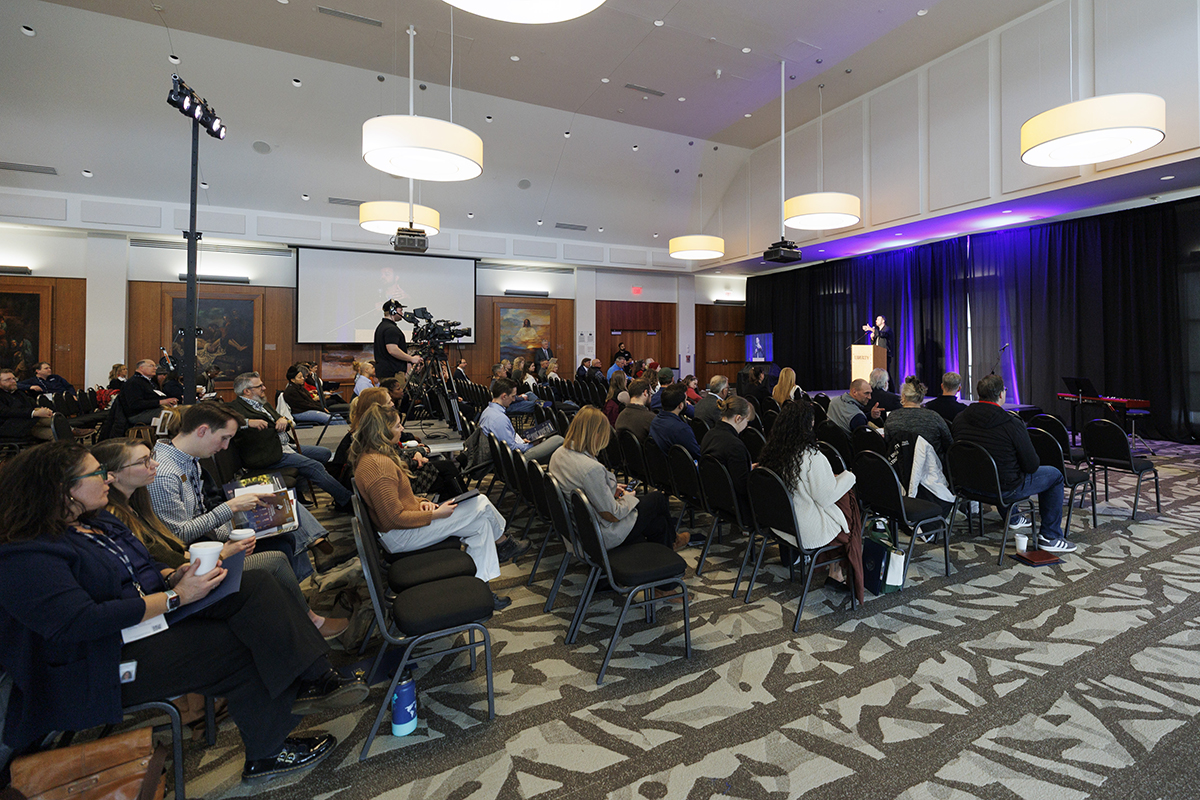
In a pre-recorded presentation during the plenary session on Friday afternoon, VanderWeele delved into the techniques used to survey participants from around the world for the Global Flourishing Study, how the study shaped the definition of “flourishing” and how flourishing is measured, and overall findings. He explained that the study’s established five domains of flourishing — happiness and life satisfaction, physical and mental health, meaning and purpose, character and virtue, and close social relationships — are all areas in which every individual and society is striving for success. But he said it is a constant effort that is never fulfilled in every area, and some cultures place larger emphasis on different domains.
“The working definition of flourishing we’ve used at the human flourishing program is that flourishing of human well-being is this state in which all aspects of a person’s life are good,” he said. “Flourishing is multi-dimensional. We may be flourishing in some ways but not others. We may have a strong sense of purpose in life, yet we are struggling with our health, for example. Flourishing also constitutes an ideal; it’s never something we perfectly attain in this life, and there’s always potential space for improvement.”
He went on to outline four pathways to flourishing, which he noted are not exclusive but are the most common: family, work, education, and religious community.
“There’s evidence that each of these is relatively common in the population, and that each has large effects on the five flourishing domains,” he said. “… One can flourish in the absence of one or more of these pathways. The argument is that each of these powerfully affects the domains of flourishing and is common in the population, and so if policy and individual efforts were made to support these pathways, population flourishing would increase.”
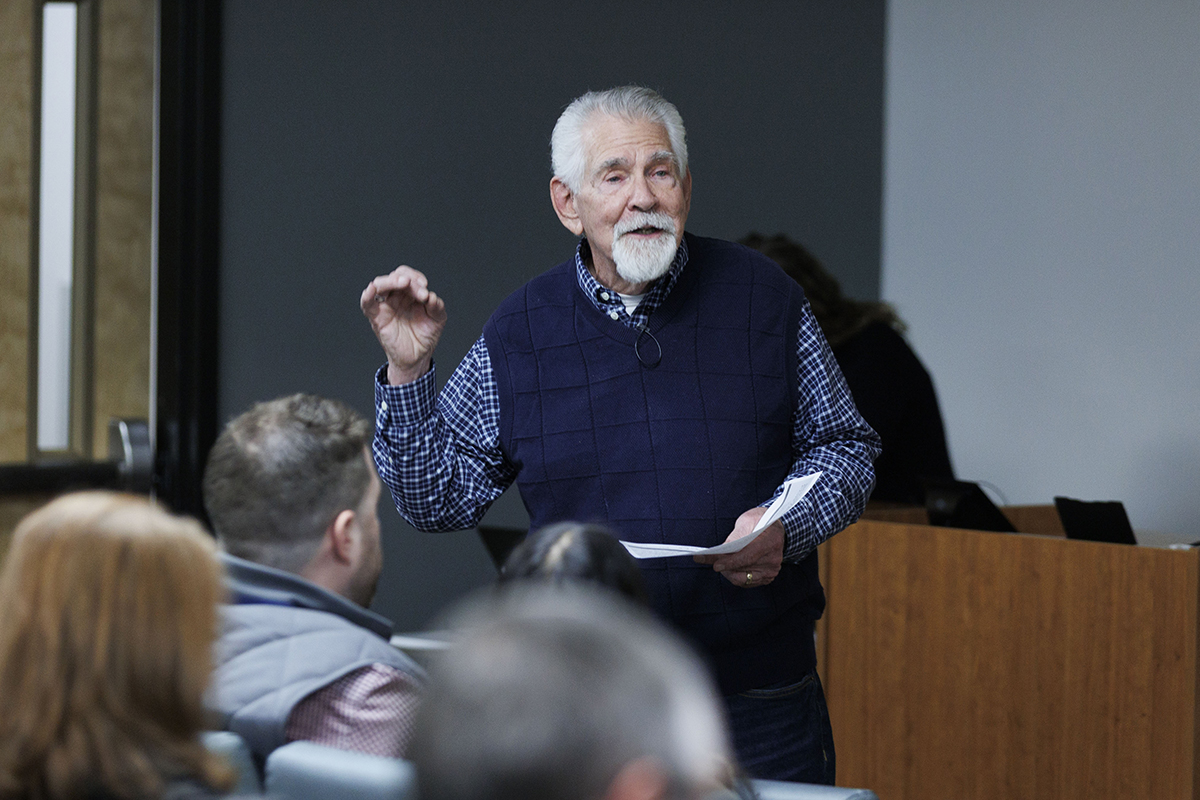
Johnson followed his research collaborator with an in-person presentation, sharing that their discussion of the study is not claiming to have all the answers but simply starting the conversation with some notable data. Contrary to the previous belief that flourishing across young, middle, and older adults was a U-shaped curve with the middle-aged population scoring low, Johnson said the study found that young people (ages 18-24) are struggling around the world more than is realized. The study also discovered that populations in third-world countries are flourishing more than those in higher GDP countries, and he attributed this to the idea that those in underdeveloped countries are more focused on areas like meaning and purpose, character, virtue, and close relationships.
The practice of religion, Johnson said, was found to be directly involved in flourishing, which he said may come as a surprise to some but not to the audience at the summit. He pointed to the virtues of hope and optimism, gratitude, generosity, and forgiveness found in religions as being conducive to flourishing, as well as the outcome of enduring life’s sufferings.
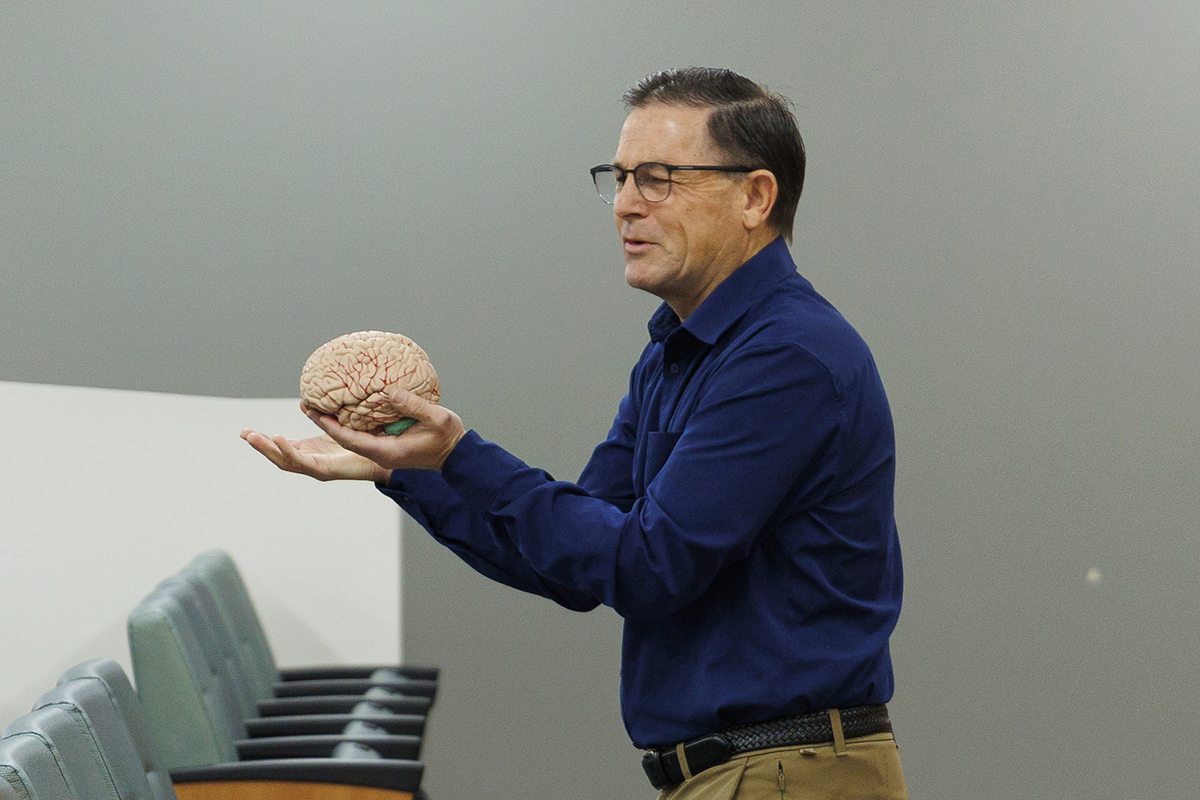
“Flourishing doesn’t always look like what we may think it looks like,” Johnson said. “Flourishing is not the absence of suffering; it is suffering that brings a lot of people to a place of flourishing, and that is a part of what we’re learning as well. We’re doing papers on anxiety and isolation and loneliness and suffering to see how people are handling those challenges in their life, and (how) can they flourish as a result of them or through them.”
Later in the day, Koenig delivered a plenary speech on the continued topic of religion’s impact on physical and psychological well-being. He spoke about the divide between psychology practice and religious practice in many circles but returned to the study’s findings that those who engage in religion are flourishing more than those who are not.
“Lo and behold, religious people are simply happier,” he said. “They experience more life satisfaction, they have many more positive emotions. … And if somebody has meaning and purpose, if they’re hopeful, if they’re more optimistic, they’re going to work harder to get better when they get sick. Those who are more religious simply live healthier, happier, and longer lives. Religious faith is indeed the key to human flourishing.”
Some students said they attended the summit because the topics overlapped in their fields of study and others said they simply wanting to practical advice on how they can help themselves and others flourish, sometimes in the face of hardships.
“I chose to come to this summit because I wanted to learn more about what human flourishing actually is and what it looks like in my (field), and I wanted to learn how to treat people holistically in healthcare one day,” said sophomore Will Chelberg, who is earning his interdisciplinary studies degree with focuses in physical and natural sciences and a minor in public health nutrition. “I want to be a doctor eventually, and I wanted to hear practical ways to put Christ at the center of my practice.”
“I’ve personally been through some verbal abuse and trauma as a child, and I also have friends who have gone through trauma, so I’ve been really interested in the breakout sessions about trauma recovery and resilience, and how we can heal from these things,” a student said. “I just want to learn more for myself and for other people, and a lot of the speakers here are addressing (important topics) that can help.”
Dr. David Jenkins, Professor of Psychology at Liberty and Clinical Director of the Doctor of Psychology program, said he looks forward to the impact that the GCHF, the summit, and future events will have on the Liberty community and beyond. He led a breakout session on compulsivity, addictions, and recovery.
“From a larger perspective, human flourishing is probably one of the best places we can engage as believers in Christ to study, research, and spread the word about what an abundant life might look like,” he said. “It’s not just the idea of this event that’s special, it’s the people God has brought to this event and who will be impacted by this event. We have world experts here in the fields of religion, health, mental health, and more.”
“Participating in this human flourishing perspective as an entire university is quite honestly what we’re here at Liberty to do,” Jenkins said. “This center and its events like this could be one of the best things Liberty has done for itself and for others. It’s going to be special to see the ongoing difference it makes.”
The GCHF collaboration positions Liberty at the forefront of faith-based mental health research and practice. The integration ensures that principles of human flourishing will be woven into academic curricula, student life programs, and faculty development efforts.
Read more about the Global Center for Human Flourishing in the Liberty Journal. For information, visit Liberty.edu/GCHF.