Liberty University grows its compost program to help steward the Earth, enrich campus grounds
March 17, 2026 : By Abigail Degnan - Office of Communications & Public Engagement


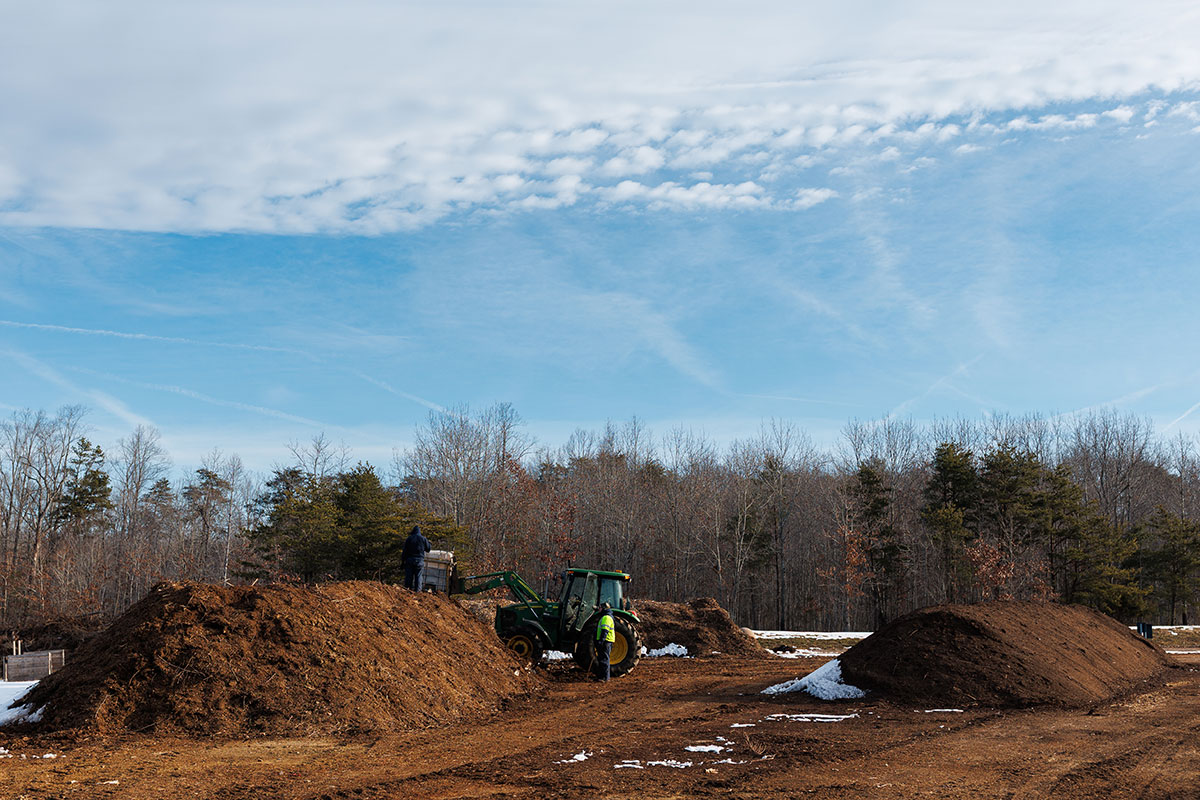
Just a few miles from Liberty University’s main campus, at the top of Liberty Mountain, sits the peaceful Morris Campus Farm with its beautiful panoramic views — and thousands of pounds of food scraps and landscape trimmings piled nearby. The fields of waste are serving a purpose as they transform into a valuable resource for campus.
Liberty has made many improvements to its compost program in the last year, ramping up its green initiatives to help steward God’s creation well. Since the beginning of the 2025-26 academic year, the program has collected nearly 200,000 pounds of composting waste, saving the university over $100,000 in landscaping organic supply, refuse removal costs, and other expenses.
Composting is the natural, managed decomposition of organic material, such as food scraps and yard waste, to turn them into nutrient-dense soil amendment. The practice not only reduces the amount of reusable waste going into landfills but also reduces methane and carbons in the atmosphere.
LU Grounds employee and compost specialist Scott Jensen has been working to help increase the impact of composting across campus since joining Liberty in early 2025.
“It’s important to go back to sustaining and taking care of this earth that we’ve been given by God,” Jensen said.
While most waste and trash going into landfills will stay there indefinitely and never break down, waste at Morris Campus Farm will be turned into rich soil amendment and reused across the Liberty campus within a matter of months. Additionally, it decreases the need for fertilizer, and it saves in costs to haul waste to landfills.
Jensen, a U.S. Army veteran, grew up on a farm in North Dakota, where at a young age he learned about composting from his father. When Jensen first arrived at Liberty, the program was not making as large of an impact as it could; the university was mainly focusing on composting landscaping trimmings and manure from the Equestrian Center. But within the past year, Jensen has helped establish multiple relationships across campus to enhance efforts and compost food scraps.
“The food scraps are what’s probably most exciting about what we’re doing, and it’s the biggest dramatic change that we have to the program,” Jensen said.
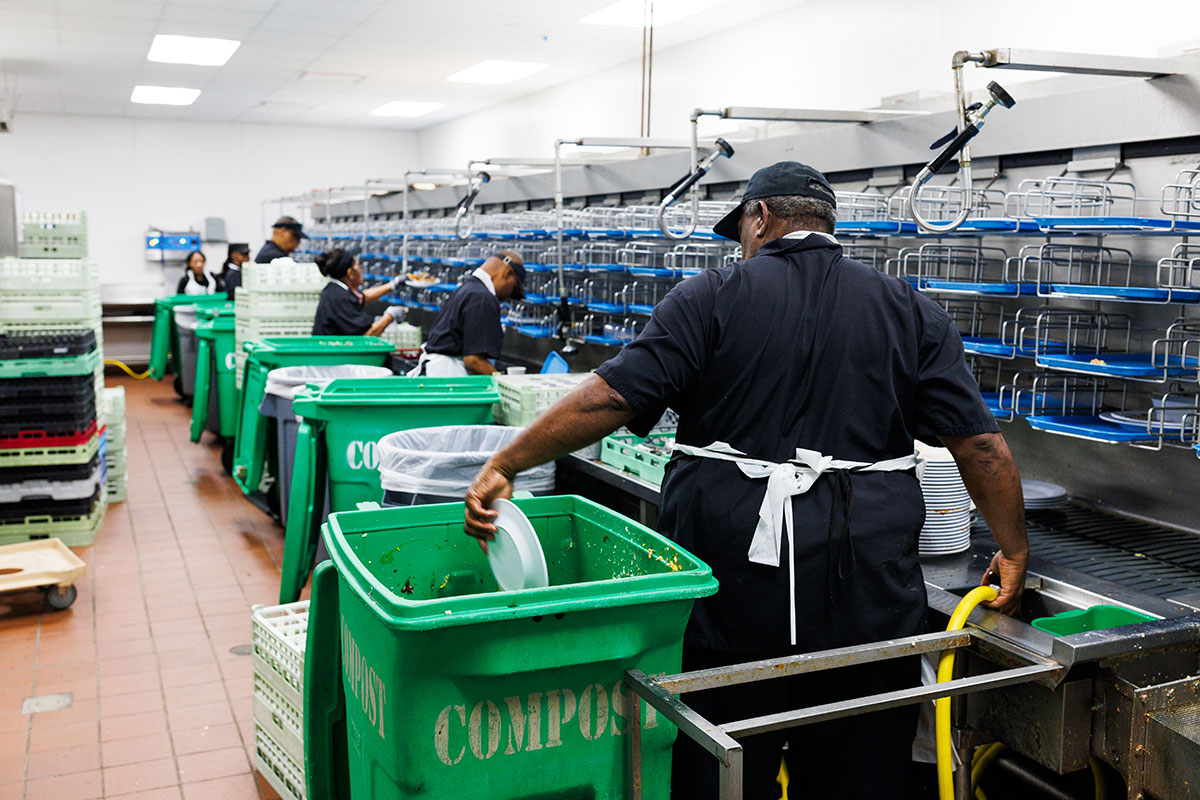
Starting in January 2025, Jensen and his coworker Matt Robbens began working with the Liberty Dining Services and Sodexo staff (Liberty’s dining services provider) to compost kitchen waste from the Reber-Thomas Dining Center, like fruit and vegetable peels and anything tossed out during food preparation. From prep food scraps alone, Jensen said they were receiving four to six “toters” (200-pound composting bins) a week, equating to roughly 800-1,200 pounds.
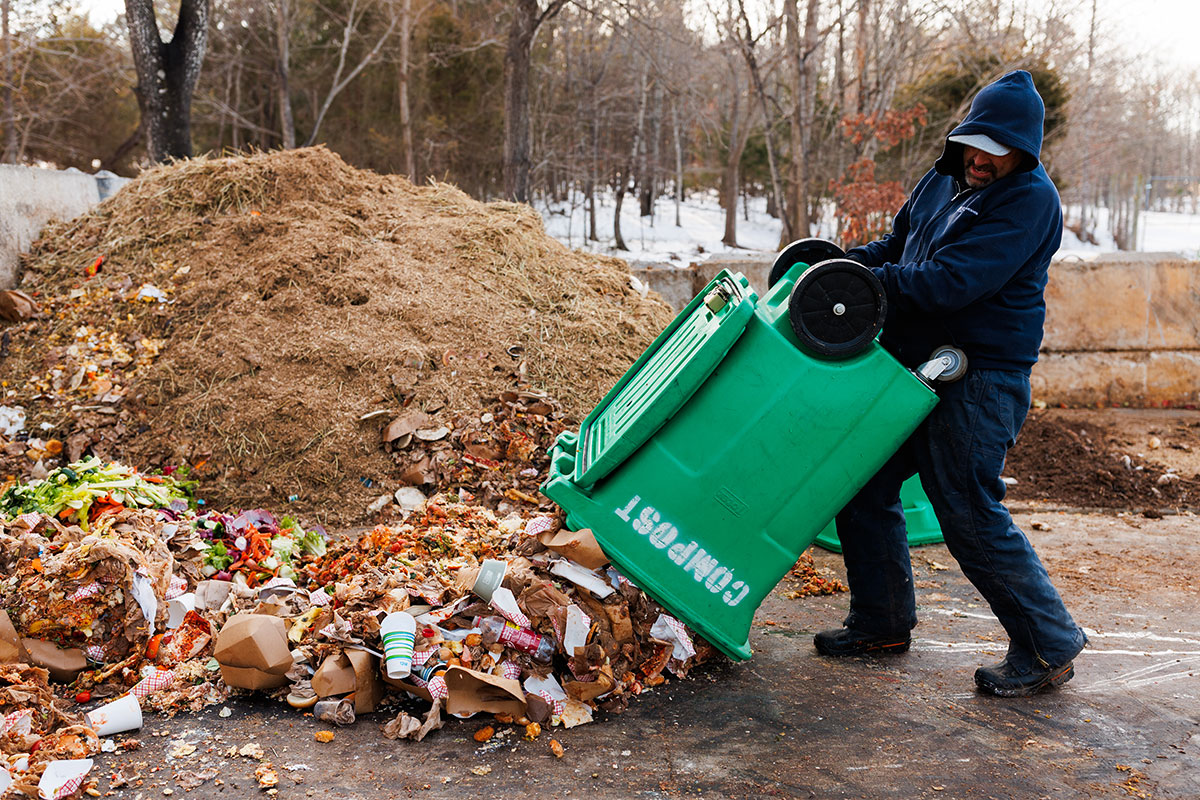
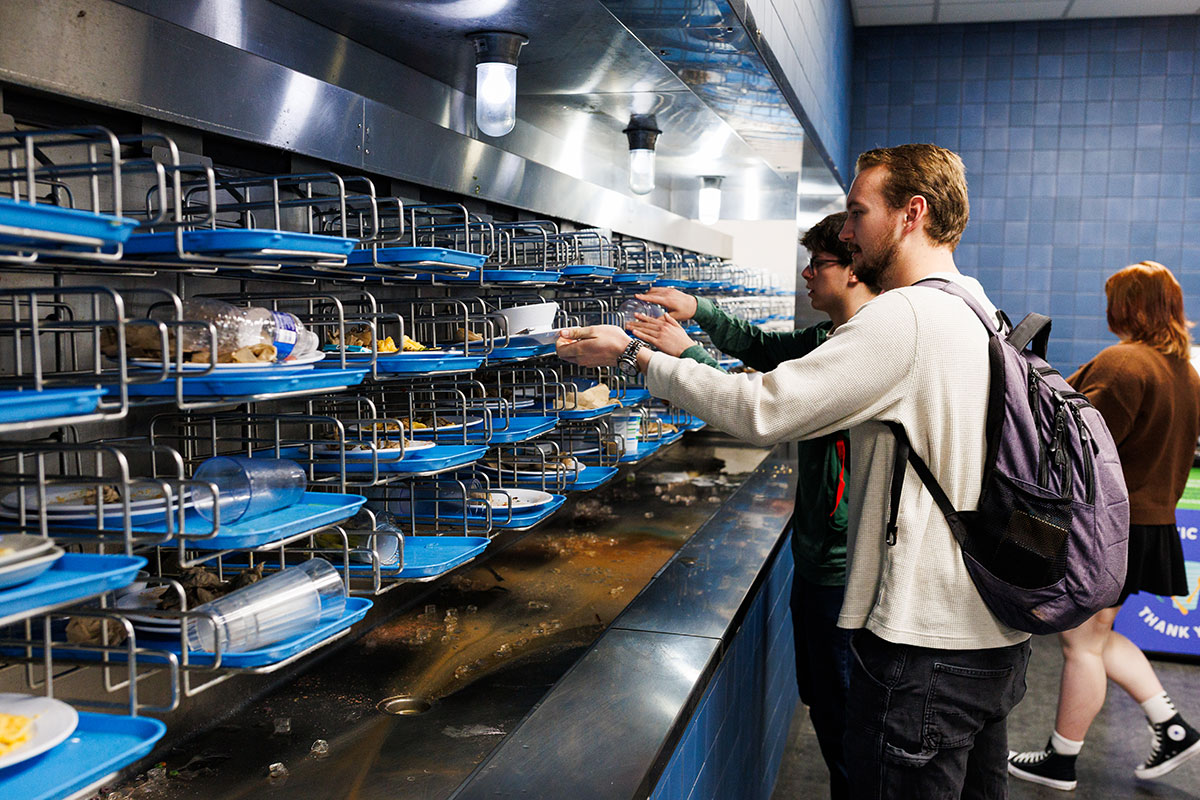
In August, leftover food scraps from served meals were collected and, in addition to kitchen waste, the program started averaging about 1,000-2,000 pounds of food scraps each day. Sodexo is working towards making all of its products compostable, from cups to spoons and the paper food boats used for finger foods. The Grounds team, in collaboration with Sodexo, has also been collecting coffee grounds from the cafe locations around campus, including Starbucks, Dunkin, and Brewvita, resulting in over 6,700 pounds of waste since August.
Rachel Sanders, district dietitian for Sodexo, said working with Jensen has brought “new life” to the composting program.
“We’ve tried composting programs in the past with little to no success. Scott has the knowledge of how to make compost and an enthusiasm that’s not easily stifled by roadblocks,” she said. “When we first started this program, Scott went into the dish room and worked with our staff to develop a rapport with them individually. He spent weeks scraping plates and sorting trash from compost on the line with our teams. He really tapped into the social and emotional side of leading people in an effort that they previously were not interested in. Now our utility team knows Scott, trusts him, and wants to do a good job for him and the school.”
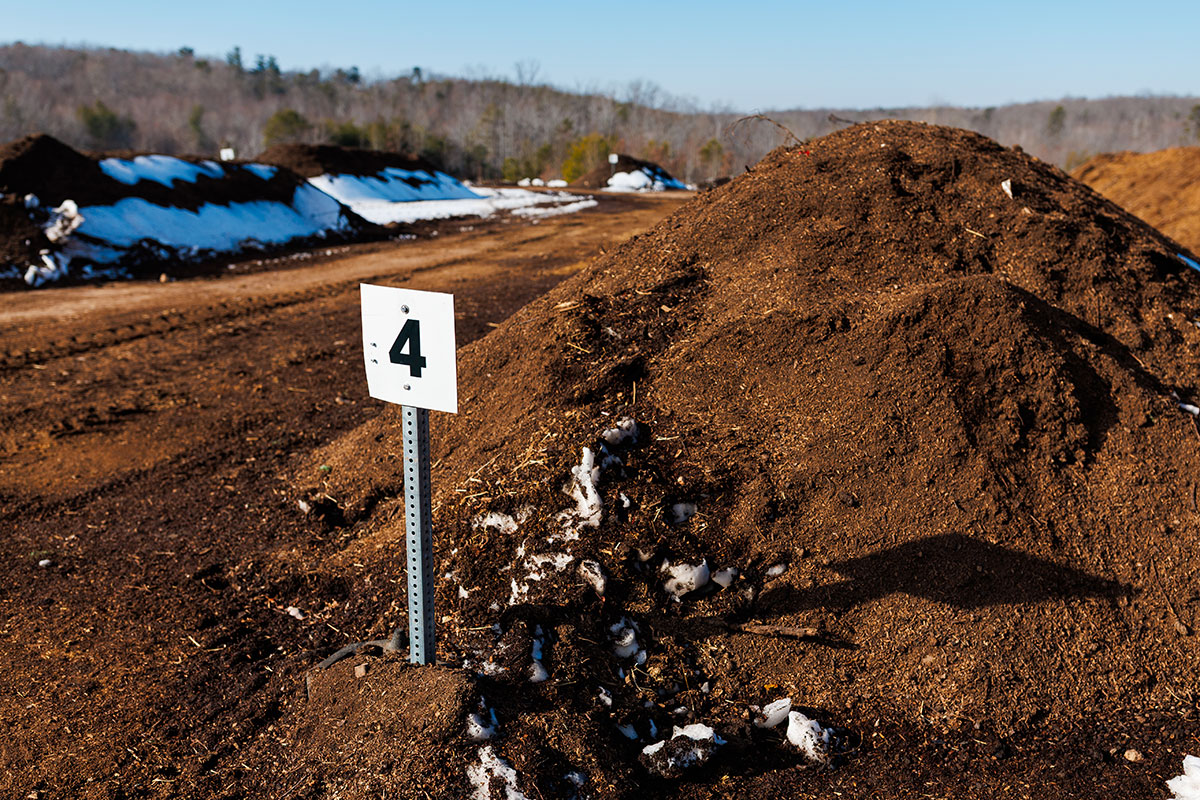
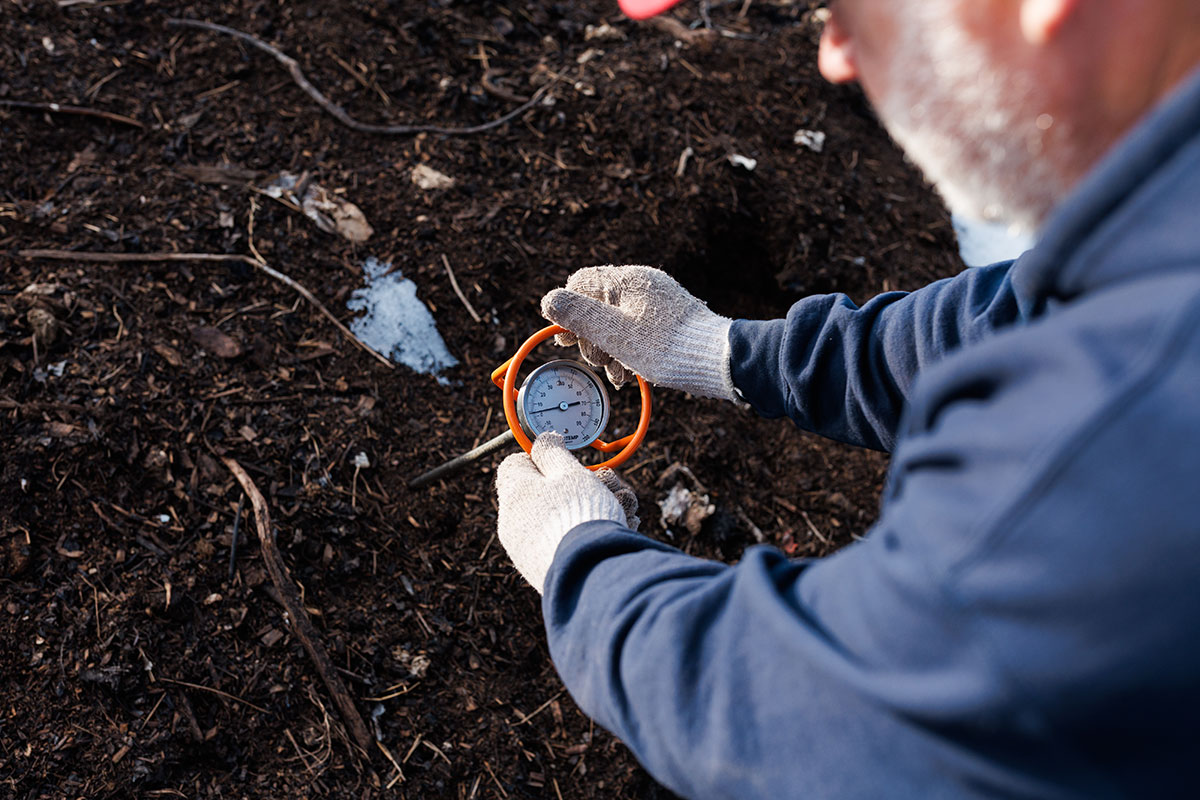
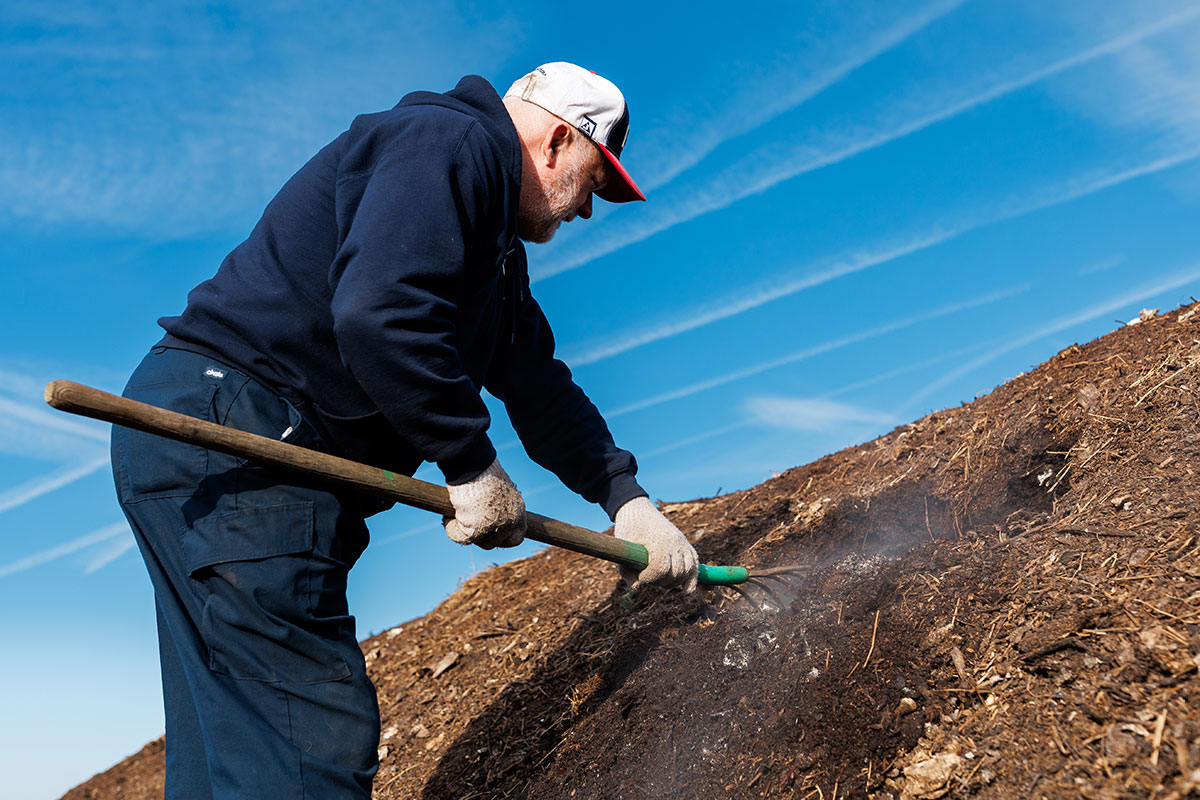
After the scraps are collected into composting bins, they are transported to the farm and dumped into piles on concrete pads. The compost spends roughly two months between two concrete pads, being turned and aerated occasionally, before being transferred into rows of piled compost on the farm’s field. As it decomposes on the field, microbes eat away at the scraps, causing a reaction that releases heat and slowly elevates the temperature up to 140 degrees, even in freezing weather. Eventually, this reaction turns the scraps into ash and dirt. As it turns into soil, Jensen and Robbens remove any non-compostable trash that may have been accidentally included.
Despite common beliefs that working with waste and compost can be “smelly,” Jensen said Morris Campus Farm has little to no smell emanating from it because of the diligent care it receives from the staff. In fact, Jensen said people from the composting industry who have visited the farm have called it “the cleanest composting facility they have seen.”
Once the compost has turned into a rich, nutrient soil amendment, which can take anywhere from five to 10 months, it is transported to campus. Jensen and his team make different “recipes” of compost based on the location and need. Last year, it was used at the new Liberty Golf Practice Facility to help reseed the fields with healthy soil, encouraging the growth of lush, green grass. This effort saved the golf course nearly $65,000 worth of organics, topsoil, filling dirt, and other supplies that would have been purchased.
Additionally, Jensen said composting has cut the university’s trash budget by 20%, with a goal of reaching up to 50%.
He said he views the composting program as an extension of Liberty’s mission to Train Champions for Christ. By stewarding the campus well, the staff is honoring God.
“We have the spiritual side (of Liberty) pretty well-captured, and I think we owe ourselves to be more outspoken about what we’re doing with what God has given us here, and we are really, really doing that now,” he said.
His next goal is to make other food locations on campus all-compostable and recyclable, including possibly concessions at sports venues.
Jensen said unlike many colleges, Liberty plans to keep the compost process in-house and not outsource it to a different farm.
“In terms of producing the product and then using it on our institution’s grounds, nobody else is doing that,” Jensen said. “They do it in small portions, but not at our level.”
Sanders said as the composting program expands, they are excited to share their work with students and the Liberty community. They are conversing with the Student Government Association to raise awareness of the initiative and have planned an Earth Day celebration on April 22 in the dining center to showcase the compost project.
“This compost project should resonate with the student population well because it’s a way to be good stewards of the Earth,” Sanders said. “We are excited to see how it continues to grow from here.”