From growing up as a refugee in war-torn Afghanistan to narrowly escaping Taliban, Ph.D. graduate grateful for America
May 19, 2026 : By Logan Smith - Office of Communications & Public Engagement


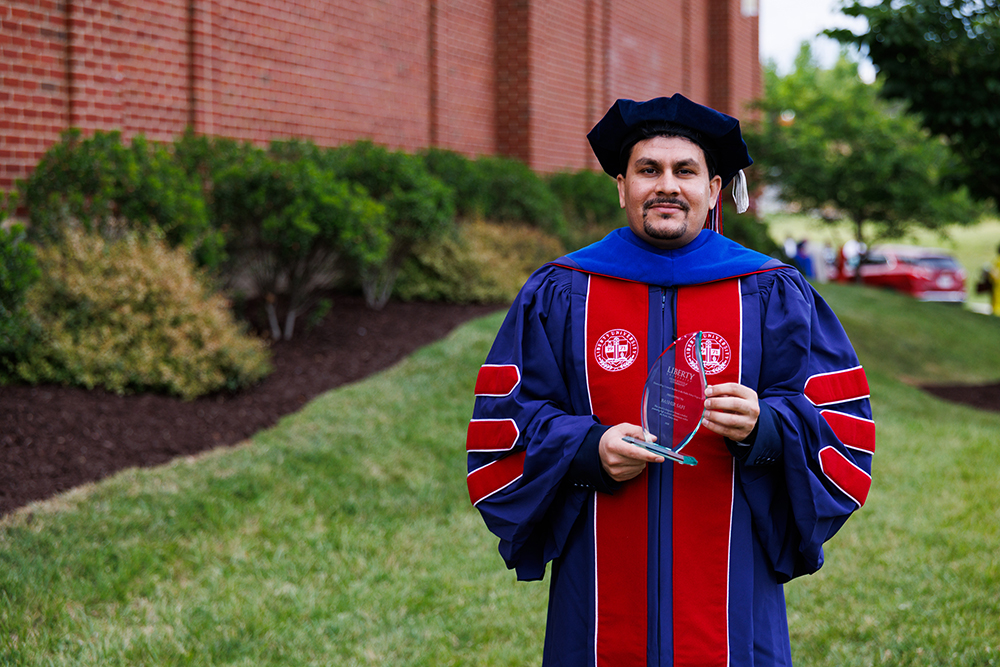
>>This month, Liberty University celebrates over 32,000 graduates who are ready to impact the world as Champions for Christ. Follow Liberty News for full Commencement coverage and more stories of trial and triumph from the Class of 2026.
Bashir Safi (’26) was born in rural eastern Afghanistan during the final years of the Soviet-Afghan conflict — under a tent in a province ruined by war. His childhood home was destroyed by Soviet bombings. There were no hospitals, structured education, major businesses, reliable drinking water, or functioning national government. Poverty and instability defined everyday life, and the Taliban occupied many areas of the region.
His journey from extreme poverty to earning a Ph.D. in National Security Policy through Liberty University Online Programs was marked by immense difficulty, perseverance, and life-threatening challenges. This weekend, the 37-year-old celebrates his achievements as one of the 34,918 graduates in the Class of 2026.
Safi said his first exposure to education was a UN-funded charity school for Afghan refugees: “Kids like me were just hoping for U.S. Agency for International Development (USAID) or United Nations (UN) shelters.”
In middle school, Safi attended school under a tent with no tables or chairs. He had no access to internet and did not have much information about the outside world. He labored for little money in a construction factory.
“Even the drinking water was very hard to find, and it wasn’t healthy,” he said. “But at the time, it was very normal. Even at the time, that was a blessing. Not every child had access to those kinds of UN schools. It was still a big blessing, and it was my foundation, which I am very grateful for.”
“I still remember those hard days,” he added. “Maybe I had a purpose, but I couldn’t define my purpose at the time. You have to have a purpose, and that purpose can shape you into whatever you want to be in the future.”
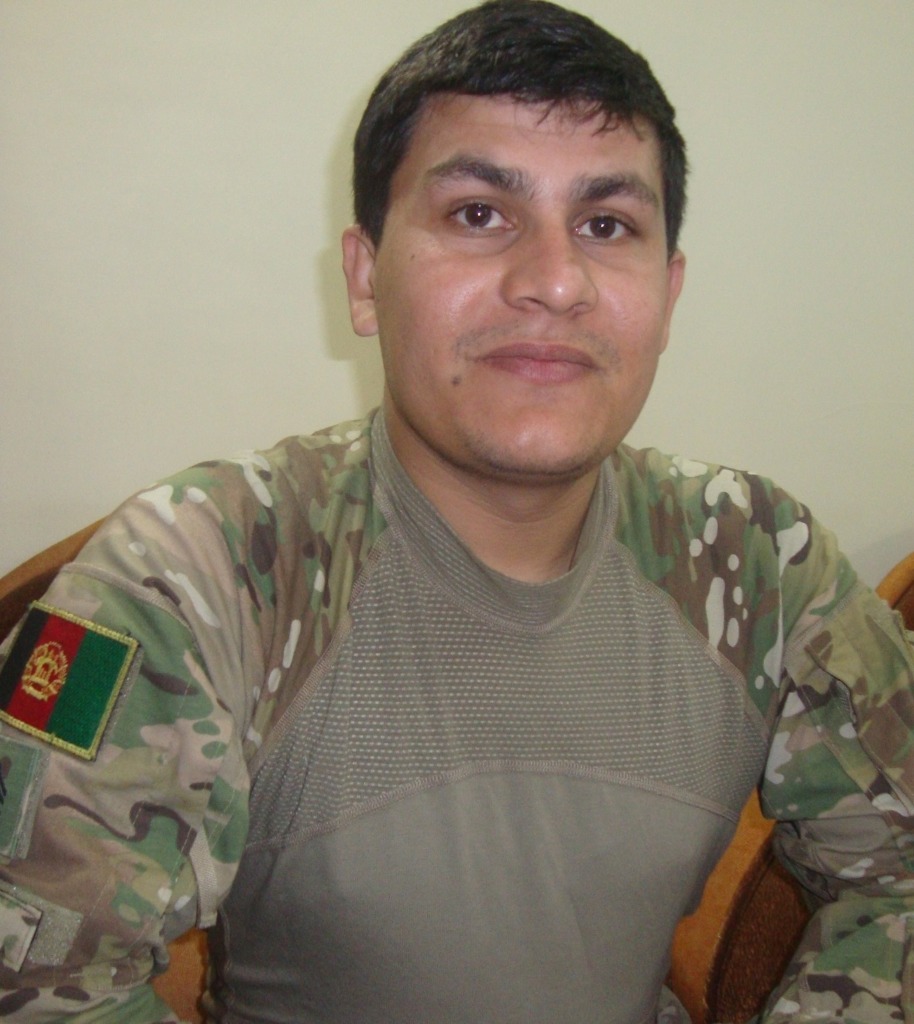
Following Sept. 11, 2001, Safi’s life significantly changed when U.S. forces created military bases around the region. And while Arabic remained the prominent language, the need for English interpreters were in high demand. Safi knew the Taliban was known for torturing and decapitating anyone who helped the Americans, but he accepted the risky job, which eventually led to his ticket to freedom, U.S. citizenship, and the American dream.
“I wanted to take a risk and prove myself,” Safi said, noting that he needed money. “One thing I still remember from my childhood is that taking risks is not always out of bravery. It’s sometimes because you have no other options. You either take risks or do nothing.”
As a teenager, Safi took after-school classes nearby and dedicated himself to learning English. He spent $1 per day on classes (still considered costly for his budget), and English newspapers, a basic dictionary, and occasional encounters with American guardsmen proved to be all he needed.
One of these Americans was a National Guardsman from Missouri, who gave Safi a job in 2009 helping local farmers with watershed and irrigation problems in a region heavily occupied by the Taliban. This was a dangerous mission, he said, because the construction company issuing the project was funded by Americans.
Safi’s loyalty proved fruitful for the Americans. Not only did Safi succeed at this mission, he gained the favor of others in the military base, including commanders from public affairs, counterinsurgency, and information operations. While taking jobs to help the Americans over the following years, Safi was able to afford a bachelor’s degree in political science from a college in Afghanistan and eventually married and started a family.
“It was very risky,” he said. “I was dealing with stuff that the Taliban didn’t like, because we were countering their misinformation and propaganda through our public affairs efforts and our media outreach and material that we were distributing in Taliban-controlled areas.”
“At the time, this was so normal in Afghanistan,” he added, noting that being captured meant certain death. “The Taliban would cut body parts from people who helped U.S. forces and do so many horrible things. So, that was expected if someone was captured by the Taliban.”
In 2015, his situation escalated when the U.S. military discovered an imminent threat to Safi’s life. There were multiple signs, including the Taliban planting bombs outside his home. The Department of State, per request from the U.S. Ambassador, granted Safi and his family U.S. citizenship because of his years of loyal service.
Safi knew the Taliban would be looking for him, so acting quickly and quietly was his only option. He said the Taliban had very good intelligence and they “knew when people were moving.”
In June that year, he left his home at 3 a.m. for Kabul International Airport, hoping to remain one step ahead of his potential captors. Once at the airport, he, his wife, and his two infant children held their breath.
“I waited in the lobby with my wife and kids, because I knew (the Taliban) were going to follow me in my last day in Afghanistan,” Safi said. “That three hours felt like three days.”
The family had three connecting flights before eventually arriving in Houston, Texas. “It was awesome,” Safi said. The U.S. already had his apartment and six months of expenses covered.
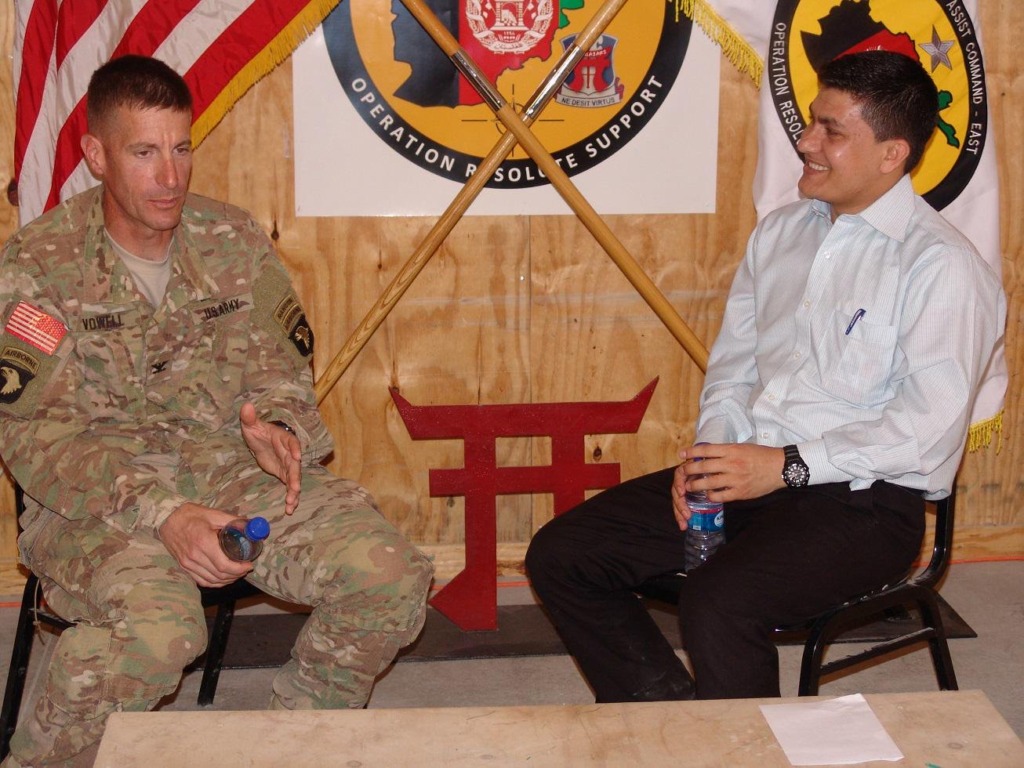
While in America, Safi continued serving the country that saved his family’s life. He worked as a contractor for the Department of Defense and State Department and was even asked to return to Afghanistan three years later to advise the Afghan President’s national security advisor office. He also completed his master’s degree in homeland security and counterterrorism at a school in Colorado.
Safi transferred to the U.S. Department of the Treasury in 2025, moved to Northern Virginia, and now serves as a lead financial investigative analyst, focusing on major investigations involving illicit economies, financial fraud, and the movement of money into “illicit economies.”
He decided to pursue a Ph.D. in National Security Policy with Liberty’s Helms School of Government because of his upbringing, his background in government contract work, and the flexibility and affordability of Liberty’s online program.
Safi said he is grateful for his education at Liberty and for a country that provided him the opportunity to build a legacy and a purpose.
“This country gave me a lot, and I’m very grateful. And I’m not asking for anything more from this country. It’s what I can do for this country. If I can (graduate with my doctorate), with my life (coming) from poverty and lack of support, then anybody can do it.”
“You have to be grateful for whatever you have,” he added. “That’s very important. Many nations and generations, if they are not grateful for what they have, they’re going to lose it. We had so many civilizations and great nations just disappear. They disappeared because they were not grateful. And if you are not grateful for something, then you will not work hard to preserve it. So, be grateful and work hard.”