Education students go hands-on in new Science Simulation Classroom
November 20, 2026 : By Christian Shields - Office of Communications & Public Engagement


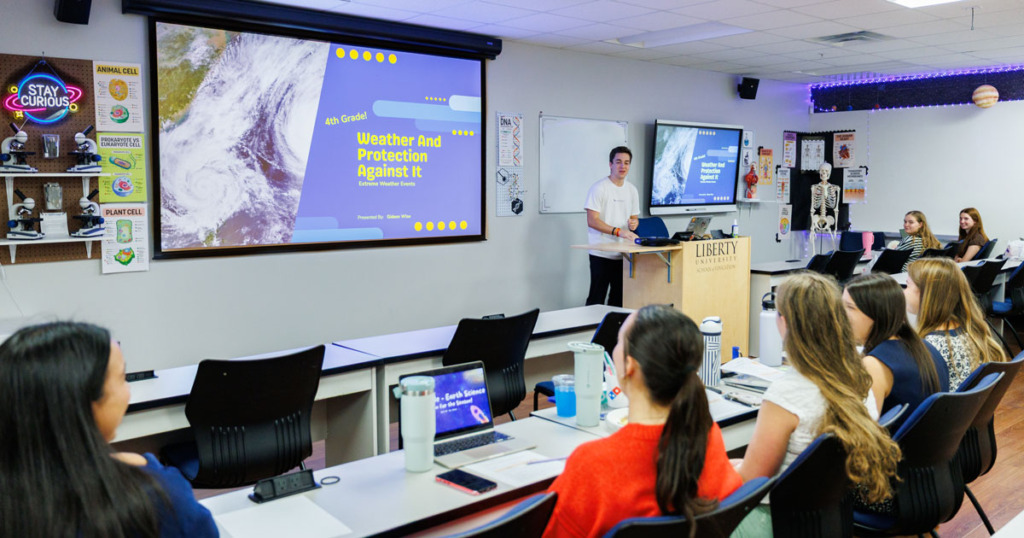
The Science Simulation Classroom provides a unique space for teacher candidates to gain hands-on experience in a safe, controlled environment. (Photos by Travis Clayton)
Earlier this semester, the Liberty University School of Education unveiled its new Science Simulation Classroom, opening yet another avenue for teacher candidates to gain practical experience before launching their careers.
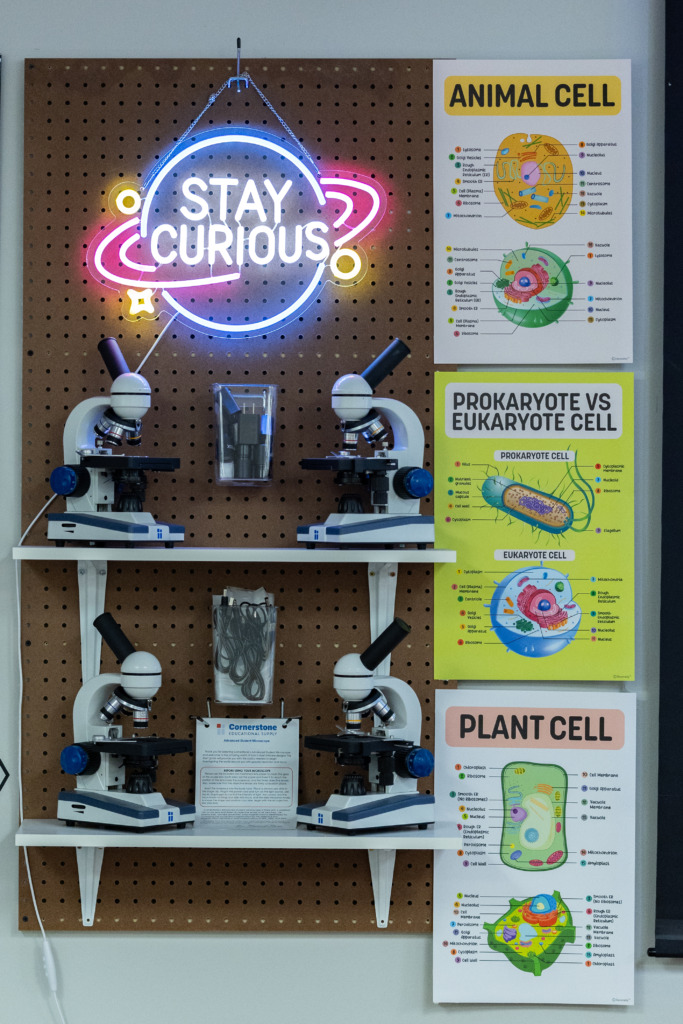
The space, located on the first floor of DeMoss Hall, features a wide variety of materials commonly found in elementary and middle schools, including an illustrated periodic table, a model skeleton, microscopes, diagrams, and much more. Assistant Professor Mark Granger, whose EDUC 324: Teaching Elementary and Middle School Science class meets in the room on a weekly basis, said the classroom equips Liberty’s teacher candidates.
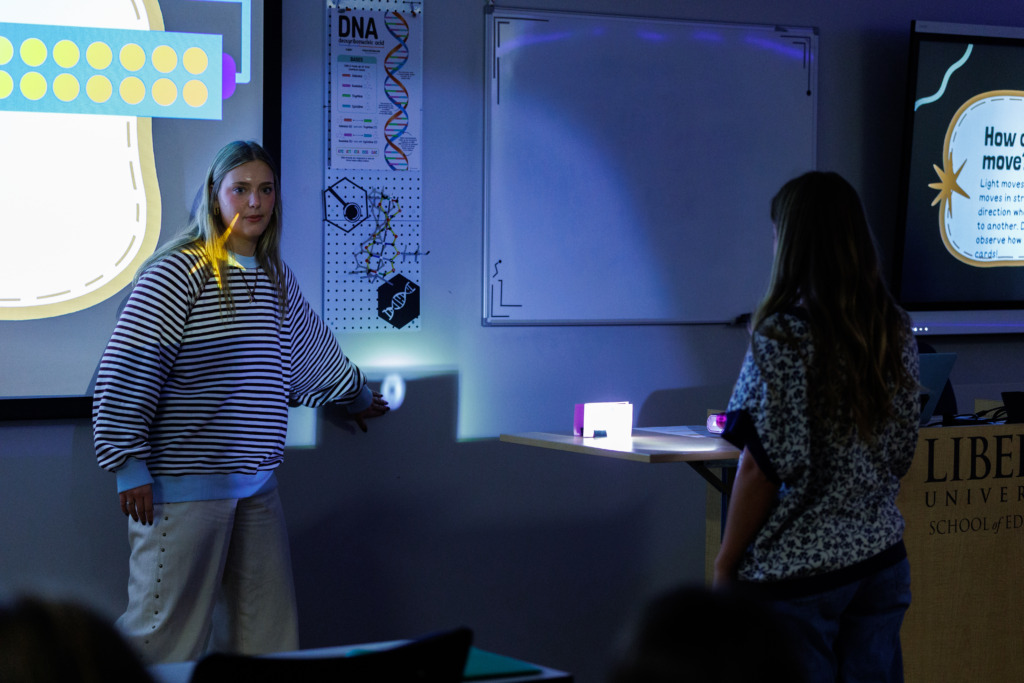
“It provides authentic teaching experiences,” said elementary education and special education senior Abbey Swartzlander. “I feel like myself and a lot of my classmates get excited when we go into the space and practice our lessons. It also gives us a lot of ideas for our future classrooms. It’s really motivating. It also provides a really good firsthand experience of ways to create an engaging environment for our future students — just seeing how it’s separated and getting into that learning zone is very immersive.”
“When it translates to them leaving Liberty and going to their own classrooms, research shows that the student engagement, experiential learning, active learning, and all the hands-on components we’re teaching our candidates help increase student learning at the elementary level,” he said. “It’s vital because the teacher evaluation process looks at incremental student growth when they are in the profession; they have to show their students are growing and making progress.”
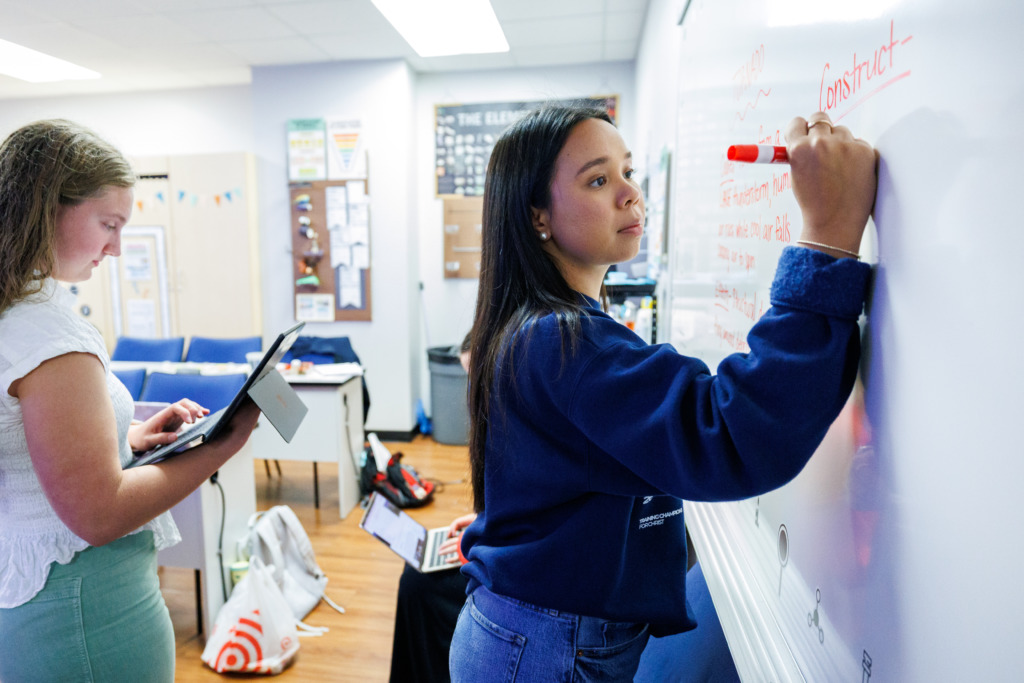
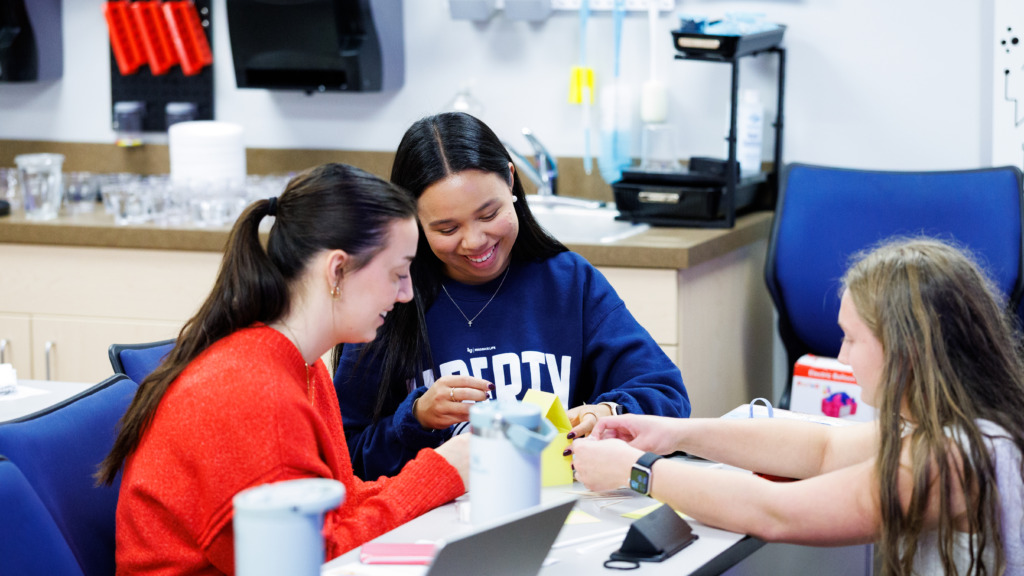
Throughout the semester, Granger not only uses the space to teach his own lessons but also opens the floor for teacher candidates to present mock lessons to their classmates.
Earlier this month, elementary education senior Hazel Edwards led her classmates in a discussion on what causes Earth’s four seasons. She said the classroom is “a big gift and a blessing.”
“It’s a high-reward, low-risk environment,” she said. “You know you’re going to get positive feedback; you’re around people who support you, and you’re in a place where you have a lot of resources to do a really effective lesson. I can have Professor Granger there to give me feedback and give me resources I need that we actually have stored in the classroom. Being able to teach to my peers and seeing their ideas for teaching, bouncing ideas off them, learning from the ways they’re teaching, and receiving their constructive criticism as well has been really beneficial.”
After graduation, Edwards hopes to enter a public school system with the skills she has gained from her time at Liberty.
“Although I may not be able to share (directly) with them (my students) my beliefs about the Lord creating the earth and all the things we see, I still want to be able to show them and model the world for them and hopefully spark wonder in them,” she said. “Hopefully through that wonder and awe they will see the fingerprints of the Lord on the world.”
Fellow elementary education senior Gracie Gusti presented her lesson on the solar system, incorporating crowd participation games to help illustrate the information. She said she hopes to teach in international Christian schools, possibly even one day planting her own.
Through classes that cover a wide range of grade levels, teacher candidates learn different techniques and skills to feel prepared to enter any grade school environment.
“You have so many opportunities to watch (science) come to life from so many perspectives,” Gusti said. “Sitting in the classroom, you have so many teachers who teach so differently. They have a different approach that comes to it. … You really get a different perspective on how you can teach it on both sides of the spectrum, which is really cool.”
Granger said the Science Simulation Classroom reinforces the school’s commitment to preparing students to positively impact the world for the Gospel.
“Our mission is Training Champions for Christ. Christ calls us to be excellent in everything we do,” he said. “Whatever we do, we’re going to work at it with all our heart. The space provides that opportunity for them to really dig into working at preparing at a higher level so that when they leave they are able to deliver excellent hands-on science education for their future students.”