Annual Trauma Day simulation helps students sharpen skills through realistic scenarios
November 19, 2026 : By Ryan Klinker - Office of Communications & Public Engagement


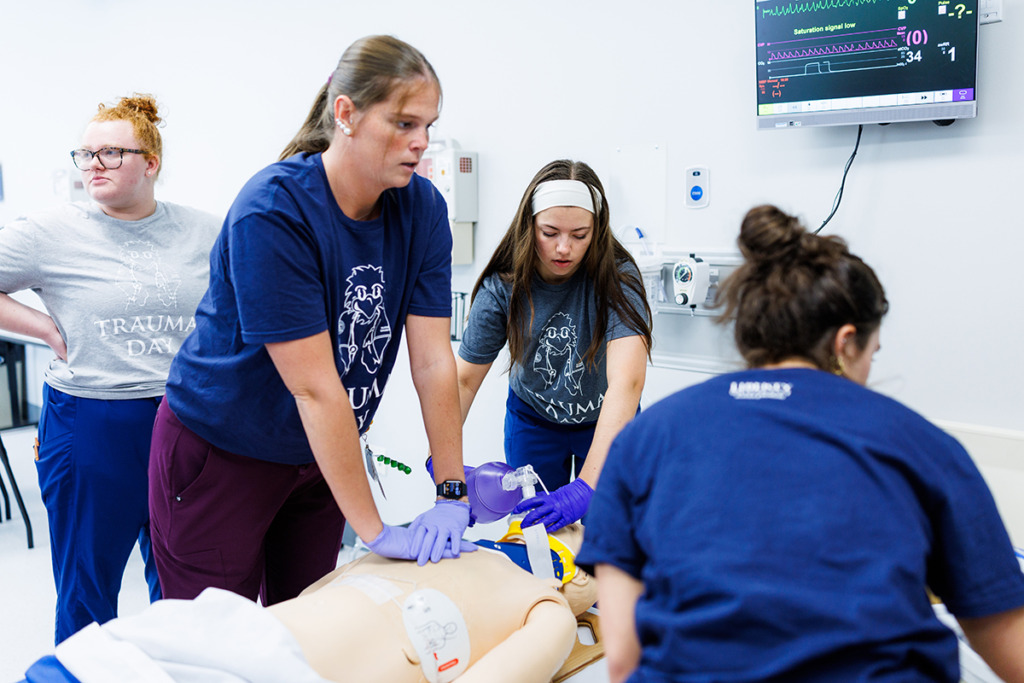
The reality of the nursing field is that each shift is a series of addressing unknown and challenging circumstances and patients from room to room, and Liberty University’s School of Nursing seeks to simulate that truth in its annual Trauma Day experience.
On Nov. 12, 27 senior nursing students engaged in five different scenarios of medical trauma during the event. Gathered in the simulation center, they applied their skills to treat simulated patients in an environment close to what they’ll find in their ensuing careers.
“As nurses, we never know what is (behind) that door,” said Dr. Lisa Foote, Executive Director of Simulation for LUSON. “We know what the chart says, but that’s not always what you encounter in the room. We want them to be able to experience that and handle those situations appropriately.”
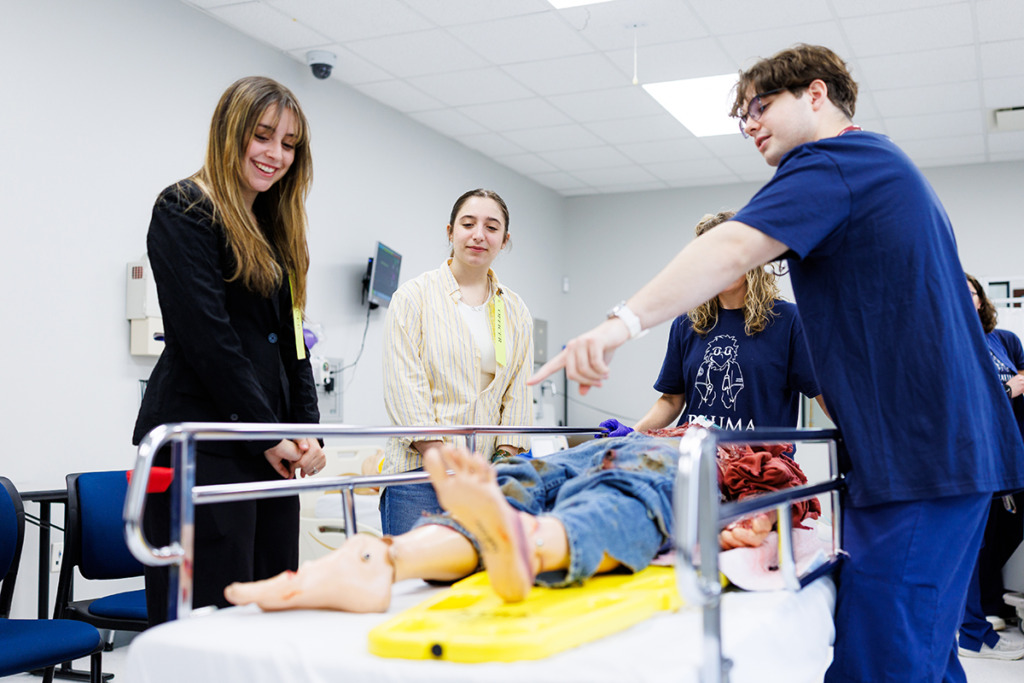
The experience was an interprofessional event (or IPE) one of multiple for nursing students held each year — in which Liberty students from programs outside of nursing join LUSON’s simulations and perform their professional roles within the context of the given scenarios. For last week’s Trauma Day, students from Liberty’s Social Work and Criminal Justice programs performed the roles of other professionals who would be called on in a real-life situation.
The day began at 8 a.m. with breakfast and a PowerPoint briefing on the patients’ backgrounds and conditions. The details of the simulation are kept confidential until the briefing (and after the day is over), so the experience can be as effective as possible for future students.
The patients within the scenarios spanned different age groups and life situations, each presenting a new challenge. Lindsey Miller, a senior in the critical care program, said she was “taken aback” by the lengths the simulation team and LUSON faculty went to in making the scenarios as realistic as possible and is grateful to have participated in the simulation before graduating in December.
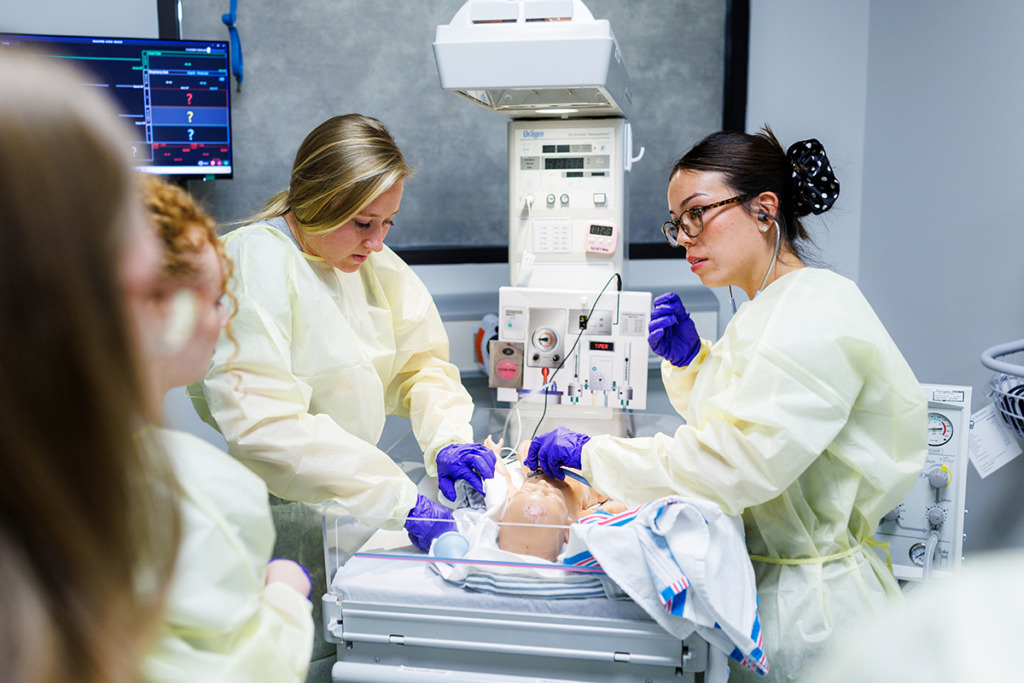
“These were situations that I’m really happy I at least have a little bit of background to pull from now, to know at least what to expect if a situation like it arises, seeing that a lot of the simulations were emergency critical care-based,” she said. “Liberty has great technology and a great simulation team, and they were able to make that happen for us.”
The students participating in Trauma Day are all pursuing their Bachelor of Science in Nursing and represented the different certification programs offered within the degree: acute care, advanced strategies for the critically ill, and advanced critical care. They shared their specialty nursing knowledge during the simulations, demonstrating how the different areas of focus can overlap and inform one another.
“All of those simulations allowed each certificate program to really show their strength and teach the other students who maybe didn’t know those skills that they had,” Miller said. “I don’t think I would have learned the scenarios that I did outside of Trauma Day before I actually became a nurse.”
Miller said the social work and criminal justice students were an “incredible” addition to the simulation environment as she got to interact with their services just as she would for a real patient.
“In the nursing-only simulations, we’ll just verbalize that we would call social work or (other services), but they’re not actually there,” she said. “To see what those students in social work and criminal justice can provide, and to see them in their roles and doing them really well was awesome. They were so helpful; we could just focus on our patients and they could take care of the things more in their realm.”
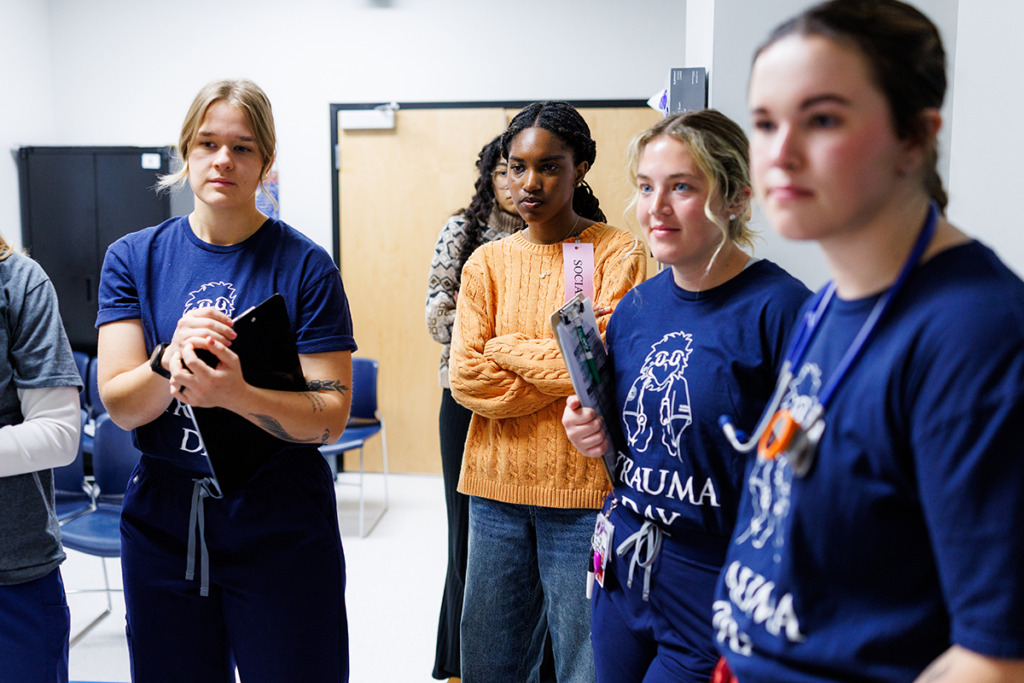
“Our saying is that they are learning about each other, from each other, and with each other,” Foote added. “We want them to know that it takes a team to take care for any patient. And not only are the students learning from each other in these IPEs, but the faculty, who are trying to make sure our students get the best learning experience, are learning from each other too about these disciplines.”
In the debriefing session that afternoon, the students and instructors further discussed the ethics of the situations they faced and the ultimate calling for students in all three fields to address the needs of those they serve with Christlike compassion.
“The instructors from all disciplines did a very good job of bringing us back to a biblical worldview and how to approach these difficult situations, which I’m really grateful for,” Miller said. “At the end of the day, it’s our duty to care for them to the best of our ability, and we have a very special role as nurses where we’re able to put that aside and just focus on their physical needs, spiritual needs, and emotional needs. That’s a special opportunity that not a lot of professions have.”