Seminary students earn honor of presenting research on Shroud of Turin, Book of Esther, 2 Chronicles at ETS meeting
May 11, 2026 : By Christian Shields - Office of Communications & Public Engagement


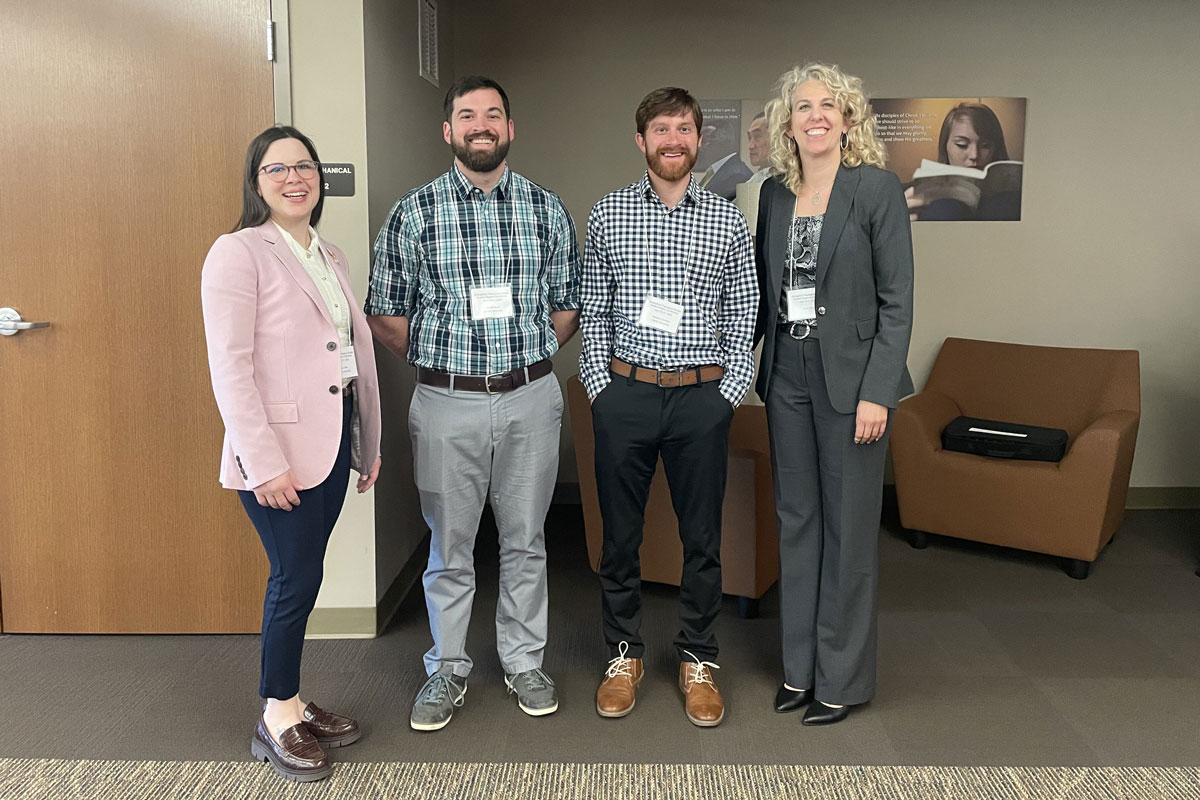
Three Liberty University Theological Seminary doctoral students were selected to present research at the 2026 Evangelical Theological Society Eastern Regional Meeting at Lancaster Bible College in April, showcasing their high-level scholarship at the postgraduate level.
In all, six doctoral students were chosen to present out of 32 accepted papers.
Joseph Dennis, who is pursuing a Master of Divinity, received the first-place prize for the graduate-level research competition with his paper, “Seized by the Agony of Death: Theological Interpretation of Faith in the Septuagint of Esther and Daniel,” but invitations to present papers were reserved for doctoral students.
For Mary Antal, who serves as a graduate student assistant for Professor Dr. Gary Habermas, the event provided her the opportunity to share her research on palynology (the study of pollen and spores) in relation to the Shroud of Turin, the famous piece of fabric believed by many to be Jesus’ burial cloth. Habermas is a recognized apologist and expert on the death and resurrection of Jesus Christ and has provided his expertise for multiple publications and documentaries about the Shroud of Turin.
Antal’s paper originally began as a class assignment but quickly evolved into more in-depth research after Habermas encouraged her to continue studying the topic. She estimates spending over 300 hours researching the carob tree (commonly associated with John the Baptist) and the Judas tree in relation to the presence of pollen residue on the Shroud of Turin. Through analyzing previous research on pollen samples from the cloth, Antal aims to verify the cloth is originally from 1st century Palestine.
“It was crazy to present something I knew hadn’t been done before and send it off into the world,” said Antal, who is pursuing a Ph.D. in Theology and Apologetics. “It’s been so well-received, not just here at Liberty but so far in academia as well.”
“By the time December came around and submissions were open, I felt like I had the school surrounding me and the support of the seminary professors,” she added. “I wasn’t worried about not getting in (to present at the meeting); it was more about realizing that I had not only made it in scholarship, but I had grown as a researcher. It was this experience of seeing the fruit of my labors, pun intended. It was so humbling to see where it started as this lightbulb moment and have the support all the way through it from my family too, and to show them the sacrifice was not for nothing.”
Corey Rugh, who is pursuing a Ph.D. in Biblical Studies, presented his research on the Septuagint account of Esther. Like Antal, he also completed his research originally for a class and was prompted to submit his paper at the suggestion of his professor, Dr. Jillian Ross, who served as his faculty advisor.
“Being selected for ETS is a testament to the faculty we have at the School of Divinity and the Liberty Theological Seminary,” Rugh said. “It’s a big blessing to be able to support such a caring and loving university where we have professors who aren’t so caught up in their own work. They are all very busy people in their own careers and what they do, but they are so caring and focused on students and making sure they also are pursuing their goals and desired dreams in what God has called them to do.”
Rugh said continuing his biblical research on the Septuagint, the Greek translation of the Old Testament which would have been the version read and studied by many Israelites, has allowed him to understand that many New Testament heroes of the faith understood Scripture. While presenting at the regional ETS meeting, he had the opportunity to discuss his topic with an undergraduate Lancaster Bible College student. This encounter allowed Rugh to further flesh out his work in a slightly less academic context and share the important role his research plays in Christian studies.
His research has also been accepted to the Society of Biblical Literature annual meeting in Denver, Colo., in November.
“For me, it’s a really good opportunity to understand how God is working in all of these very high-level studies and how they can funnel down and lead to questions you didn’t expect in conversations on the importance of what we do in studying God’s Word,” he said. “It’s very encouraging to be used by the Lord to have those conversations and just to be able to have honest conversations about the Word of God, to dive deeply into it and encourage others in that field and that area.”
Ross also served as faculty advisor for the other presenter, Stephen Cooksey, who is pursuing a Ph.D. in Biblical Studies and presented on his work, “The Contradictory Chronicler? The Nature of a True Davidic Kings in 2 Chronicles.” Cooksey explored the characteristics that qualified a king in Israel to be designated a “king like David” according to the author of 2 Chronicles.
“(These presentations are) wonderful for the school because it shows the type of student Liberty is producing: somebody whose head, hand, and heart are integrated,” Ross said. “We have students at the Ph.D. level who are decidedly evangelical and producing academic rigor for the church and the academy.”