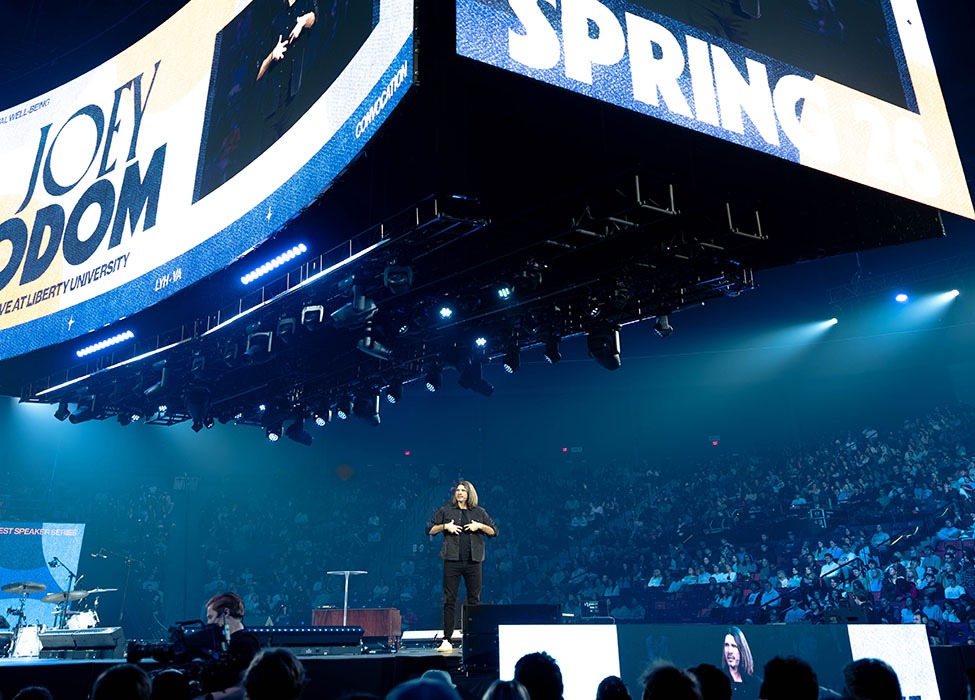
After a weeklong pause of Convocation due to snow, Liberty University students returned to the Vines Center Jan. 30 to hear from speaker, writer and tech co-founder Joey Odom, who gave the challenge to reconsider their relationship with their phones and embrace digital rest.
Odom, who focuses on digital wellness, gave a timely message as Liberty prepares for a monthlong digital rest initiative in February, encouraging students to reflect on how technology shapes their spiritual lives, relationships and daily habits.
“This is about an unbelievable opportunity that all of us have to live fruitful lives on the other side of our phones,” Odom said.
Odom emphasized that distraction is not a modern issue but one that has existed for centuries. Referencing “The Screwtape Letters” by C.S. Lewis, he pointed to the subtlety of temptation and how it often works through seemingly harmless means.
C.S. Lewis wrote, “Murder is no better than cards if cards can do the trick,” a quote that Odom used to illustrate how distraction can be just as effective as apparent sin.
“Satan’s goal is to separate us, our mind, our will, our intentions — everything you do, he wants to separate us from God,” Odom said.
Rather than relying on obvious temptations, Odom said distraction is the enemy’s primary tool today.
“The greatest threat to the fruit we want in our lives — the lives that God has called us to — it’s not capital S sins,” Odom said. “It is the world of distraction in our phones.”
Odom turned to the Parable of the Sower, focusing specifically on the thorns that prevent the seed from producing fruit. He explained that the parable includes four main elements: the ground, which represents people’s lives; the seed, which represents God’s Word; fruit, which reflects the seed’s potential; and thorns, which threaten that potential.
“For us today, these are not physical thorns, these are digital thorns,” Odom said.
The first thorn Odom addressed was the worries of life, which choke out joy. He explained that constant exposure to information, notifications and anxieties through screens can overwhelm believers and crowd out peace.
The second thorn, the pleasures of life, is not always rooted in obvious vices, Odom explained. Instead, it often involves the desire for constant stimulation or escape from loneliness, boredom or anxiety, ultimately choking out our sense of presence.
The third thorn, the deceitfulness of wealth, is not about money itself but the story money tells. Odom said this thorn chokes out truth.
Together, these thorns prevent the seed from becoming fruit. Odom reminded students that Scripture places a significant emphasis on fruitfulness.
“Fruit is one of these major themes of the Bible that passes right by us without us even noticing. There are over 300 references to fruit, fruitfulness, unfruitfulness,” Odom said. “Fruit is the result or reward of work or activity.”
He emphasized that while the seed is not yet fruit, it carries promise.
“The seed represents the potential of something that could be greater later,” Odom said.
Odom described how thorns grow by taking over space to steal sunlight and nutrients but also by slowly wrapping around healthy plants until they choke them. He noted how choking is not a sudden death but a slow process, mirroring how digital distractions often operate unnoticed over time.
Students were reminded that digital thorns surround them daily and have the power to choke out every good thing in their lives if left unchecked. He pointed to Luke 8:15 as a reminder that perseverance and intentionality can produce fruit.
“The digital thorns don’t have to overgrow in our lives,” Odom said. “Left unchecked, our phones will — not if — will become thorns and they will try to choke out every good thing we want in our lives.”
The central challenge of the message was summarized into one statement: “Before they attack, I must prune the thorns back.”
Odom encouraged students not to approach the digital fast alone, emphasizing the importance of accountability and community. He challenged them to consider who they could join during the monthlong fast.
As a practical takeaway, Odom urged students to live differently by developing daily habits of stepping away from their phones.
“Don’t bring thorns to a fruit party,” Odom said.
He also challenged them to look different than the world, referencing Matthew 5:16 and encouraging students to put phones away in lines and restaurants. Odom said slowing down and looking up is a tangible way to see, know and love others like Jesus.
As students left the Vines Center, Odom’s message lingered as both a challenge and an invitation to prune back digital distractions and pursue a life marked by fruitfulness, presence and intentional faith.
Clardy is the off-campus news editor for the Liberty Champion.