Liberty Department of History hosts America 250 conference highlighting nation’s founding and Revolutionary War legacy
April 20, 2026 : By - Office of Communications & Public Engagement


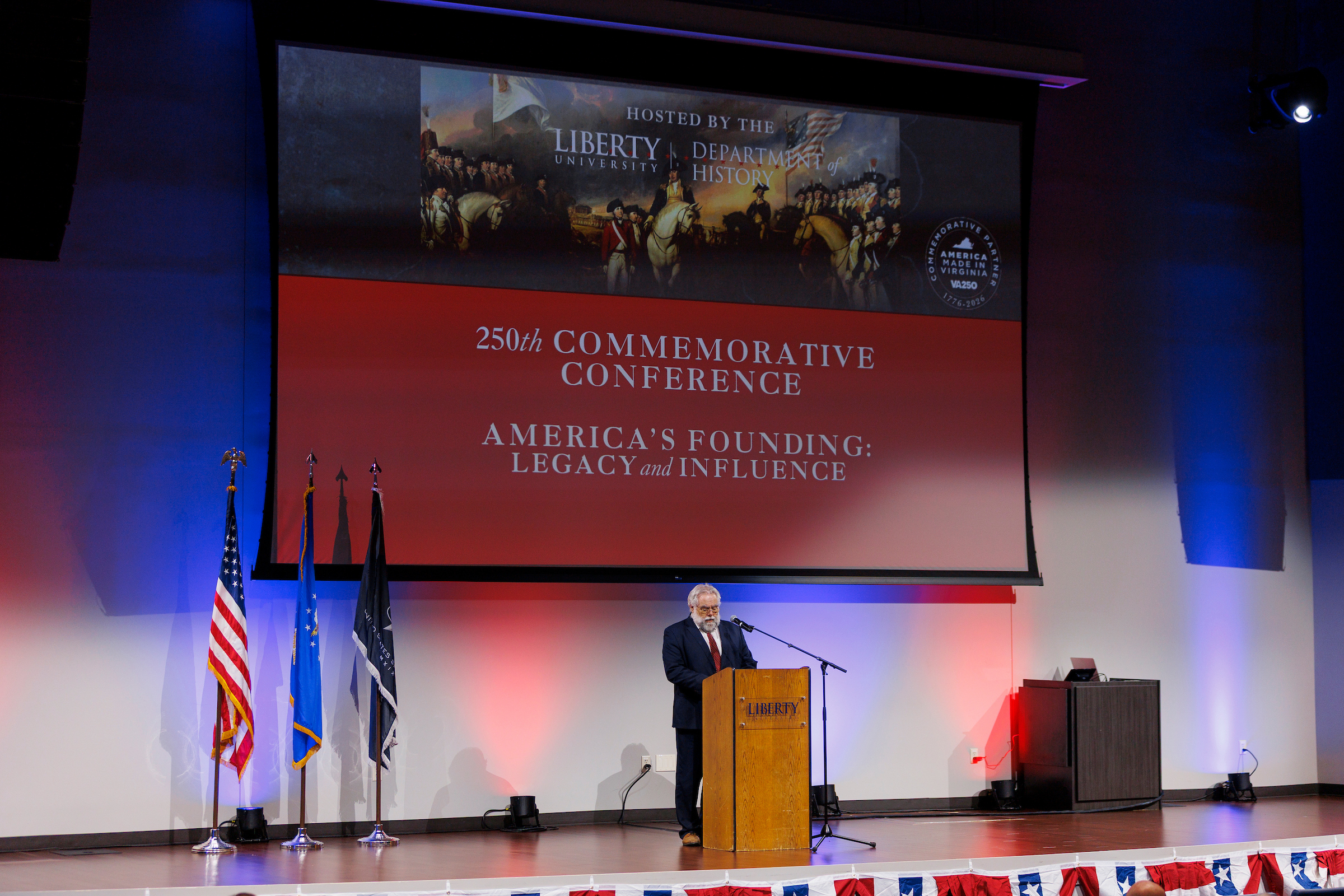
As Liberty University continues its celebration of America’s 250th anniversary, the Department of History hosted a two-day academic conference titled “America’s Founding: Legacy and Influence” on April 17-18, bringing together scholars, speakers, and guests to examine how America’s Christian founding continues to impact the world today.
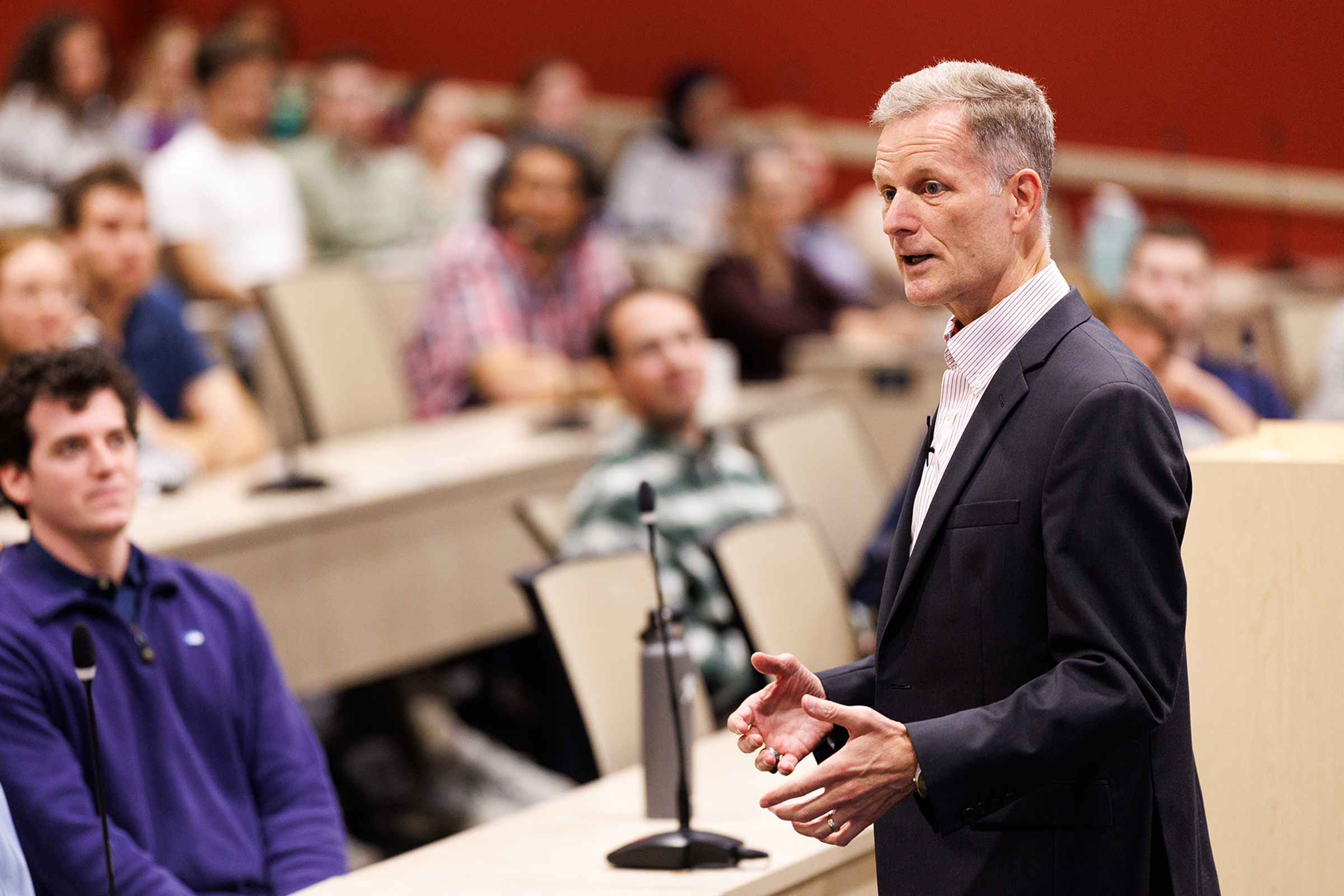
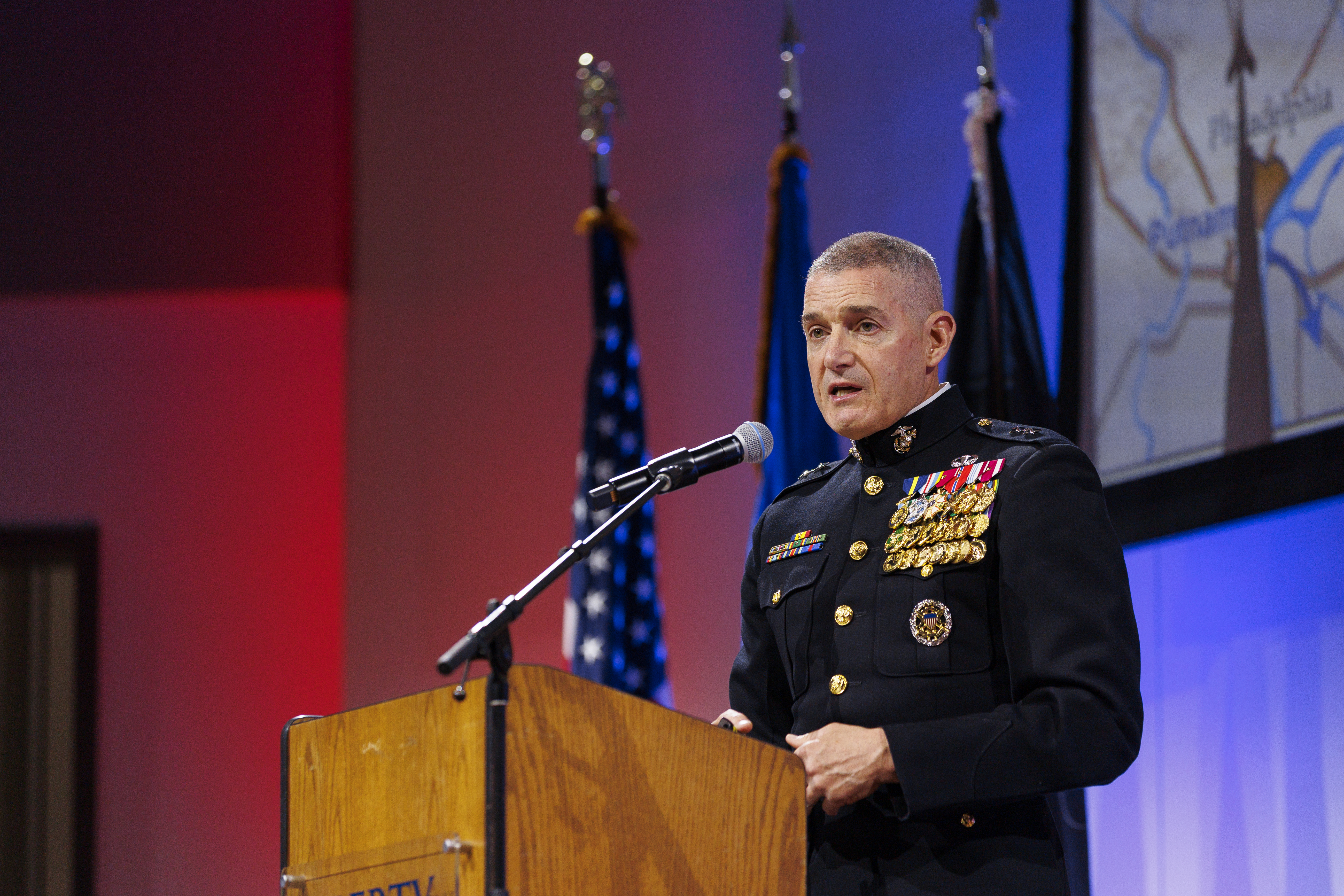
Helms School of Government Dean Maj. Gen. Jason Q. Bohm, USMC (Ret.), headlined the conference as the keynote speaker on Friday, giving an inspirational talk on the origins of our nation’s earliest military division — the Marine Corps — and how it played a crucial role in America’s victory in the American Revolutionary War.
The conference, which included three plenary sessions and research presentations by dozens of residential and online history students, was one of Liberty’s many celebratory events honoring America’s birthday and Christian heritage. Among the participating students was online PhD history student Andrae Henderson, who flew to campus from Okinawa, Japan, to present her research paper.
“The Liberty University Department of History is grateful for the strong participation and scholarly engagement that made this a successful and timely conference commemorating the 250th anniversary of the nation’s founding,” said Dr. Samuel Smith, Department of History chair and graduate program director. “Through dynamic panels and papers, students and faculty explored the Christian origins, global context, and enduring legacy of our great country.”
Bohm is the author of “Washington’s Marines: The Origins of the Corps and the American Revolution,” a comprehensive history guide endorsed by renowned historian David Hackett Fischer that details the birth, leadership, and operations of the Continental Marines, a small yet powerful force that helped turn the tide in America’s brutal yet necessary fight for independence.
“The King of England and Parliament had no intention of providing us with our God-given rights, so we would have to fight for freedom and liberties just as David fought Goliath, Moses confronted Pharaoh, and Joshua led his people to fight for possession of the land that God promised them,” Bohm said, noting that America had yet to exist as a unified nation equipped with a national army. “America, too, which at the time consisted of 13 independent colonies, would need to fight for the lands they felt God had provided to them. But in doing so, they would be taking on the most powerful military force in the world.”
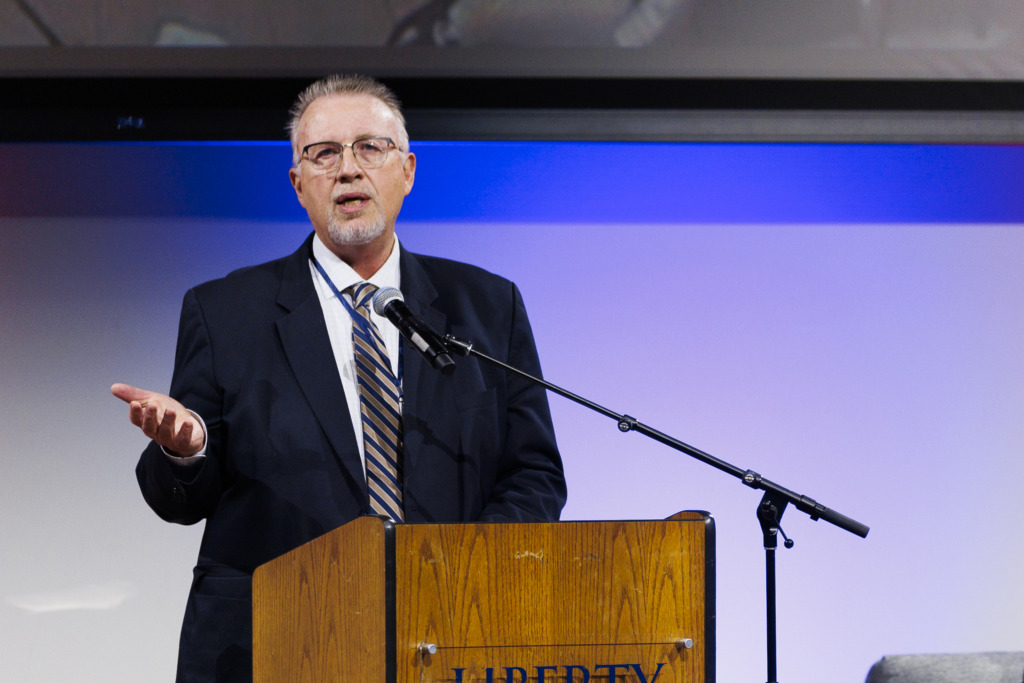
“I think that many of you are familiar with the honorable service, selfless sacrifice, and warfighting powers of today’s United States Marines,” Bohm added. “But very few know about the Corps’ humble beginnings and how, like our brothers in the Continental Army, Navy, state militia groups, and privateers, it contributed to the winning of our nation’s independence and the preservation of our freedom.”
Bohm outlined how the patriots leveraged America’s maritime environment to thwart British operations on the coastline, lakes, rivers, and canals. He reminded attendees that America’s adversaries needed to travel 3,000 miles across the Atlantic Ocean to support British soldiers stationed in America, a time-consuming, expensive, and dangerous process.
Bohm said the British Army and Royal Navy sought to occupy the West Indies (Caribbean), southern colonies, and near what is now the state of Maine to streamline merchant deliveries for their troops. The Battle of Machias (then part of the Province of Massachusetts Bay) on June 11-12, 1775, was the first naval engagement of the Revolutionary War, resulting in a significant victory for the Americans after they captured several British merchant vessels. That victory and the subsequent naval encounters, Bohm said, proved to George Washington that foot soldiers alone could not overcome the world’s most powerful military unit.
Saturday morning’s plenary session featured Smith and Ryan Helfenbein, Standing for Freedom Center executive director. The two-part session was titled “Baptists and Religious Liberty in America.”
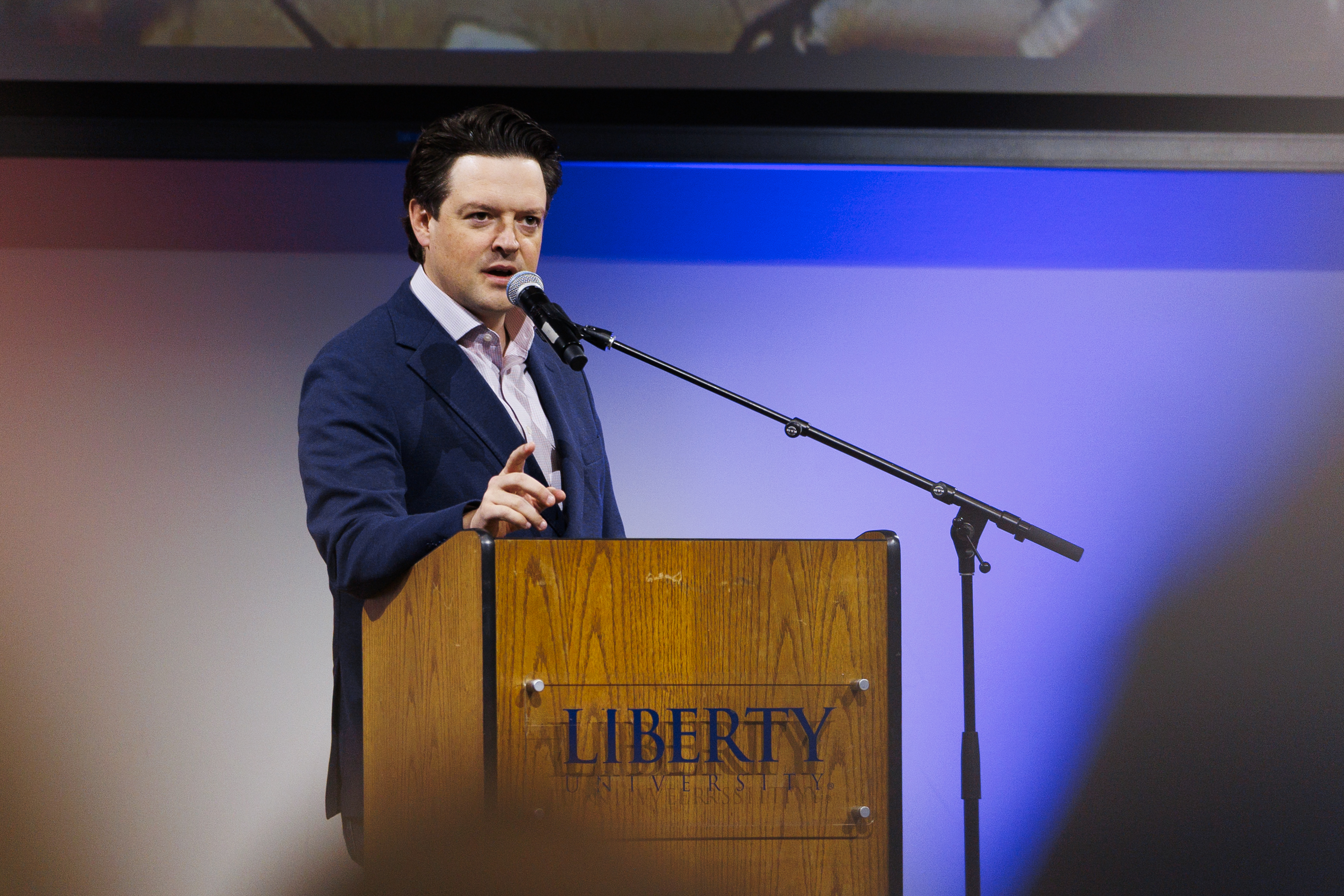
Smith, an expert on early American church history, focused on religious liberty and the history of early English Baptist groups, churches, and influential figures like ministers Isaac Backus and John Leland. He also addressed the persecution of Baptist minister James Ireland, who was imprisoned at the age of 21 for preaching without episcopal sanction.
“These Baptists demonstrate that true religious liberty is essential to a republican form of government,” Smith said. “This is the Baptist legacy in our nation’s founding. May it continue for the glory of God.”
Helfenbein then presented on the popular myth that America had a secular founding and on how progressive beliefs have sought to rewrite history apart from Christendom. The Standing for Freedom Center at Liberty champions the Christian faith and defends the Constitution, and Helfenbein leads the center’s weekly “Give Me Liberty” podcast, where he tackles a wide range of topics regarding the intersection of faith and cultural engagement.
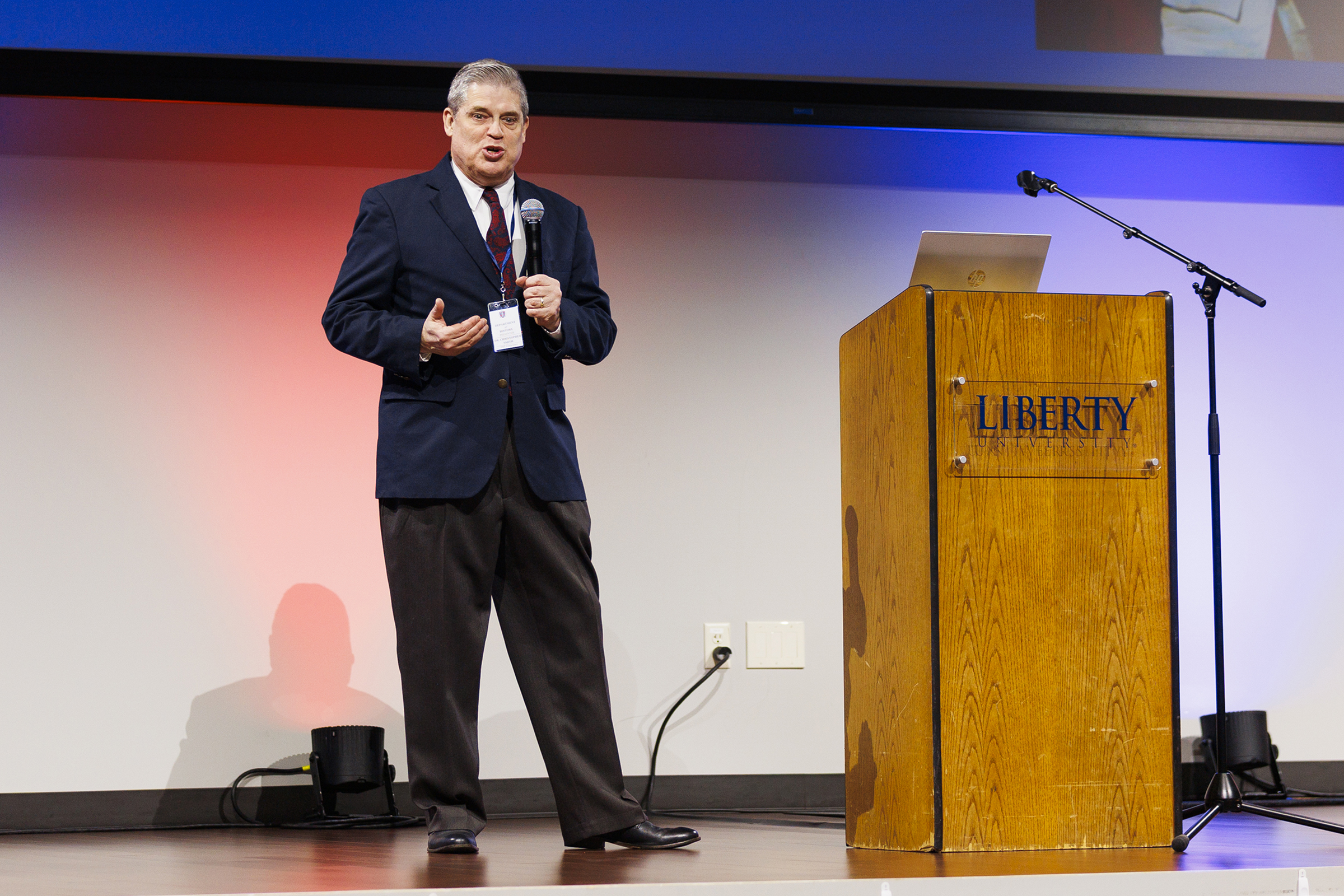
Helfenbein reminded the audience that neutrality, which insists that the state must remain morally neutral and cannot favor any one ethos, is a myth. He compared how the varying ideologies permeating today’s culture, like abortion and gender ideology, conflict with the biblical interpretation of life and gender. He also emphasized the importance of holding to the Christian faith and recognizing its vital role in building America.
“(The) Gospel is the faith that founded this country and is still important today, and I think that is what makes America truly great,” Helfenbein said. “While many progressives have made these revisions in history, the sad and tragic reality is that many Christians have cosigned to it, under the same beliefs, out of fear of being ostracized or marginalized in the academy and in the hallowed institutions. Fear of man can be credited for this bullied consensus of secular progressivism, and we must stop it.”
In Saturday’s afternoon plenary session, titled “The War for America: The Revolutionary War as a Global Conflict,” Associate Professor of History Dr. Christopher Smith discussed how the war for independence changed the world, particularly from the perspectives of Britain, France, Spain, and Russia.
“The American Revolution presented to the Western World what was possible in challenging the established order of that day and age,” Christopher Smith said. “The Americans had put together an army of citizens who fought for the political ideal, the cause of independence. This was a war of political ideals, and then the people’s representatives drafting and implementing constitutional government.”
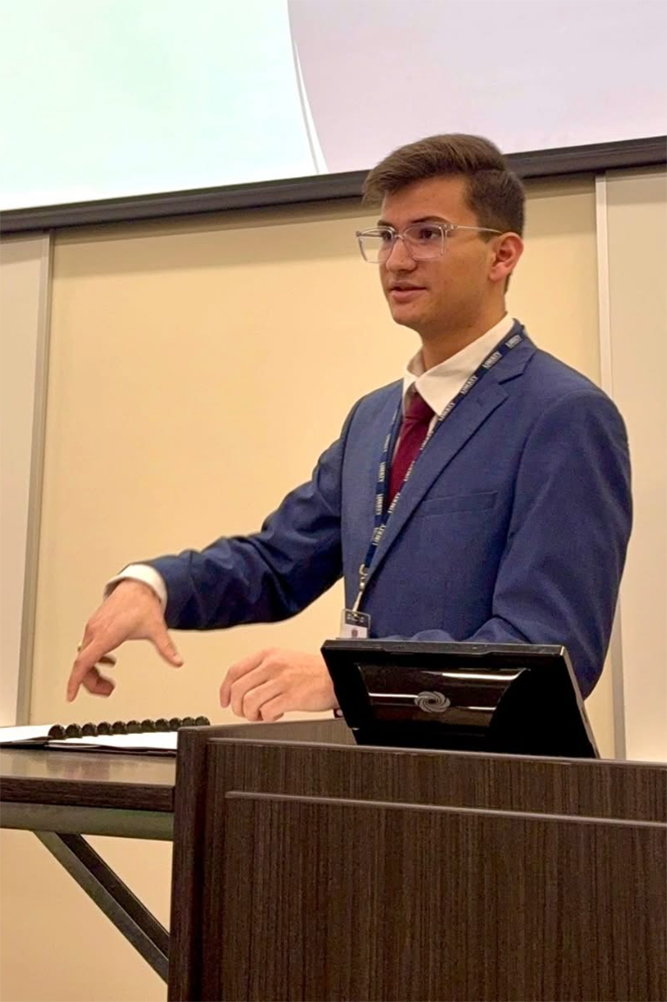
He said it served as inspiration for the French Revolution, the Latin American revolutions, and other similar movements into the future, some of which dispersed Western values to many areas of the world.
“All countries in Europe were very interested in the outcome of America’s struggle for independence,” Christopher Smith said. “All of this is taking place at the time of the Enlightenment, a very mixed bag for Western civilization. It is an intellectual movement that is questioning everything, like divine-right monarchy, hereditary aristocracy, state churches… Virtually the whole structure of European civilization is under fire from the Enlightenment intellectuals.”
The ways in which people govern themselves was a main discussion of the Enlightenment, he said, among both intellectuals and growing European public opinion.
Americans, and the writings of Thomas Paine and Thomas Jefferson in particular, which were steeped in Enlightenment ideals, proved formative in changing perspectives on a global scale. Benjamin Franklin, who was often regarded as a “frontier philosopher” for applying pragmatic, Enlightenment ideals to improve daily life in colonial America, embodied a new society based on liberty and equality. To gain French support during the American Revolution, Franklin said, “Our cause is the cause for all mankind, and that we are fighting for their liberty in defending our own.”
“The American Revolution ideology is this fascinating amalgam of biblical teachings, Christian principles, (and) a little English radical whiggery sprinkled in, so the Enlightenment idea is quite the intellectual and philosophical fruit salad,” Christopher Smith said. “Europeans read the writings of the American founders with great interest and asked, ‘How can we make this work for us?’”
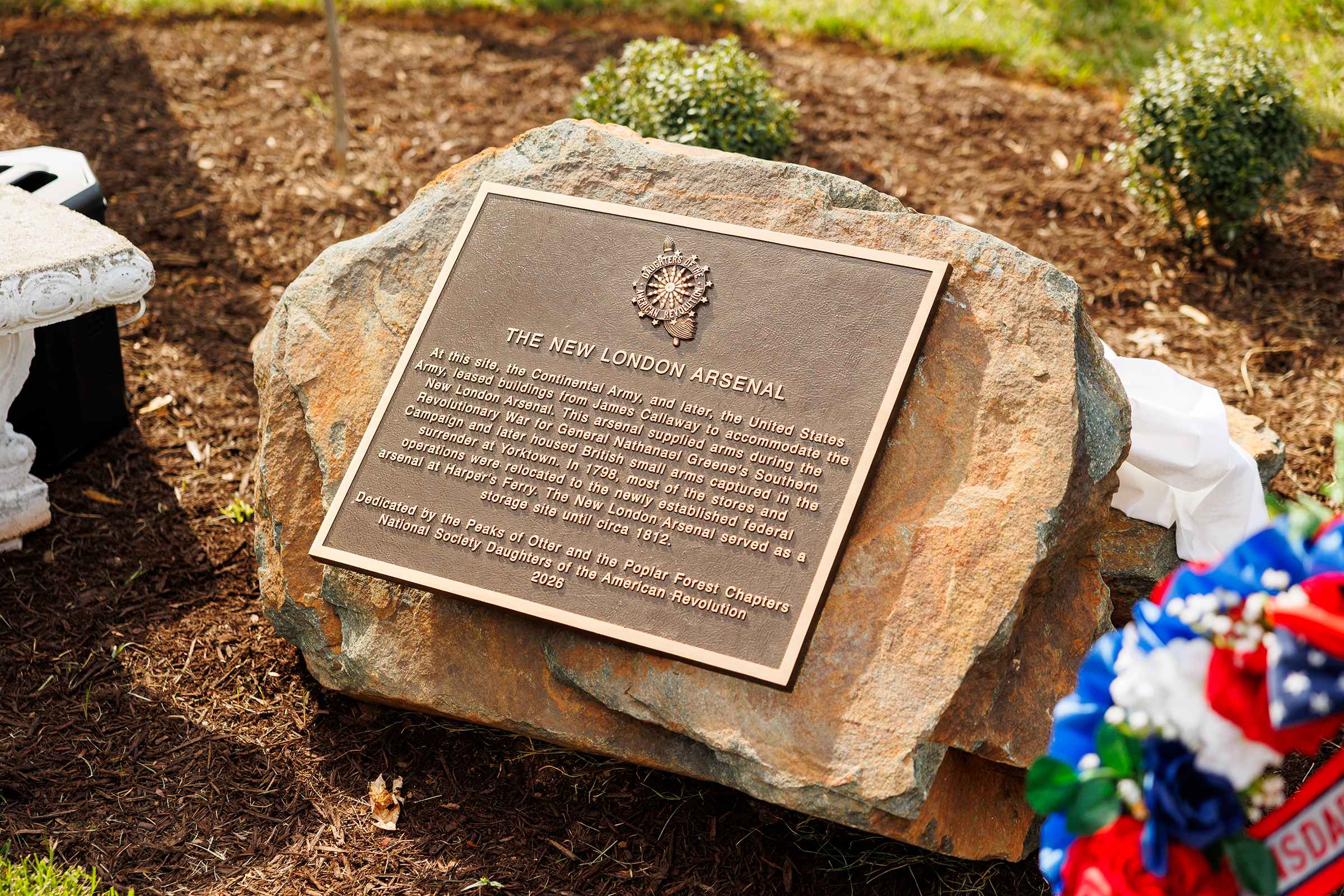
Prior to the conference, Liberty’s Department of History joined local historians and members of the local chapters of the Daughters of the American Revolution on Friday afternoon to dedicate a historical marker recognizing the site of a Continental Army arsenal located on the university-owned property of the old Bedford Alum Springs Hotel in the historic town of New London. The property has been an archaeological lab for Liberty’s students and faculty since it was purchased in 2018, and the discovery of the arsenal was made during students’ involvement.
The ceremony was part of the VA250 movement commemorating the 250th anniversary of the American Revolution, the Revolutionary War, and the independence of the United States in Virginia. Liberty’s Department of History is an official commemorative partner of VA250.