School of Health Sciences welcomes guest lecturers from Johns Hopkins University for sessions on pediatric trauma, value-based care
April 16, 2026 : By Ryan Klinker - Office of Communications & Public Engagement


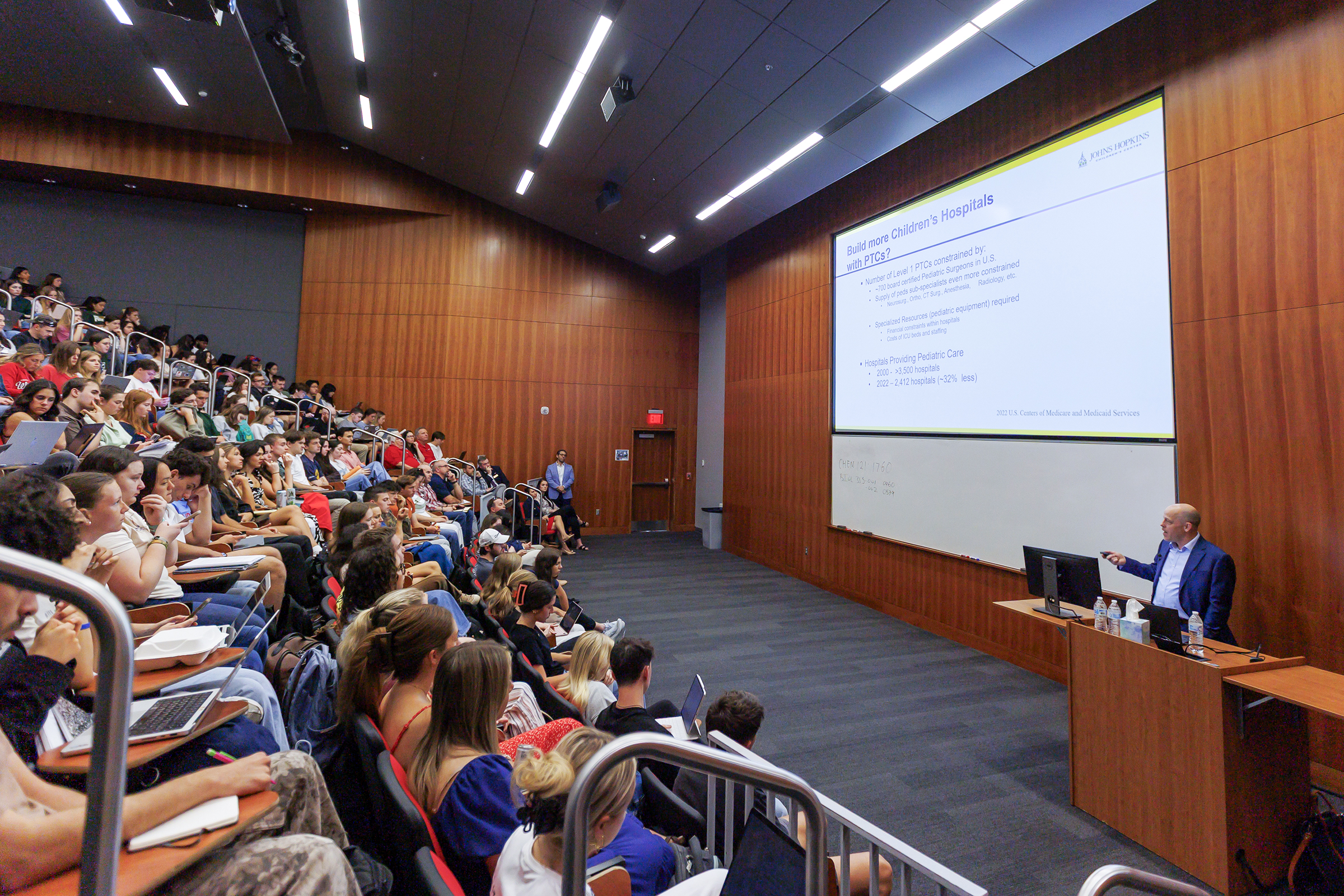
On Monday, students from the Liberty University School of Health Sciences attended lectures by Johns Hopkins University professors about ongoing research and potential healthcare reform.
Dr. Mark Slidell, an associate professor of surgery at Johns Hopkins, delivered a Grand Rounds lecture in the morning. In addition to his academic role, Slidell serves as Associate Chief of Health Services Research and Clinical Integration in the Division of General Pediatric Surgery at Johns Hopkins Children’s Center and as associate program director for the center’s pediatric surgery fellowship training program. His clinical practice spans the full breadth of general pediatric surgery, and he is recognized nationally for his expertise in hepatobiliary diseases, foregut surgery, chest wall deformities, and pediatric trauma. His health services research focuses on improving clinical outcomes and addressing health disparities in pediatric surgery, particularly regarding pediatric trauma care. Slidell is the author of dozens of peer-reviewed manuscripts and book chapters, and he is the editor of the surgical textbook “Difficult Decisions in Pediatric Surgery.”
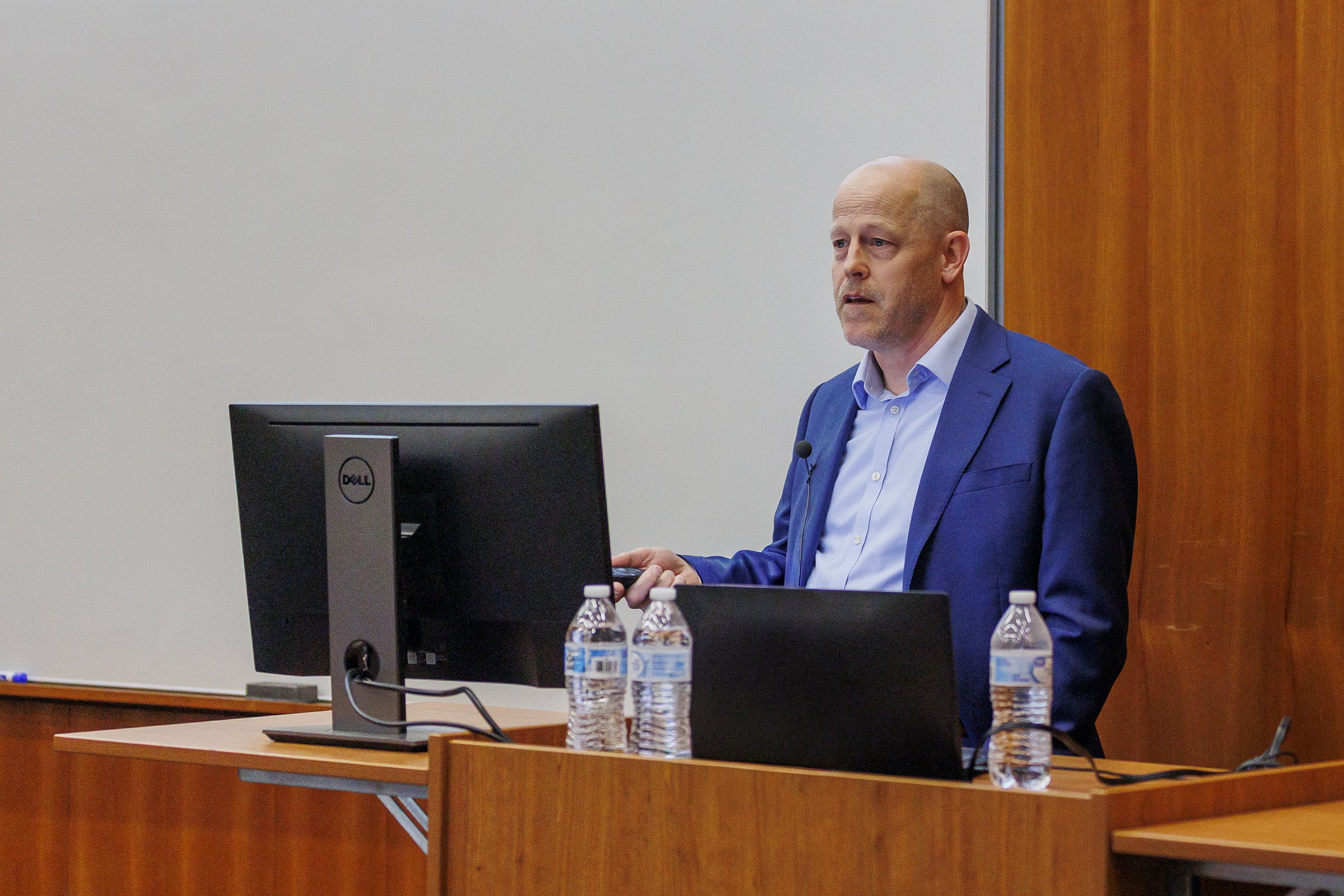
Slidell’s lecture focused on the health disparities in pediatric surgery, which are especially evident for pediatric trauma patients. After he witnessed multiple children pass away due in part to a lack of pediatric trauma response care, he made the topic a specific area of research interest, and he began looking into the “trauma deserts” of his local area at the time (Chicago) and later at the state and national levels. Trauma is the leading cause of death and disability in childhood, and yet Slidell found that nearly 50% of children in the United States live over one hour (by air or road) from a certified pediatric trauma center (PTC) with trained staff and specialized equipment. The number of pediatric beds in hospitals are decreasing, likely due to the added costs and space they require, he said. Of the 30,000 general surgeons in the United States, only 700 are pediatric surgeons, and only around 100 are focused on pediatric trauma.
“Pediatric Trauma Centers make a difference; there is real value in having them,” he said. “We need that specialized care because children are different, in their different anatomy and physiology, and they need these specialized resources.”
Slidell presented the potential solutions of increased collaboration across trauma centers within states and between neighboring states, a defined “pediatric” age cutoff on a national level, increased state readiness through more concrete guidelines, and more preparation for non-PTCs to treat pediatric patients. He identified 11 “high priority” areas and 49 “priority” areas around the U.S., taking into account the number of children in a given area and the number of prepared trauma centers in the area.
Dr. Chen Dun, a research associate in the Department of Surgery and core faculty in Biomedical Informatics and Data Science at the Johns Hopkins University School of Medicine, delivered an afternoon lecture. She teaches courses in biomedical informatics, clinical decision analysis, and research methods and works with trainees and collaborators in their School of Medicine and the Bloomberg School of Public Health. She has also authored more than 60 peer-reviewed publications. Dun’s research uses large-scale real-world data — including Medicare claims, electronic health records, and clinical registries — to study variation in practice patterns, comparative effectiveness, and patient outcomes.

Dun’s guest lecture elaborated on her ongoing research into value-based care, a model of healthcare that rewards providers with incentive payments for improving patient health outcomes, enhancing the quality of care, and lowering costs, usually through preventative care, chronic disease management, and reducing hospitalizations. She also spoke at length about biomedical informatics, the interdisciplinary field that studies and implements the acquisition, storage, retrieval, and use of data, information, and knowledge in biomedicine and healthcare to aid decision-making. As an example of both value-based care and biomedical informatics, she used a plethora of data to talk about treatments for patients with claudication, a muscle pain; cramping; or fatigue triggered by activity and relieved by rest, typically signaling peripheral artery disease (PAD) due to poor circulation.
Following the lectures, each speaker answered questions from Liberty students.
Both professors are involved in a partnership between Johns Hopkins University and the Liberty University School of Health Sciences in which three Liberty Master of Public Health students are selected to participate in a yearlong fellowship to learn about healthcare policy reform from leading researchers and advocates. Slidell and Dun expressed admiration for the dedication and work ethic they’ve witnessed in Liberty students.
“It has been wonderful to work with the Liberty students, it’s really been fantastic,” Slidell said. “We have bright students that we get to work with, and it’s rewarding, fun, and inspiring to see these minds who will be our future. These will be the people who will help develop our future healthcare systems and make an impact on my children’s lives someday.”
“The students have had some barriers in front of them, such as working remote, but they have worked very hard and put in a lot of effort to make it happen,” Dun added. “They attend all the events, driving hours at a time, and they are so eager to learn. It is very impressive.”
The fellowship’s principal investigator, Dr. Caitlin Hicks, an associate professor of surgery at Johns Hopkins University School of Medicine, gave a grand rounds lecture to Liberty students last spring and accompanied Slidell and Dun to campus on Monday.
“Welcoming faculty from Johns Hopkins underscores the strength of our academic partnership and our focus on outcomes-driven education,” said Dr. Heidi DiFrancesca, dean of the School of Health Sciences. “By engaging with nationally recognized experts addressing pediatric trauma and value-based care, our students gain both perspective and preparation to lead in a rapidly evolving healthcare system.”