Nursing alumni provide lifesaving care as Mercy Ships volunteers
April 10, 2026 : By Ryan Klinker - Office of Communications & Public Engagement


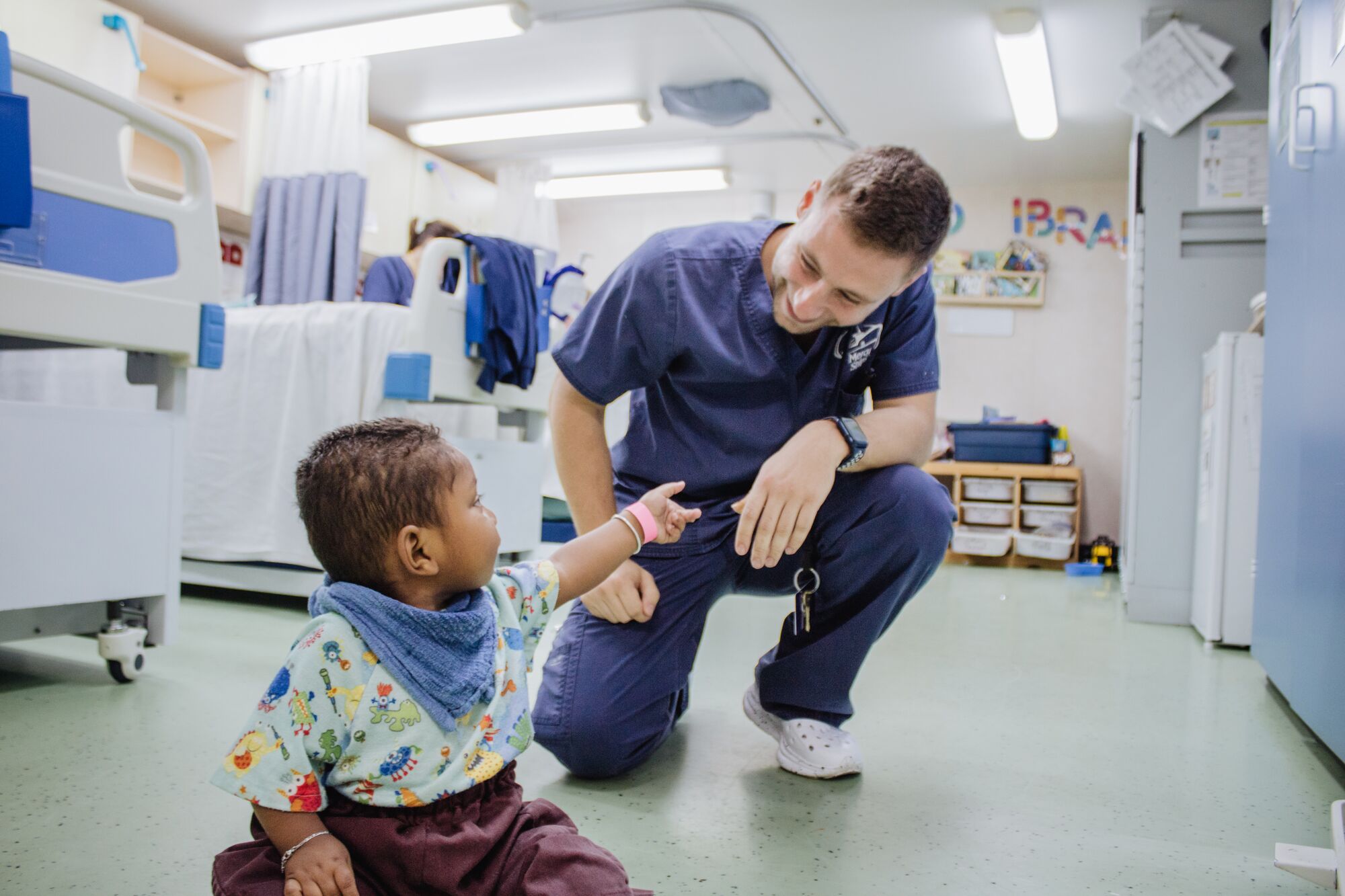
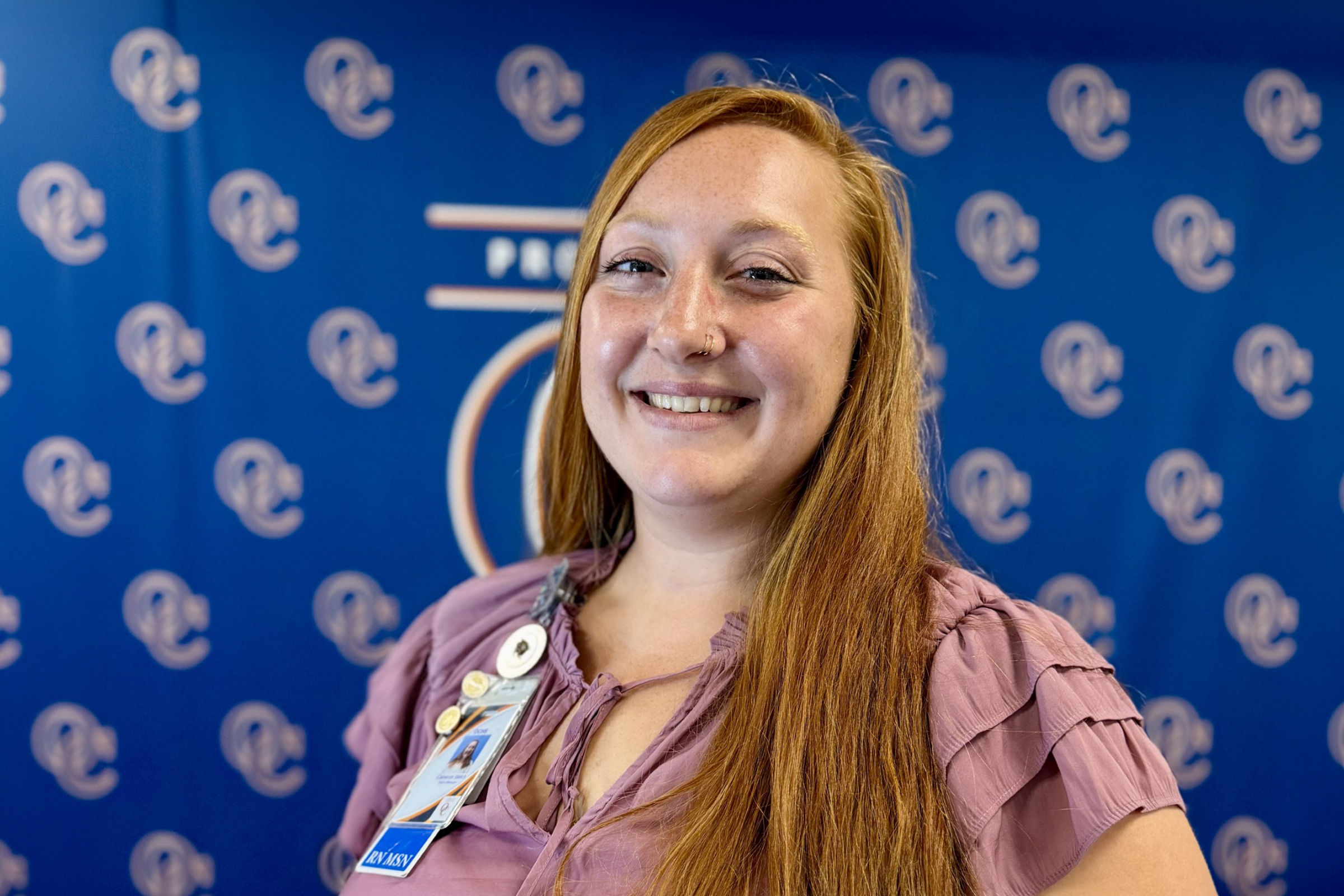
After being trained to be the hands and feet of Jesus as Christian nurses, Ellee Rollins (’15) and Cole Allgood (’22), graduates of the Liberty University School of Nursing, are bringing surgical care to parts of the world where it’s needed most as volunteers with the nonprofit medical missions organization Mercy Ships.
Since 1979, Mercy Ships has brought hospital ships into the ports of countries with scarce medical resources and limited access to surgery. Workers spend months or years performing a variety of free, life-altering procedures for those in need. The ships are filled with state-of-the-art medical equipment and a volunteer crew of doctors, nurses, medical staff, technicians, teachers, physical therapists, and others.
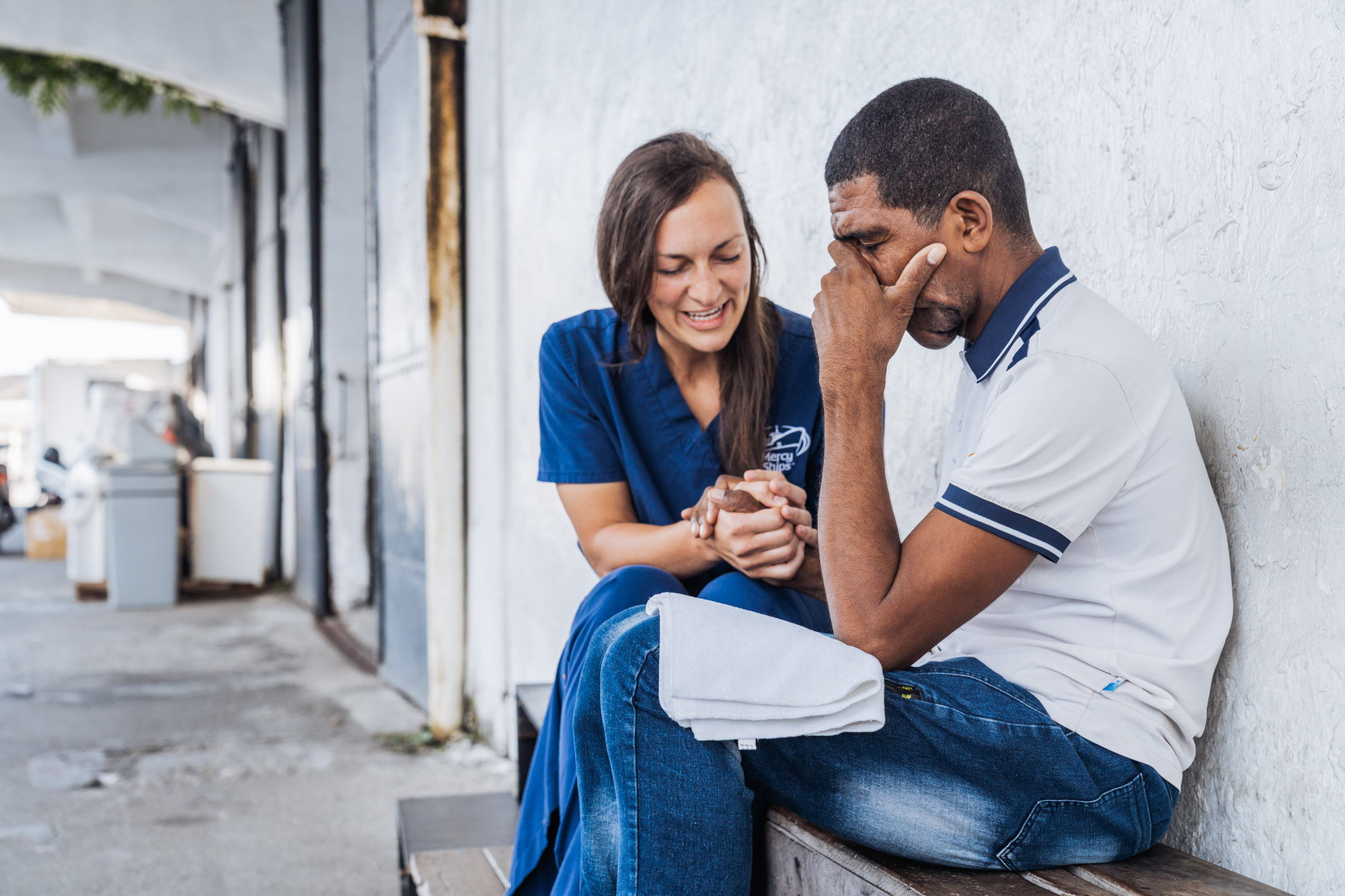
On April 1-2, Rollins and Allgood returned to campus to share their experiences with students in two nursing classes.
Rollins has volunteered with Mercy Ships on and off since 2018 and said she first heard about the organization from a coworker at Lynchburg General Hospital, where she worked after graduation. She said she was intrigued by the “floating hospitals.” As a missionary kid who spent the first nine years of her life in Eastern Europe but was unsure about full-time missions work for herself, she said she’s found a perfect combination of both missions and medicine.
“I started looking up all the YouTube videos that are available about (Mercy Ships), and I just felt powerfully this thought of ‘This is what I’m supposed to do right now,’” she said. “I’d grown up seeing my parents live missionally, and then as I got older and became a nurse, I’d thought, ‘Maybe I can combine these two things.’ I signed up that night, and about five or six months later, I was on a plane to Guinea, the first country where I served. So that just shows you: you never know when the timing is right, but the Lord knows.”
Allgood also had prior missions experience, having gone on short-term trips with his church, and he chose Liberty due to its longstanding dedication to serving those in need worldwide. He said Mercy Ships was an opportunity to do something larger. He has been volunteering with them for nearly a year.
“I knew that Liberty has a good nursing program and also knew that it is very much involved internationally, and so that was a big part of it for me. After I graduated, I said, ‘OK, Lord, what’s next?’ The Lord really stirred my heart. I applied, and not long after, I was in Madagascar.”
Mercy Ships originally offered different forms of care, but Rollins said the organization chose to narrow in on surgical care due to the widespread lack of it in countries around the globe, especially in West Africa. She said 93% of sub-Saharan Africa does not have access to safe, affordable, timely surgical care, and roughly 16.9 million people die globally from the lack of it. For example, patients with benign tumors or abscesses that can be easily removed or treated in Western medicine are left without care, allowing the growths to increase to a size that becomes life-threatening.
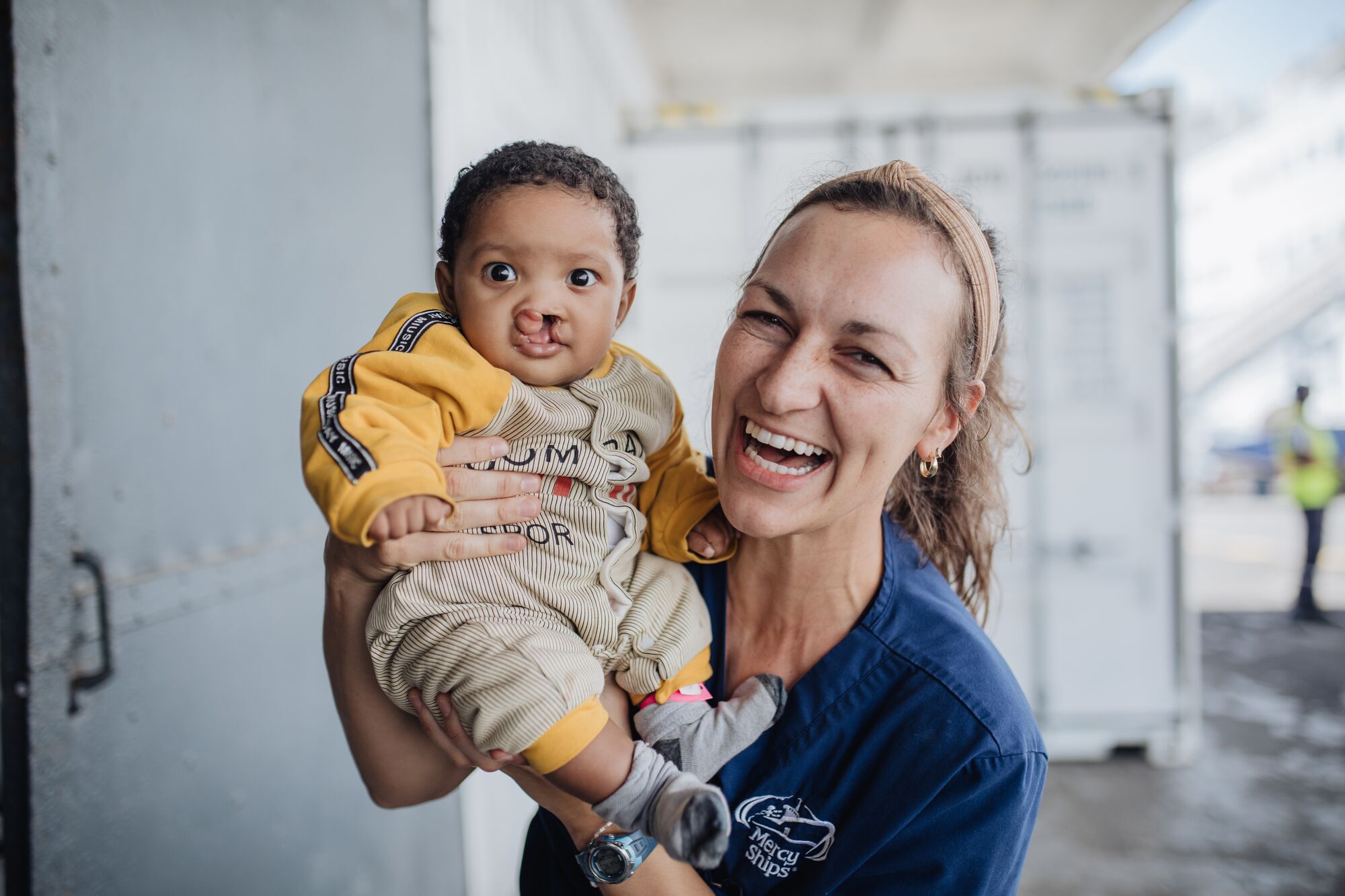
“They have sometimes zero access to medical care, which is hard to wrap your head around,” Rollins said. “If something happens, like they break their leg, many people either don’t have a hospital or they don’t have money. Hospital systems are often basically saying they have to pay up front before they come. They’ll essentially let people bleed out on the street in front of the hospital, unfortunately, because they require the payment. These patients, a lot of times, are dying at such young ages that would never be dying in the Western world.”
This is why Mercy Ships, with 2,5000 volunteers from over 60 countries, performs a variety of cost-free surgeries, including maxillofacial (head and neck) surgery, reconstructive plastic surgery, pediatric surgery, ophthalmic (eye) surgery, dental surgery, orthopedic surgery, and women’s health procedures. They also train local healthcare workers to improve the region’s resources, with the goal of having those locals continue care to the community after the ships depart.
“Mercy Ships follows the 2,000-year-old model of Jesus bringing hope and healing to the world’s forgotten poor,” Rollins said, quoting the organization’s mission statement. “This is our anchor. This is our grounding. This is our purpose. We want to follow Jesus in the way he treated people. You don’t have to be a believer to be on the ship; some people come just to do a good thing, but then they become a ministry too.”
“The beauty of this community is you work with people literally from all over the world — from England to Australia, New Zealand, different parts of Africa — and you’re serving voluntarily on board, all for the mission of Christ,” Allgood added.
The vast majority of the populations they serve are Muslim, and Rollins said they make a point to share Christ in their actions, words, and prayers while assuring patients that they will get the care they need.
“We never hide why we’re there, but we also want to respect where they are and make sure that they know they don’t have to become a Christian for us to love them, for us to do surgery,” she said. “We say, ‘We want to help you, and this is why we’re helping you.’ We get to pray with our patients, which is very special. We also have a local chaplaincy team come, which hands out Bibles and preaches the Gospel and sings praise songs on the ship.”
Throughout the classes, the alumni shared multiple inspirational stories of patients whose lives were forever changed physically, emotionally, and spiritually.
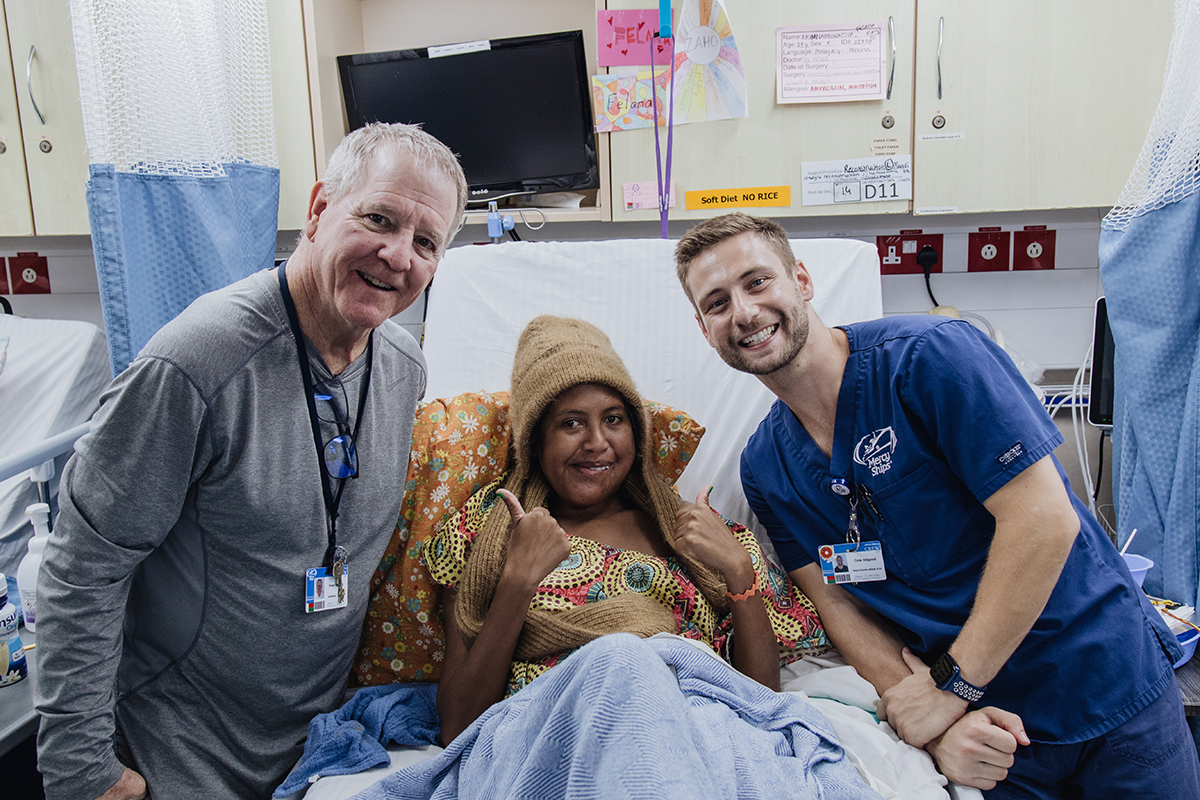
Rollins described the patients as “incredible” and “brave,” given the courage it takes to board an unfamiliar ship and trust a team of strangers with their lives.
“Sometimes we’re the first foreigners they’ve ever interacted with, or it’s the first time they’ve been on a ship, or it’s the first time they’ve interacted with the doctor,” she said. “Considering everything, they’re so great to come and so we try to do our best to make them feel welcome, to ease their nerves, explain everything really well, and make sure they get it. We also celebrate everything with them; celebrate how valued they are, regardless of their issues, and celebrate what God’s given them.”
Allgood shared the story of a girl who needed a significant maxillofacial surgery and struggled with her appearance before the procedure, but the post-op results completely changed her self-confidence.
“We had a young patient when I first got there who literally took a picture of herself every day because she now felt beautiful, and she hadn’t for so long,” he said.
Both alumni work as nurses in the United States. Allgood is an Advanced Practice Registered Nurse (APRN) in Nashville, while Rollins is a travel nurse. They sign up for varying amounts of time with Mercy Ships. While the ships stay in ports for nine to 10 months at a time (or longer), the volunteer medical staff can sign up for a minimum of two months at a time and renew their contracts if they choose.
“It’s hard to turn away after you see the need and you see how incredible (serving there) is,” Rollins said.
Allgood said the experience has helped him and others to avoid “burnout,” a common occurrence among healthcare workers.
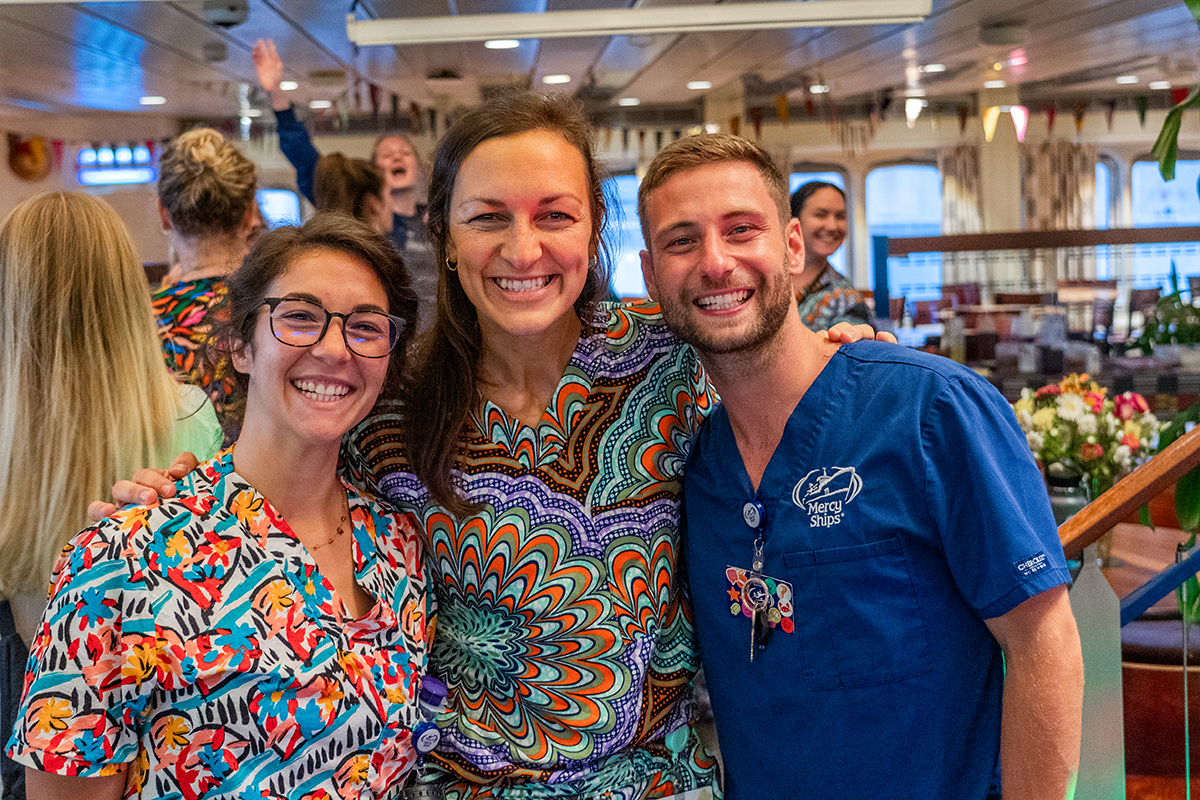
“I think Mercy Ships and international missions is a great outlet for us to give back, to be involved in something greater than ourselves, and to prevent burnout,” he said. “You can be overworked, and in the Western kind of culture of healthcare it’s very toxic and negative. This allows us to be a part of a fulfilling environment where we are able to serve the Lord and serve others and really get back to the heart of why we all become nurses: to be the hands of Christ.”
Both alumni said their training at LUSON prepared them to approach the healthcare field, both domestic and international, with a Christian worldview that treats patients’ body, mind, and soul.
“I feel like Liberty Nursing was awesome in preparing us to be missions-minded wherever we are,” Rollins said. “It prepared us to see a patient as a person with a soul, with a heart created in God’s image and not just a chart. I’ve always remembered that, and it’s been a really cool kind of anchoring practice and reminder as I headed into healthcare. (Healthcare) is a pretty negative environment, and that negativity can be contagious. But I really felt prepared after leaving Liberty to always try to stay focused on that (Christian mindset) the best I can and to have it be a ministry anywhere I am.”