Newly expanded Hydaway Lake opens flow of aquaculture research
October 15, 2026 : By Ryan Klinker - Office of Communications & Public Engagement


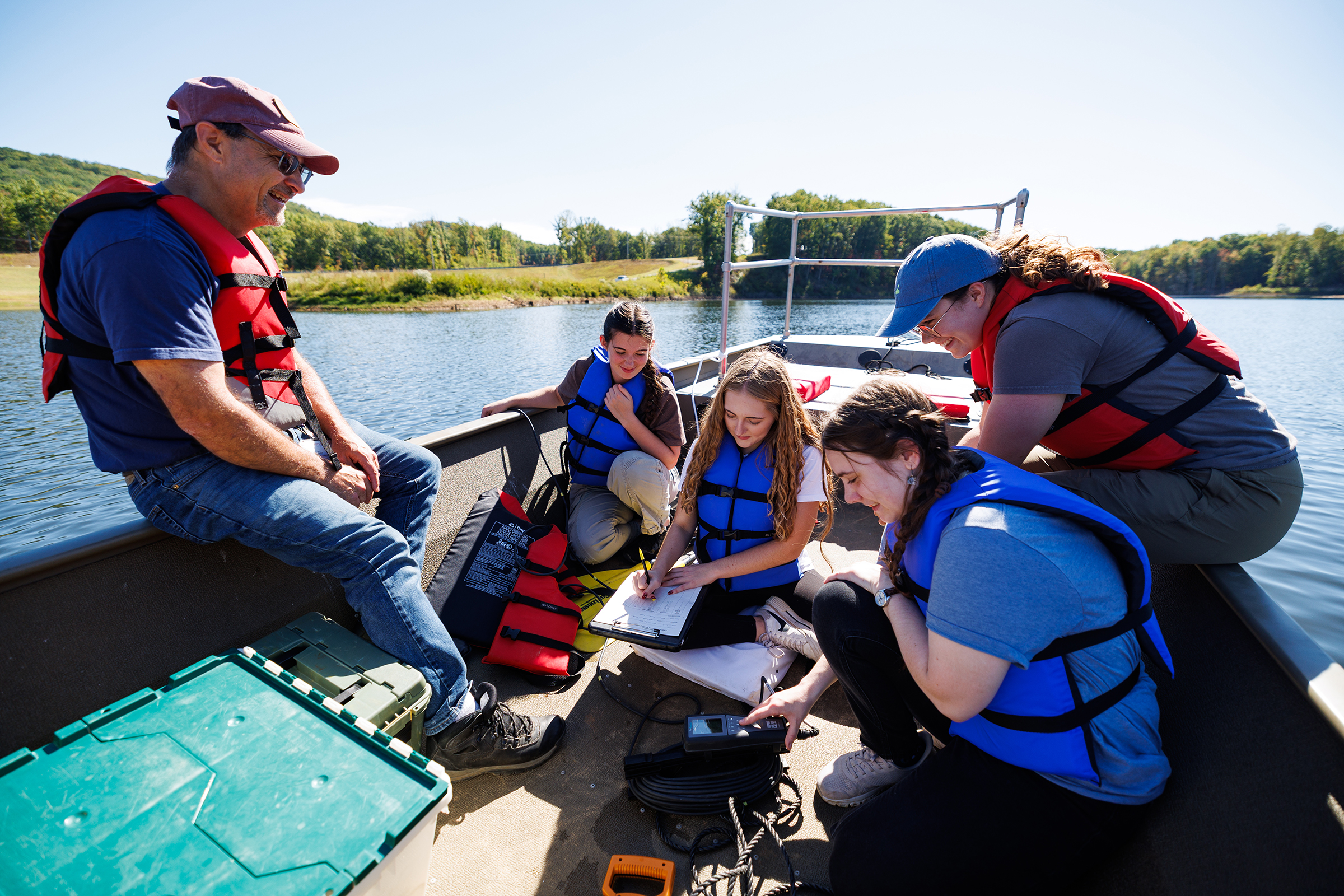
Liberty University’s Department of Biology & Chemistry is taking advantage of the greatly expanded Hydaway Lake on the school’s mountain property to give students hands-on experience in researching freshwater ecosystems. Their efforts could eventually help cultivate a new habitat for fish there, which in turn, would increase recreational fishing opportunities at the lake.
The lake, located at the Hydaway Outdoor Center on Liberty Mountain, reopened for student use last fall after a major expansion from 5.6 to 31 acres. Through Liberty’s Campus Recreation Office, students can swim, fish, and go paddle boating, canoeing, and kayaking on the lake.

Students from classes in ecology and fishery techniques spent the week of Oct. 5-9 on the lake. Working in small groups, they used instruments that reached to the bottom of the lake to record the depth, temperature, dissolved oxygen, pH, and conductivity (ability to transmit or allow the flow of energy). They collected plankton, algae, and fish in nets.
“Access to Hydaway Lake for class labs provides an excellent opportunity for fisheries and ecology students to study a lake ecosystem here on campus,” said Assistant Professor of Biology Dr. Lara Hedrick, who coordinated the studies along with her husband, adjunct professor Jim Hedrick. “Since it was just recently expanded, our students get to monitor and do research on a newly created lake, observing changes as it ages in water quality, aquatic communities such as zooplankton and fish that live in the water column of the lake, and even wildlife communities such as aquatic birds and mammals that inhabit the area.”
“We can teach it in the classroom — we can show students the types of equipment, show them videos, and describe processes and procedure— but when you actually do it hands-on, it’s a different learning experience,” Jim Hedrick added.
Lara Hedrick said she has taken students to the nearby James River to study the large river ecosystem. Students currently use the aquaculture lab in the Center for Natural Sciences to study different fish species and learn the types of equipment and process needed to culture fish in captivity.
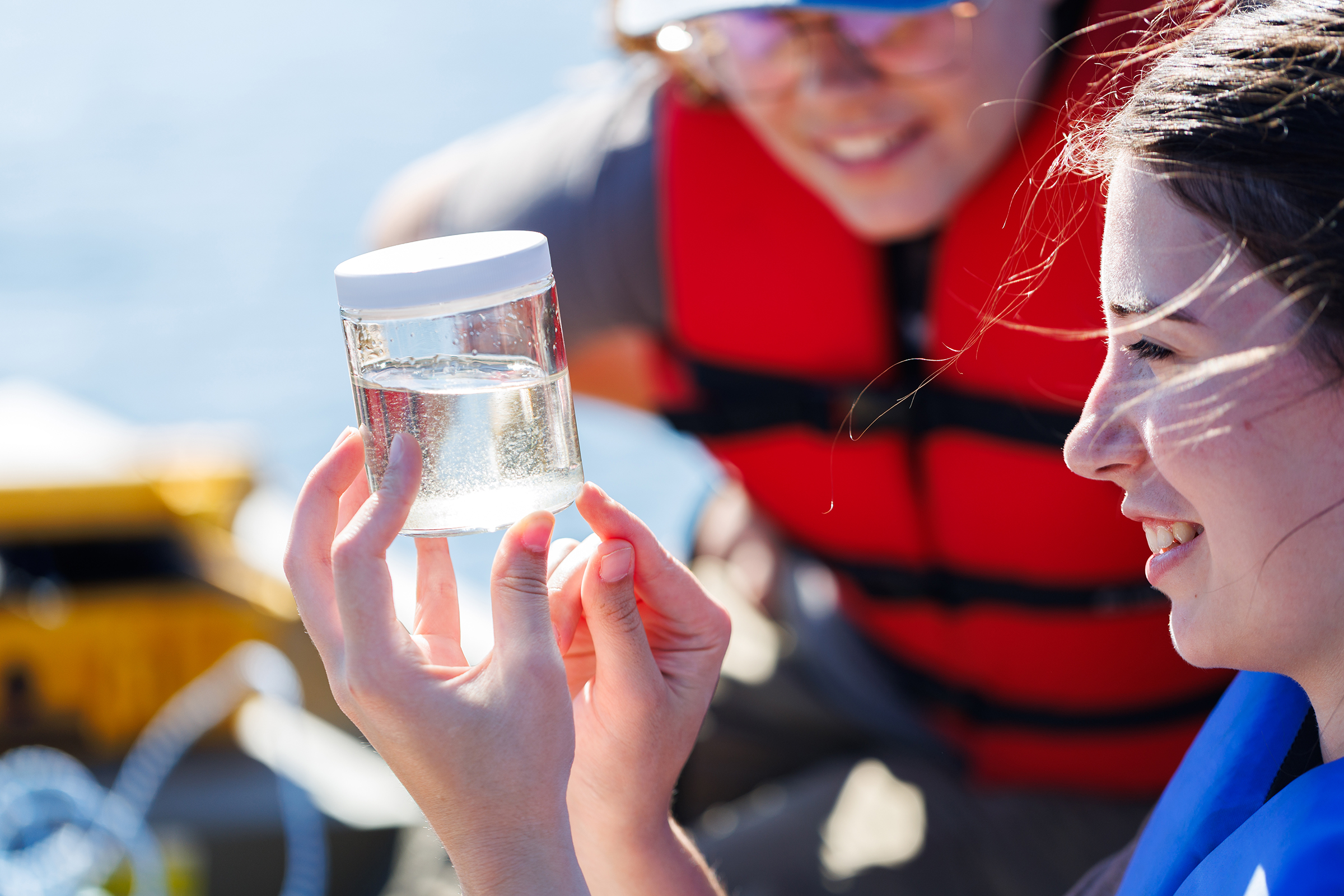
A goal for the Hedricks and the department is to cultivate the lake into a more conducive habitat for fish population and reproduction, an effort that will help students learn yet another set of skills.
“On the research side, we are looking at hopefully putting in some habitat structures in the lake,” Lara Hedrick said. “Because the lake is brand new, we feel like it can use some structures (that mimic natural cover and breeding areas) that will encourage fish to spawn and reproduce, which will increase the amount of recreational fishing opportunities at the lake. We can put in habitat structures that also help the young fish as a nursery area to help more of them survive to grow to adulthood and reproduce.”
In the spring, the department plans to start construction on a dedicated aquaculture facility with recirculating 350-gallon tanks at the Morris Campus Farm on Liberty Mountain. The facility is expected to open in March 2027.