Record number of Liberty students showcase projects during annual Research Week
April 28, 2026 : By Abigail Degnan - Office of Communications & Public Engagement


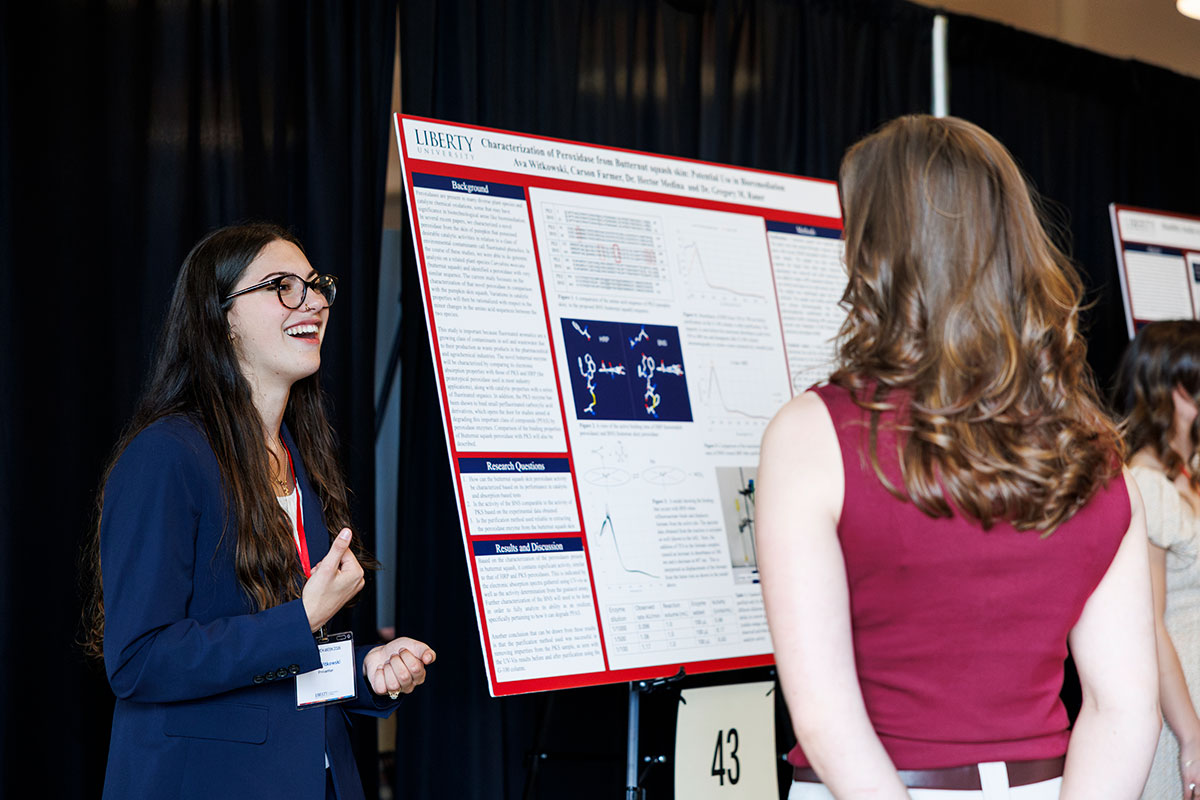
Liberty University’s Research Week is one of the school’s largest multidisciplinary events held on campus each year, giving students a chance to share the results of their research in science, history, healthcare, literature, music, and much more. From April 20-23, a record 766 students participated and gave 365 presentations.
Research Week is open to undergraduate and graduate students in Liberty’s residential and online programs and is hosted by the Jerry Falwell Library.
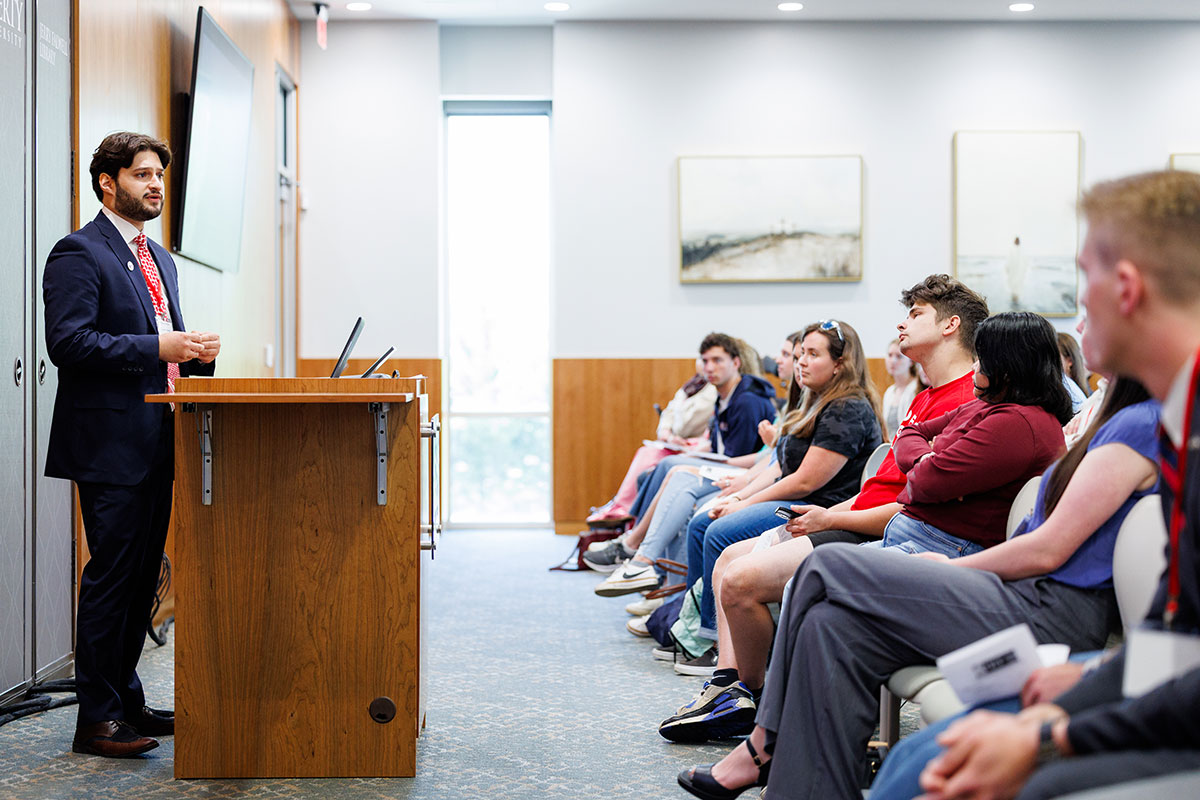
What began as separate undergraduate and graduate research symposia in 2014 was combined in 2017 into one event designed to highlight research and scholarship produced by Liberty students.
The Research Week awards ceremony will take place at 10:30 a.m. on May 6 in the Jerry Falwell Library. (This article will be updated with the winners.)
While Research Week is a competition, it is also a chance for students to gain practical research experience and presentation skills for their future careers. Over three days, students can present in various categories, such as Creative & Artistic, Textual /Investigative, Applied, and more. The week culminates with the Three-Minute Thesis competition, where undergraduate and graduate students have three minutes to present their thesis research.
On Tuesday, industrial/organizational psychology graduate students John Paul Fryrea and Dayne Harter and criminal psychology undergraduate student Jada Ward presented their research on neuroplasticity (the brain’s ability to change and adapt through life experiences) and its effect on athletic performance.
“This specific project showed the nuances of conducting research in the real world, the difficulties of doing that, and the real-world translation of what could actually come from it,” Fryrear said, noting he also presented their research at the Virginia Association of Psychological Science Convention last week. “When I started research, I told myself I’d never do it again because I didn’t like reading research articles. But once I realized I could actually translate it into something meaningful, it was much more effective.”
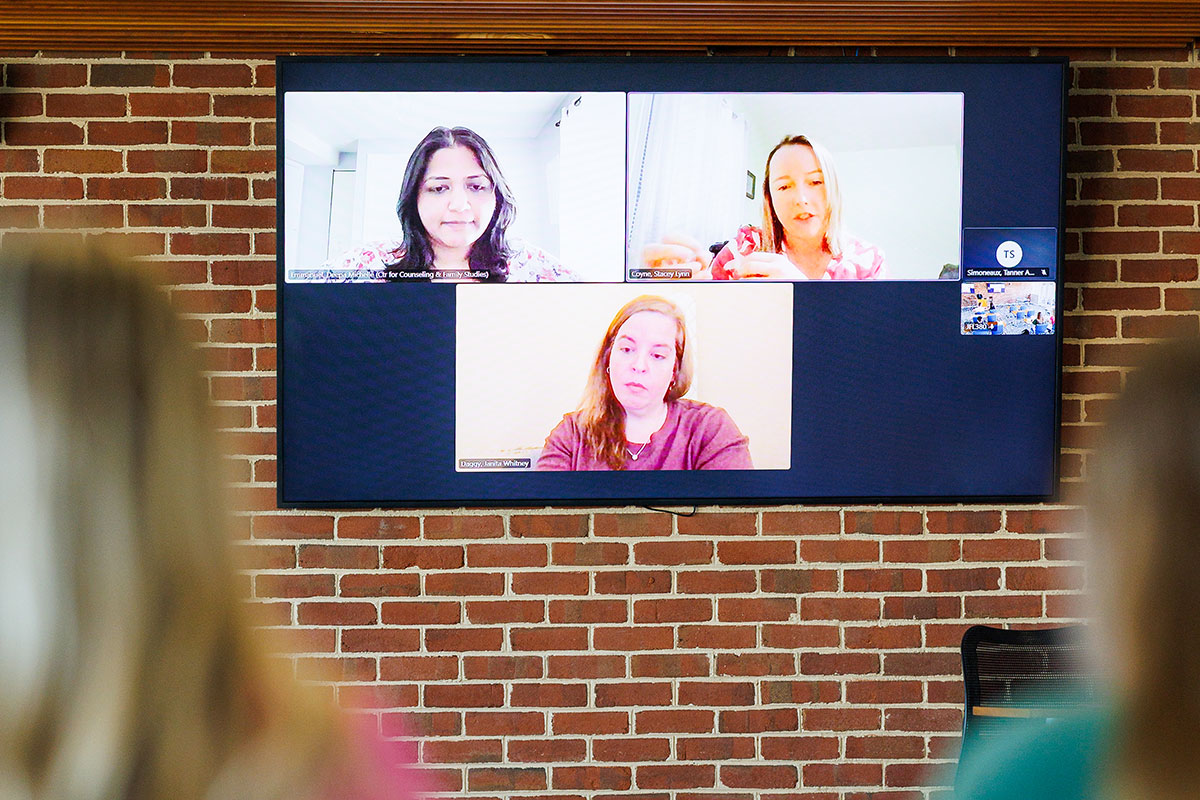
Also on Tuesday, senior elementary education student Reagan Lewis took her undergraduate thesis and turned it into a Research Week presentation. She focused on how students with cognitive disabilities and communication barriers comprehend the Gospel and make decisions to accept Christ. Her presentation gave overviews of several methods for presenting the Gospel to those with disabilities.
“It feels really good to be able to share my research with people, to share something I’m so passionate about,” Lewis said after her presentation. “The audience was very receptive and didn’t make me nervous, so that was great. This was not something that was originally in my mind to do, but (my professors) kind of pushed me toward doing it because they knew that it would be good for me and helpful for me, and I really appreciate them doing that.”
Madison Kelly, a second-year history graduate student, presented on Wednesday regarding women’s roles in the military. She said while 350,000-450,000 women served in uniform during World War II, the numbers dwindled to 6,500-7,000 for the Korean War and 7,500-11,000 in the Vietnam War, where women primarily served as nurses and administrative assistants.
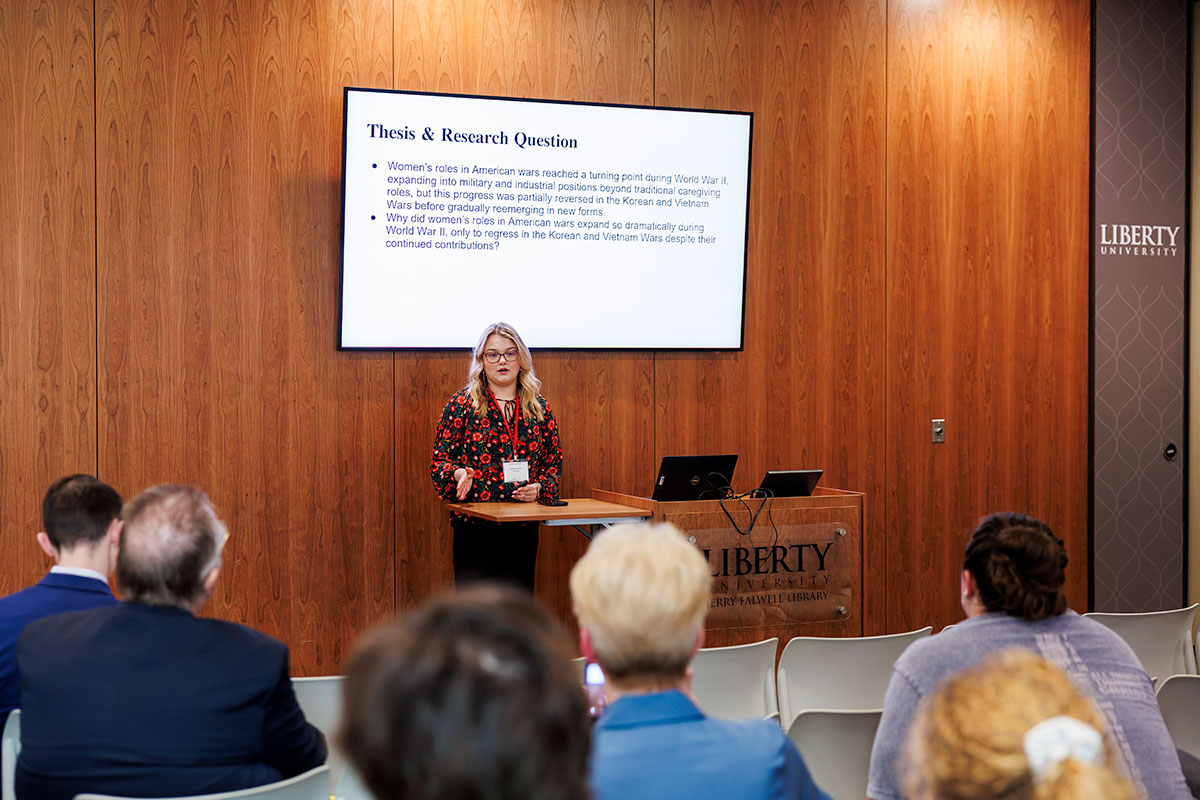
Kelly, who works at the National D-Day Memorial in nearby Bedford, Va., sought to discover why women did not take on as many military roles during the Korean and Vietnam wars. She found that it was due to the smaller scale of the wars, societal norms that encouraged women to stay home, and limited career opportunities for women in the military.
“There’s a lot of stories that need to be shared, especially from the Korea and Vietnam (veterans). Many of them haven’t told their story, so it’s an honor that I get to at least try to tell their stories for Research Week,” she said.
Kelly credited the history department faculty with helping her prepare to present her research.
“The faculty here in the history department are amazing; they really help and encourage you to do the best you can for Research Week,” she said.
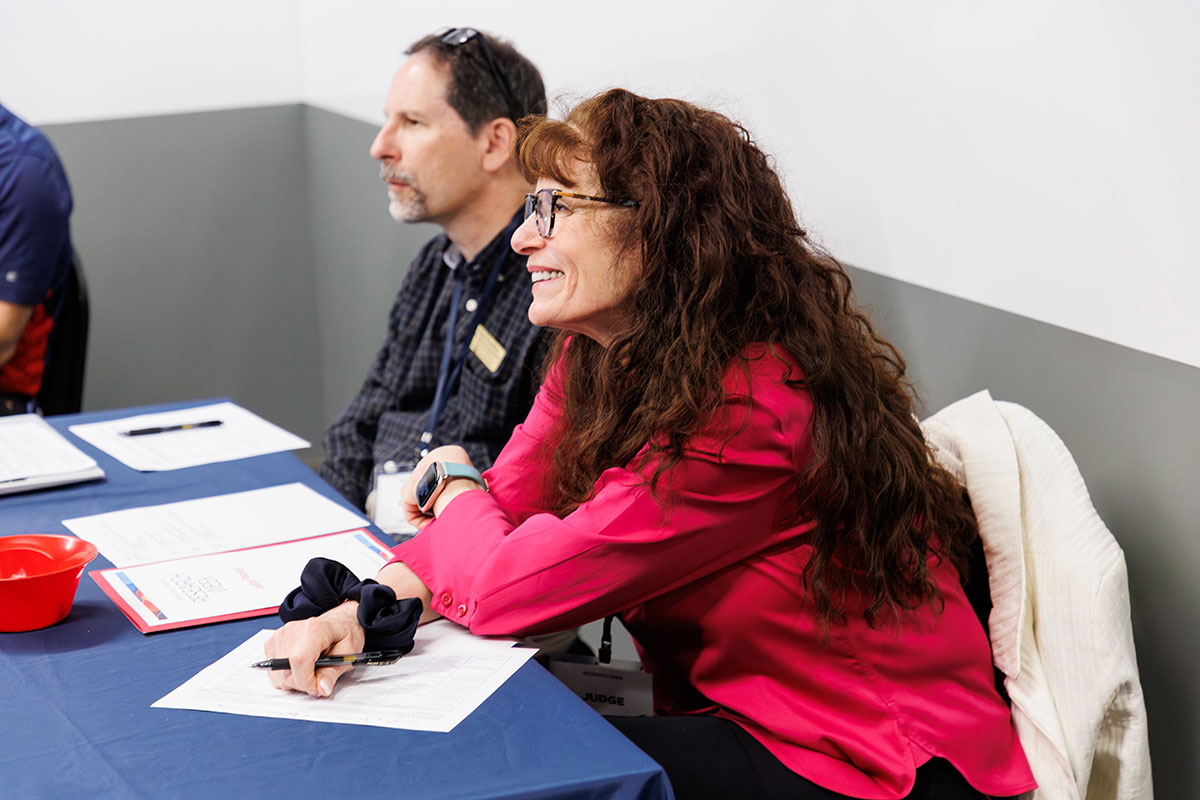
Senior piano performance student Sarah Vo’s presentation, “Everything You Know About the Piano is Wrong,” proved how piano can be used orchestrally to evoke the timbres (tone) of other instruments. She emphasized that playing the piano is much more than just hitting a key and hoping the right sound comes out; orchestral thinking can expand pianistic expression. She gave examples of how to translate different instrument timbres. For a brass instrument, the pianist would put extra weight on the keys and a slight separation between notes, emphasizing a “biting” yet strong, grounded tone. One female judge was amazed at Vo’s research, noting she learned so much in the 15 minutes of time Vo spoke.
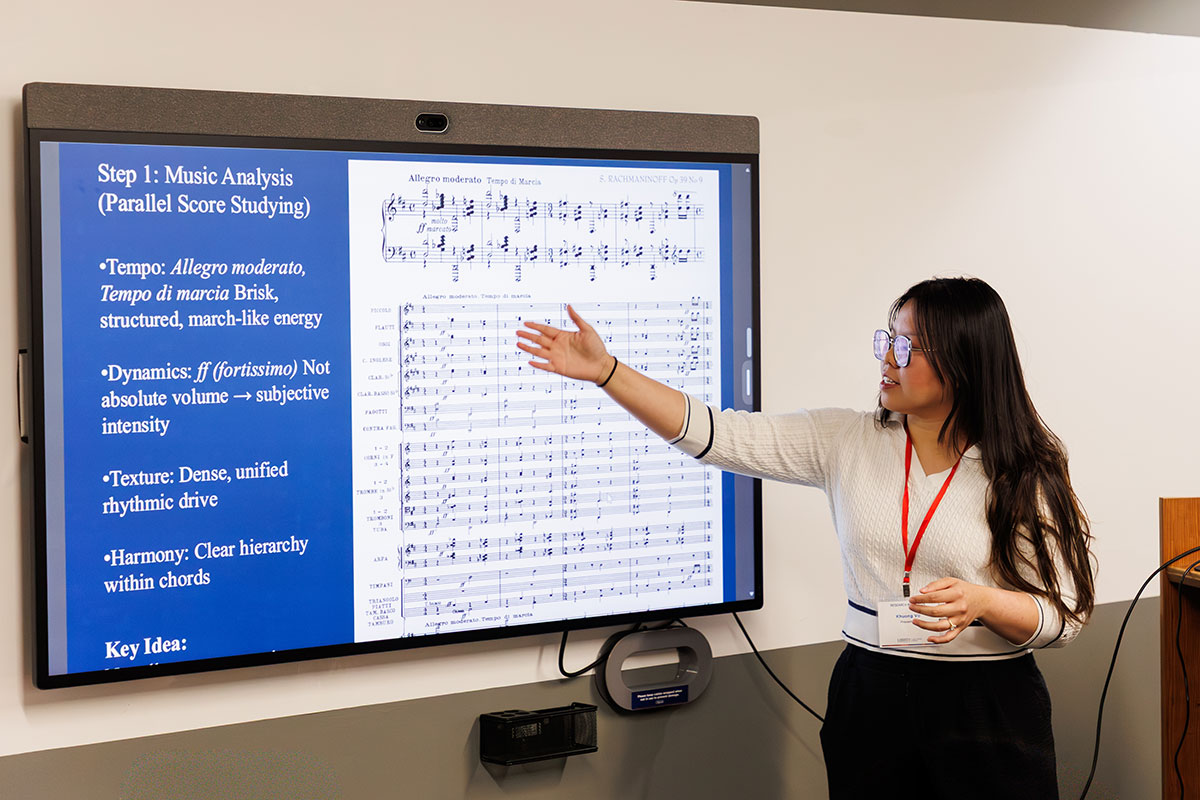
Vo, who plans to pursue graduate and doctoral studies, said Research Week expanded her understanding of the piano.
“It forced me into a sense of truly understanding and knowing the things I do instead of just doing them, being able to articulate the ‘why’ and ‘how’ behind everything,” she said. “It’s given me a lot of confidence in doing more academic (work) as a stepstool for a master’s degree and hopefully a doctorate one day.”
Vo added that Research Week provided a safe, healthy atmosphere to practice in so she is ready for future opportunities and can confidently represent Christ in her work.
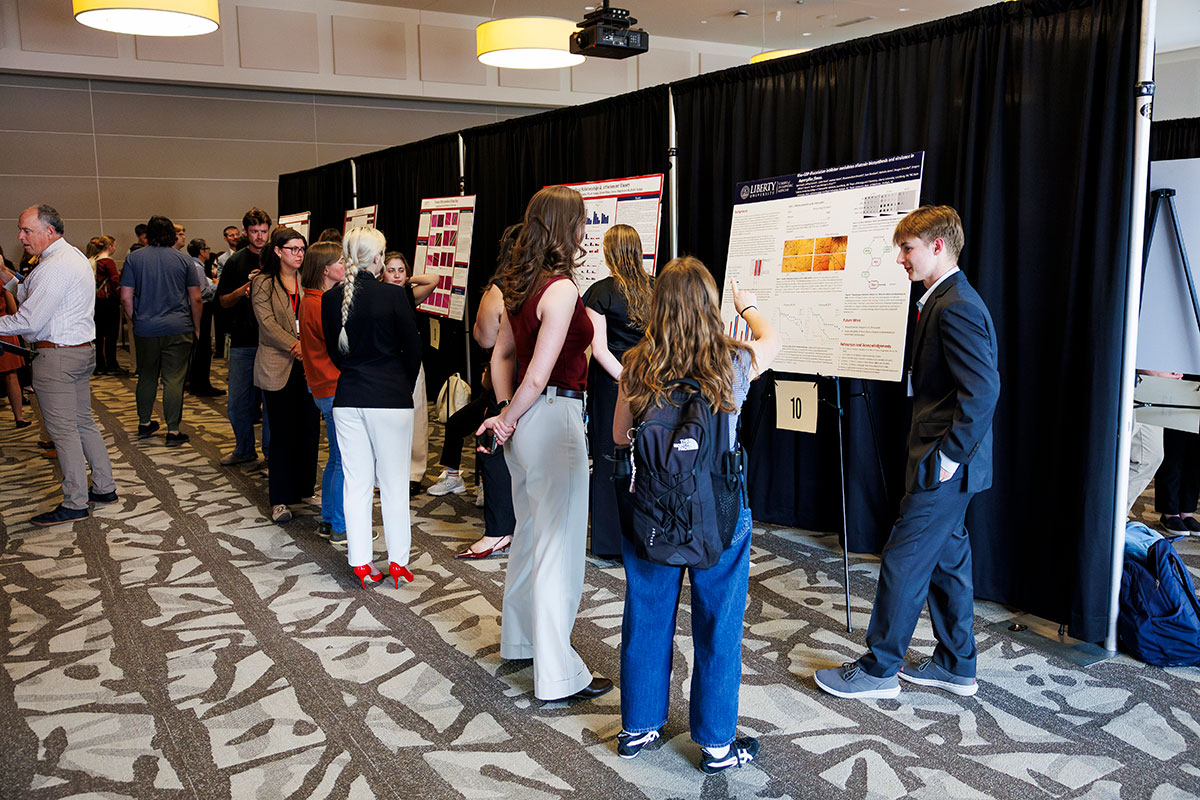
While many students present their research as oral presentations, each day had a two-hour time slot for poster presentations in the Montview Student Union, Alumni Ballroom. The posters presented research findings on topics ranging from disaster relief integration and public funding allocation in sports venues to trust levels within hospitality settings, analysis of ASL resources for deaf children, the failures of long-term care facilities, and the outcome of energy drinks in undergraduate students.
Daniel Murphy, a first-year graduate student studying interpersonal communication, gave a poster presentation on “The Power of Cult Rhetoric.” His in-progress research explores how cult leaders use interpersonal and rhetorical communication strategies to recruit and retain members, with the goal of helping people understand manipulative strategies and better equip them to recognize and counter these influences.
Murphy was drawn to the topic after watching documentaries about cult leaders like David Koresh, Marshall Applewhite, and others.
“The stories are so interesting, because how could so many people be bought into a group so crazy and bizarre?” Murphy said. “To outsiders, we see that as insane. But the more you look into it, it’s actually a really long process that anybody could be brought into. I want (my research) to be used to put some light onto what cult leaders are doing. As we speak, there are organizations going on that we don’t know about yet.”