Born extremely premature, student enters medical school with a passion to save young lives
November 23, 2026 : By Ryan Klinker - Office of Communications & Public Engagement


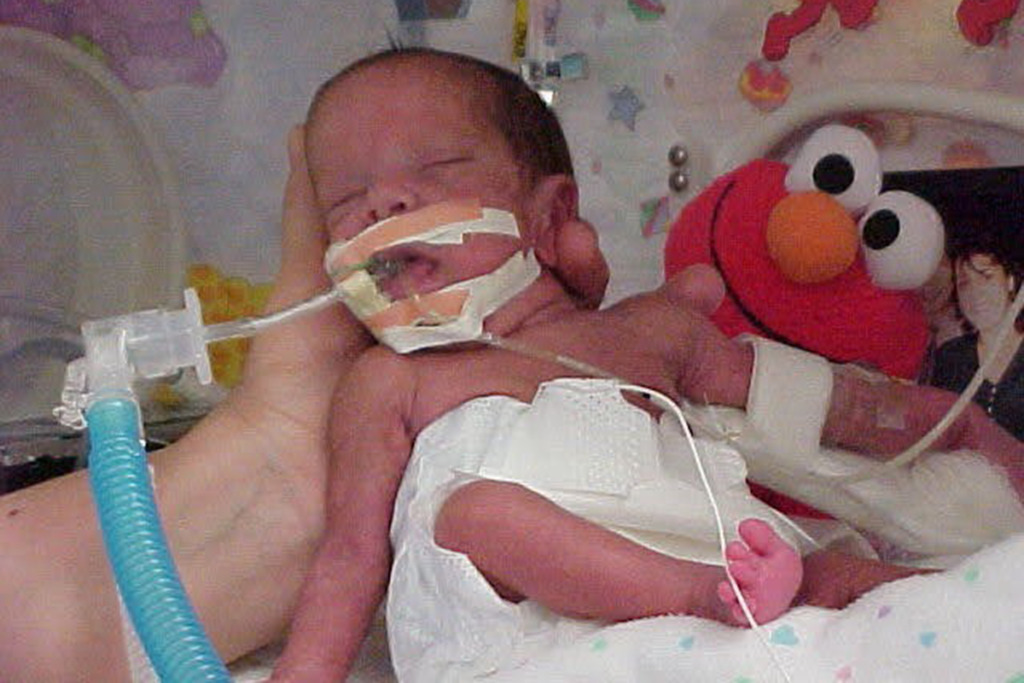
Alyssa Jade Nunez weighed 1 pound, 10 ounces, and was 13 inches long when she was born at 25 weeks. Her chance of survival was 20%. Today, she is a first-year student-doctor at Liberty University College of Osteopathic Medicine training for a career where she can help save lives just as physicians saved hers 27 years ago.
After her birth, Nunez spent 99 days in a New York hospital and was released almost exactly on her original due date. She owes her first months of life to a treatment called surfactant replacement therapy, which is used for premature infants to breathe better. Remarkably, the treatment was developed by one of the doctors who was on call for her delivery, Dr. Edmund Egan.
The lasting effects of Nunez’s extremely premature birth are largely unnoticeable today.
“A lot of things could be so much worse than they are,” she said.
As a micropreemie, she had significant brain bleeds, a heart murmur, and was at risk of becoming blind. She has residual scarring in her eye vessels from the low oxygen levels at birth and scars from the IVs on her ankles and feet.
“There really is no evidence (of being born premature) from the outside looking in,” she said. “I’ve always said that it goes to show the power of our God and also the power of medicine and the care that I was able to receive.”
The blessing of her own health has naturally allowed Nunez to lean into her purpose and faith in Christ, and as she’s studied medicine, she has come to more fully understand the impact of her testimony.
“Growing up, I always knew I was a miracle baby and I knew that I very well could have not been living or living to the full extent I do,” she said. “Being raised in a Christian home, it’s always been a natural push toward the concept that my life is not my own and that it’s a gift that’s been given to me, and that’s pushed me toward healthcare in general.”
Nunez desires to help the people of Saipan (capital of the Commonwealth of the Northern Mariana Islands) and Hawaii, both places she’s lived and witnessed underserved populations with hospitals in need of more doctors and medical resources.
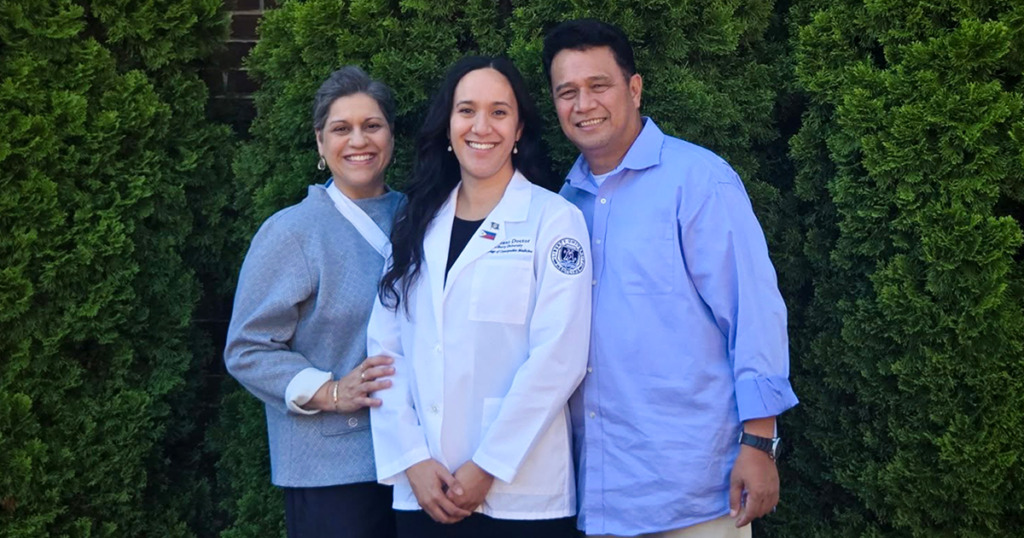
Nunez is the first person on her father’s side to pursue medicine and the second on her mother’s, following in the footsteps of her late great uncle who was an ENT. At LUCOM’s annual White Coat Ceremony in September, a symbolic gathering for new students as they mark the beginning of their medical school journey by donning a white coat for the first time, Nunez was fortunate to have both of parents in attendance; her father traveled from Saipan to mark the occasion.
“White Coat was surreal for me,” she said. “I was also thinking about those things and what it means for my family on both sides, as well as the importance of the timing of the white coat and allowing both of my parents to be present.”
She joined 161 members of the Class of 2030 in the event observing their first steps into medicine.
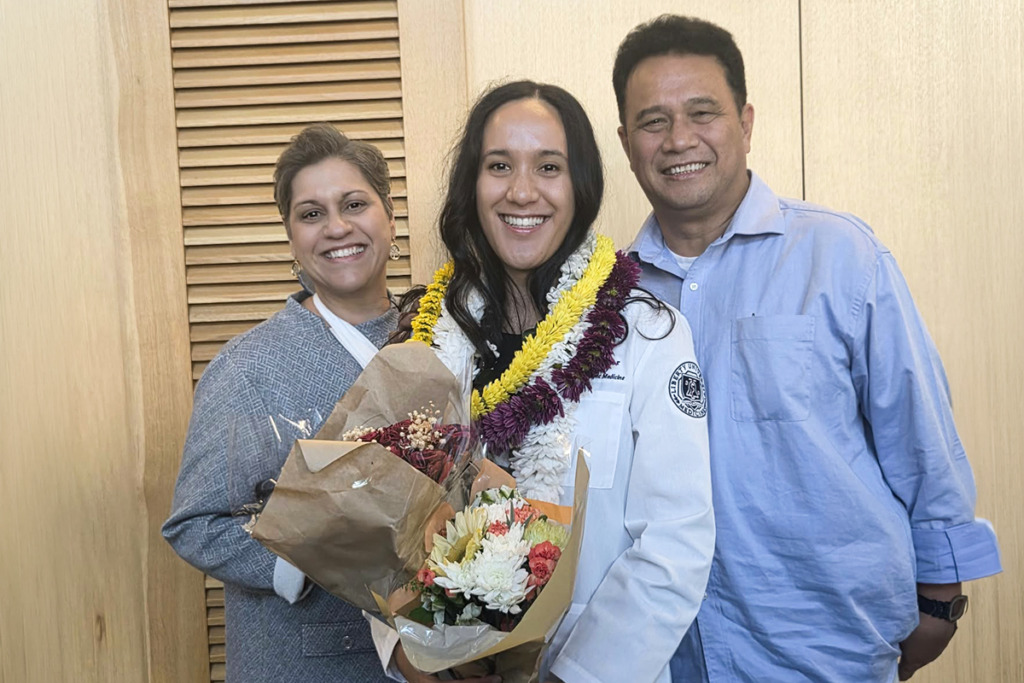
Nunez spent her undergraduate years studying biophysical sciences at Regent University. During her first few months at LUCOM, she said she is considering OBGYN and maternal fetal medicine for a possible residency specialty, where she can provide specialized care for mothers and their babies during high-risk deliveries such as hers.
“I feel very encouraged to see how, whatever it ends up being, I will connect it somehow to my experience and to my parents’ experience and hopefully be in Hawaii or Saipan,” she said. “They both need doctors who will come and stay. I knew that I wanted to do healthcare, and then I saw these islands need help too and already felt the connection to them as being home.”
That stage of her life and career, however, is on the other side of the notoriously arduous studies of medical school. Amid the frequent exams, long hours, and significant distance from her family, Nunez admitted that it has been a difficult adjustment, but she has found support from her LUCOM professors and motivation in her aspirations.
“It’s easy to get stuck in thinking, ‘This is a lot,’ ‘I’m stressed,’ and ‘I’m overwhelmed,’ but it’s so helpful for me to remember everything in my story because it gives the purpose to what I’m doing,” she said. “It’s not without prayer from the faculty here. I had the fortunate experience of going to a Christian university for undergrad, and so I had experienced that culture of prayer in the classroom before, but (at LUCOM) I’ve experienced that care from professors outside of the classroom too.”
“Even though I’ve lived elsewhere and far from family before, this is different,” she added. “It’s higher pressure being in such a rigorous program, but it’s the care from the professors outside of the literal classroom that has helped — and I’ve felt that difference.”