Behavioral Sciences expo focuses on military mental health
May 5, 2026 : By Ryan Klinker - Office of Communications & Public Engagement


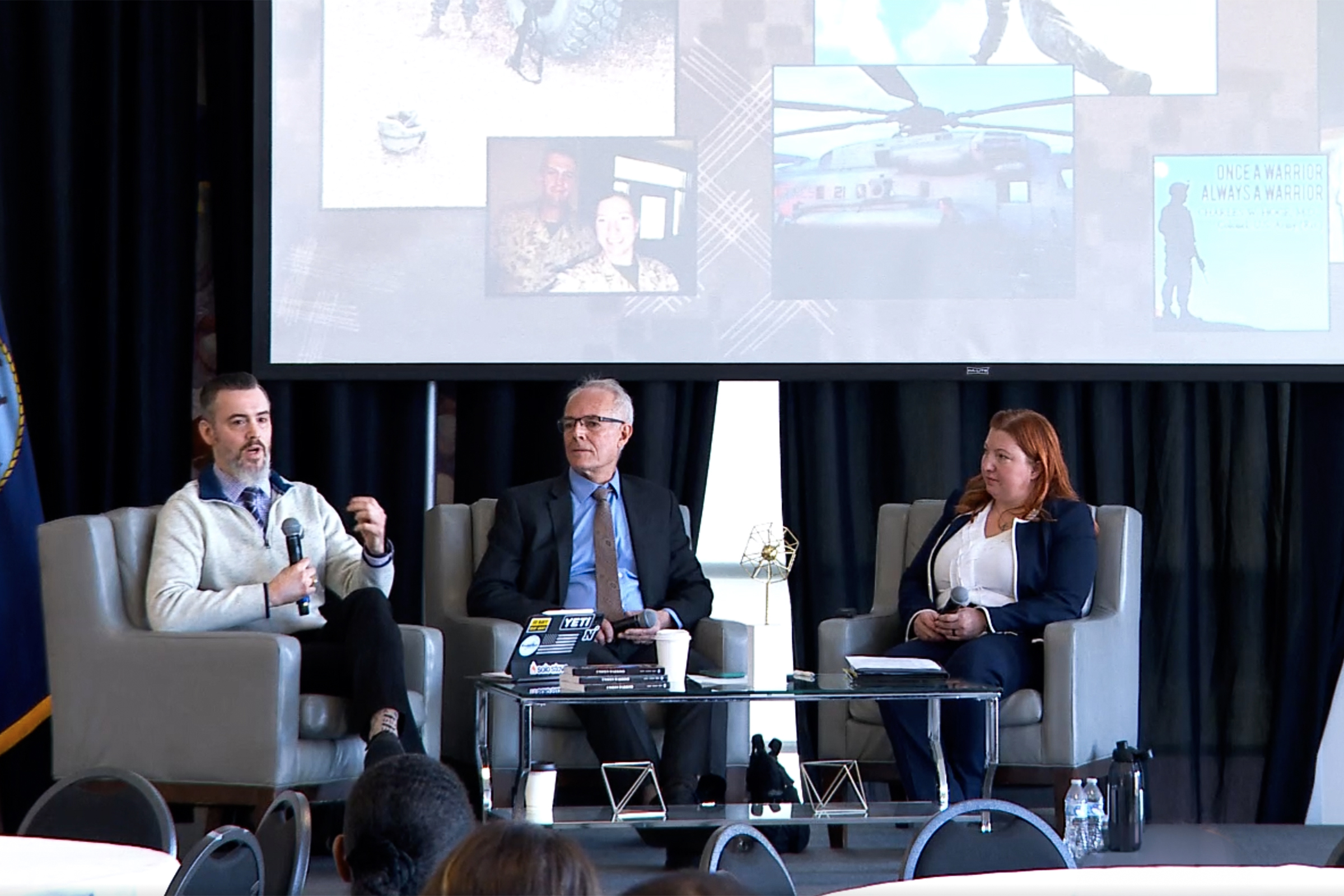
In an effort to help mental health professionals better understand the intricacies of treating military veterans, Liberty University’s School of Behavioral Sciences held a Military and Mental Health Expo this spring. Faculty and students spent the day learning from three veterans who are now mental health professionals skilled in helping other military members and civilians understand the emotional struggles of service and returning to the homefront.
The event was held on March 24 in the Montview Student Union, Alumni Ballroom, and attended by 480 faculty and students, many of whom tuned in virtually. The School of Behavioral Sciences provided professors continuing education (CEUs) through the National Board for Certified Counselors.
School of Behavioral Sciences Dean Dr. Kenyon Knapp opened the event.
“I brought you a very accomplished group of speakers today, which we’re really grateful for,” he said. “I should say, too, that this event today illustrates our aspirations here at Liberty to train you to be competent, ethical, and professional in the way that you treat military members. We’ve got a lot of different programs here at Liberty to help service members and help you be knowledgeable in the way that you train them.”

The expo was led by veterans Jessica Behne (United States Marine Corps), Samuel Zasadny (United States Marine Corps), and Dr. Charles W. Hoge (United States Army) who have all used their experience in the military to inform their work and research in the field of mental health. Hoge works as a psychiatrist treating service members, veterans, and family members in the Washington D.C. area, Behne serves veterans and military families through her telehealth practice, and Zasadny’s clinical experience includes work in community mental health, private practice, and military contexts. Together, they wrote the book, “Unseen Warrior: A Military Cultural Guide for Mental Health Professionals,” that served as the curriculum for the day.
The guest speakers explained how military culture and chronic stress exposure impact the mental health of service members and how clinicians should seek to understand aspects like trauma development, family systems, and the challenges of transitioning to civilian life in order to more effectively treat the veteran population.
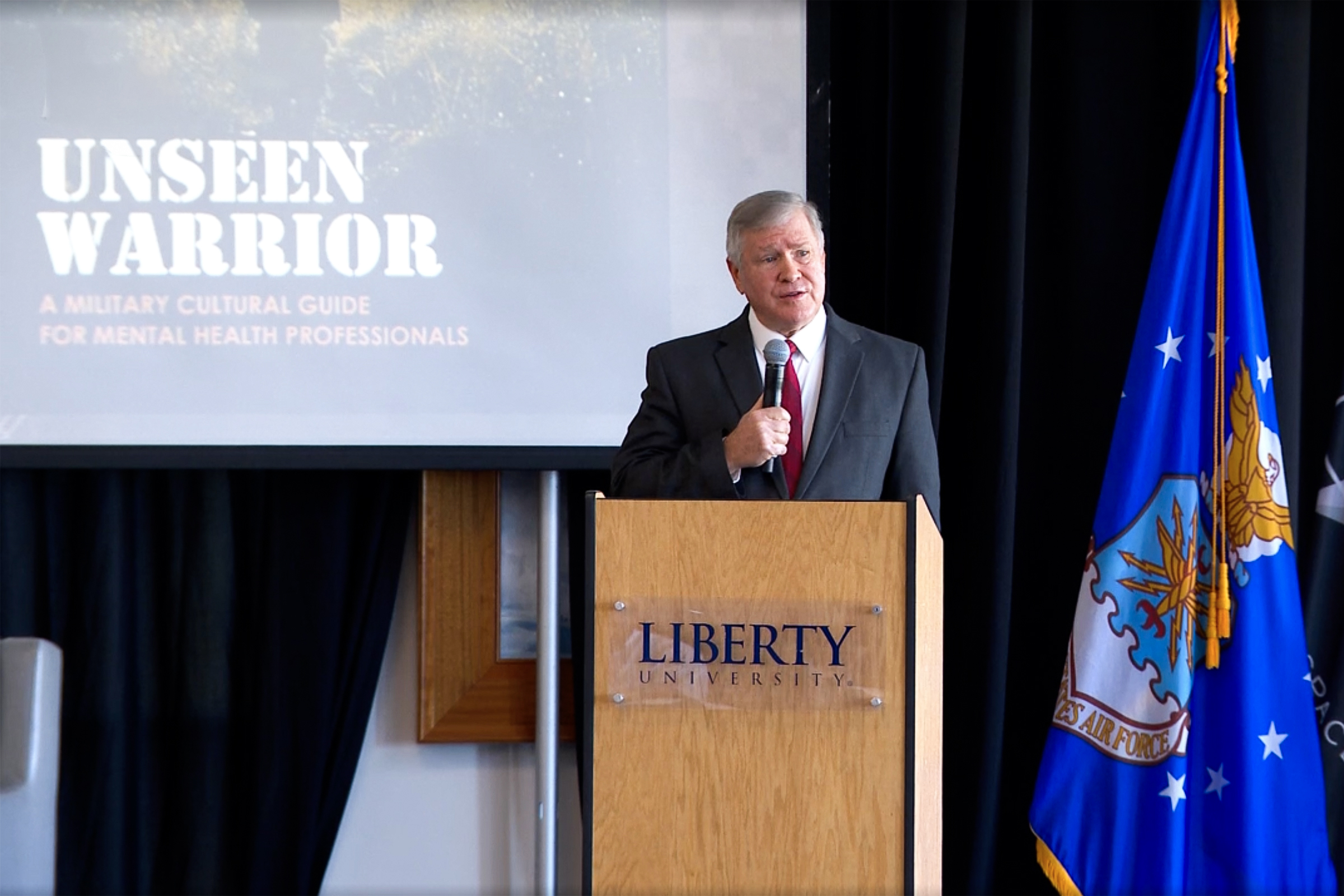
Dr. Steven Keith, director of Liberty’s Center for Chaplaincy, spoke briefly about his own experience as an Air Force chaplain for 30 years on active duty, sometimes in war zones on multiple deployments. He expressed his gratitude for the faith-driven purpose of the expo: to help veterans become who God has designed them to be.
“We’re talking today about military members, so we’re talking about some heavy stuff: a heavy mental load, a lot of trauma, burnout, depression, and all kinds of mental challenges. So how appropriate that at Liberty University, where we believe the Gospel and that it’s always our starting point, that we have the answer to people’s problems — and His name is Jesus,” he said. “When a person is right with God, and they feel they’re right with God, they have peace, and they know they’re loved, and they feel more secure in who they are. People are back to the way God created them to be: spiritually, mentally, and emotionally healthy people.”