Biodiversity trip to Galapagos Islands teaches students in God’s natural classroom
February 18, 2026 : By Ryan Klinker - Office of Communications & Public Engagement


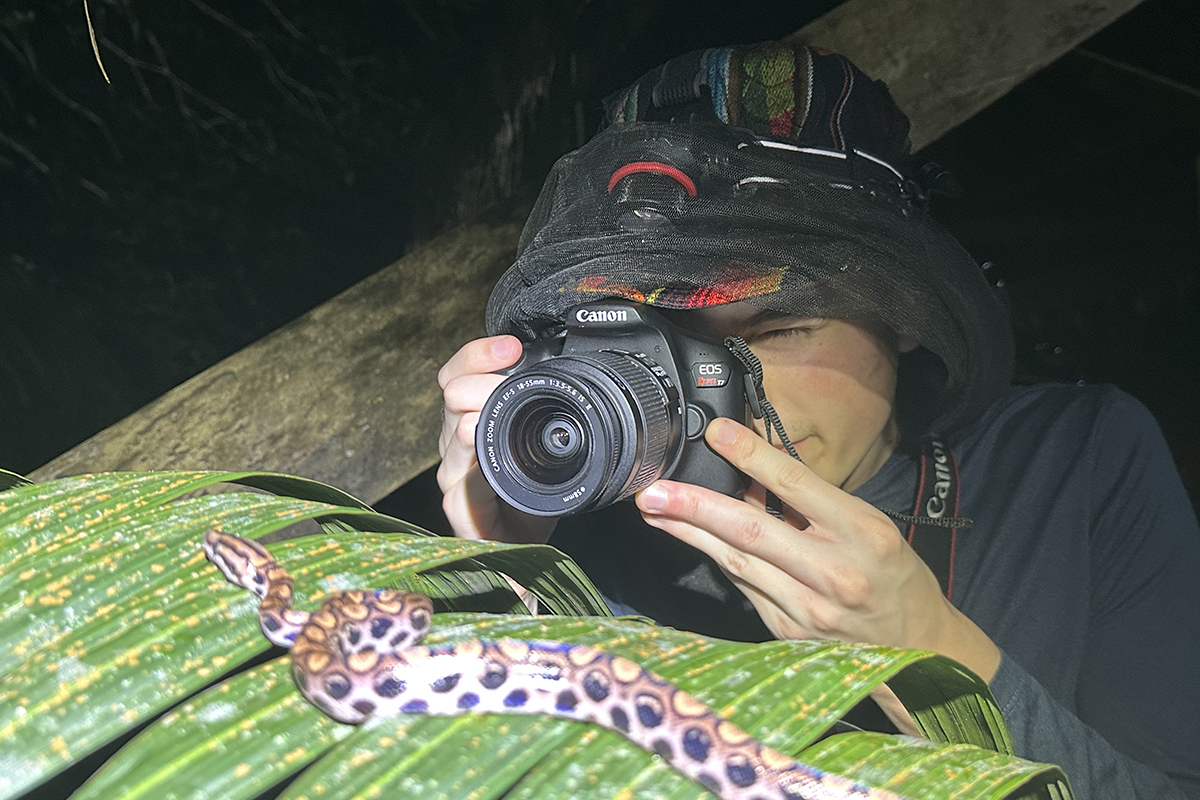
A group of 14 Liberty University students spent Jan. 10-19 in Ecuador and the Galapagos Islands, one of the most biodiverse regions in the world, to learn about its vast native species and the beauty of God’s creation. Led by two professors from the School of Health Sciences Department of Biology & Chemistry, Drs. Kyle Harris and Sherrie Welfel, the group hiked, swam, and sailed to study creatures great and small.
This was the eighth trip that Harris has led to Ecuador and the Galapagos, but this year presented new opportunities and varied explorations through an ongoing partnership with Tropical Herping, a local biodiversity organization that has guided Liberty students through the region on multiple trips. This year’s trip took the group deeper into the Amazon than years past, which allowed for unique experiences like fishing for piranhas and seeing monkeys in a more remote area
Harris, who also collaborates with Tropical Herping on personal research projects, said continues working and coordinating trips with them due to the staff’s vast knowledge of the region’s wildlife, enthusiasm for discovery, and awareness of local culture.
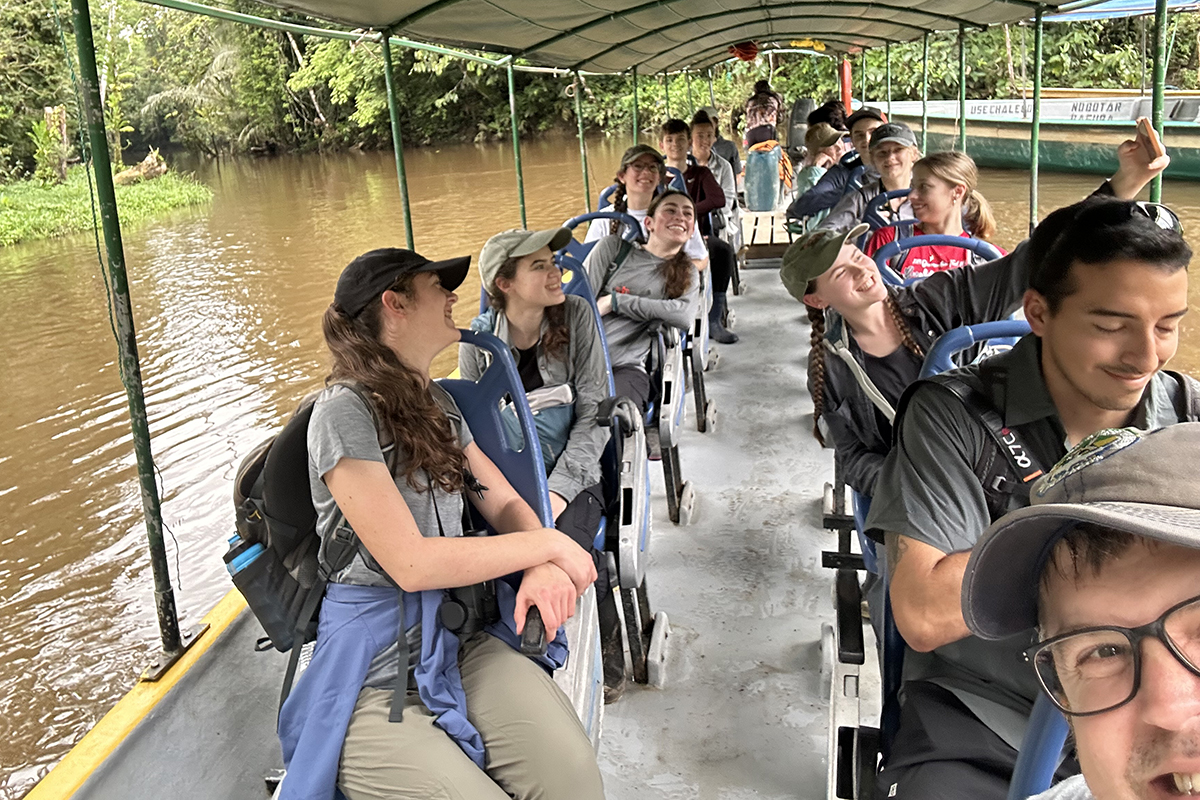 “They are gifted biologists,” he said. “(These trips) are not an ‘eco tour;’ (but rather) an academic trip to learn all about the flora, fauna, plants, animals, and so on. At Liberty, we’re really passionate about wanting to know about the whole of God’s creation, and (while) Tropical Herping are secular scientists in their approach, we eagerly look for everything together. They’re really great about getting up early to take us out on a morning boat ride to look for birds or nighttime trail walks to identify different species.”
Throughout the 10 days, which Harris likened to “an entire semester of field labs sandwiched into a week,” the students were actively engaging with the area’s vast species at every turn, including reptiles, amphibians, mammals, insects, birds, and marine life. A core experience is the nightly surveys along the area trails, searching for nocturnal wildlife. Along the shore, they also snorkeled with Whitetip reef sharks and other sea life.
“In every moment of the day, we were seeing (amazing creatures), and even though I’ve been there many times, there’s always something new to learn,” Harris said. “That’s the glory and beauty of God’s creation — the more you peer into it, the more you see and the richer it gets. We get to say, ‘Look at what God has made, look at His Majesty right on display, in front of us.’”
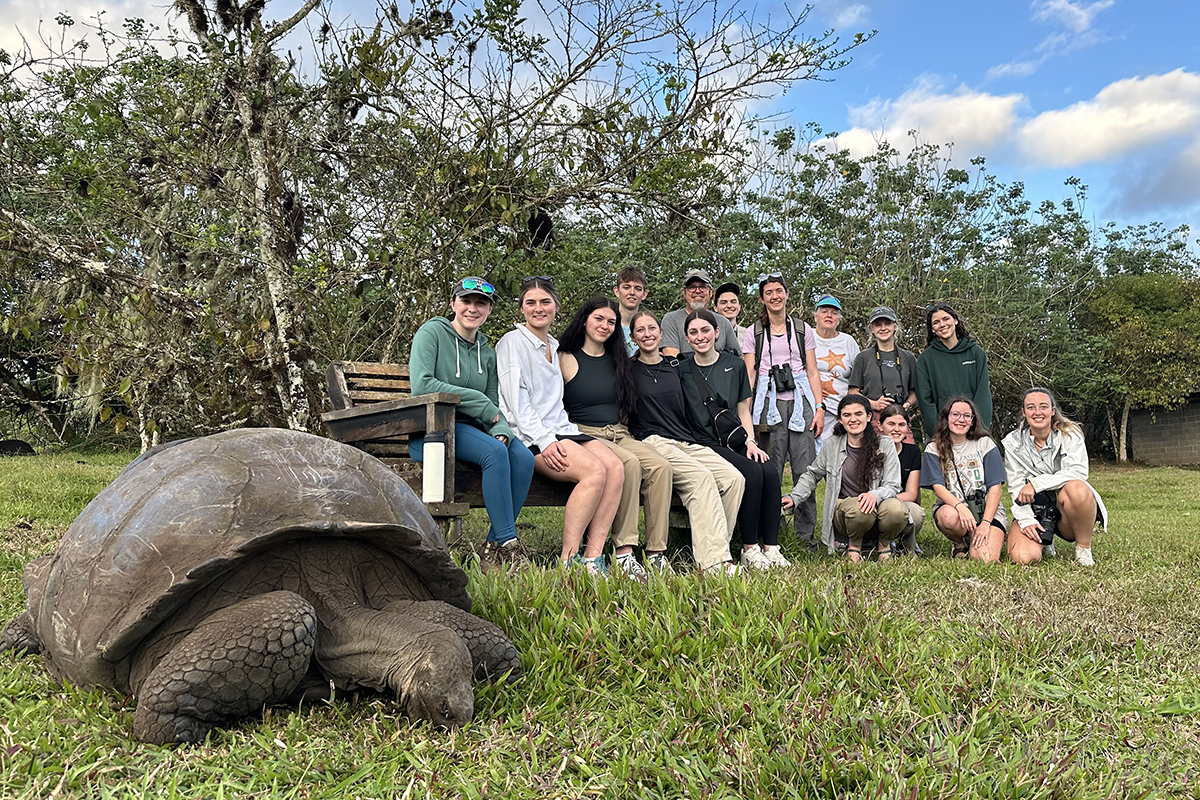 The annual trip was coordinated with LU Send, which facilitates all student group travel and experiential learning opportunities in the U.S. and abroad. Multiple students earned course credits on the trip for creation studies (CRST 290) and a special topics course in tropical biodiversity.
Dr. Harris is beginning to plan the next LU Send trip, hopefully to the opposite end of the globe, for students to study elephants, monkeys, and more in Thailand in January 2027.