Biology & Chemistry students complete summer research internships in labs beyond Liberty’s campus
September 24, 2026 : By Ryan Klinker - Office of Communications & Public Engagement


Each summer break for students in Liberty University’s School of Health Sciences opens doors to research opportunities that can inform the classroom and career field. While some continue projects with professors in campus labs, others have the ability, through the School of Health Sciences, to apply for opportunities at different universities to diversify their skillsets and familiarity with various environments.
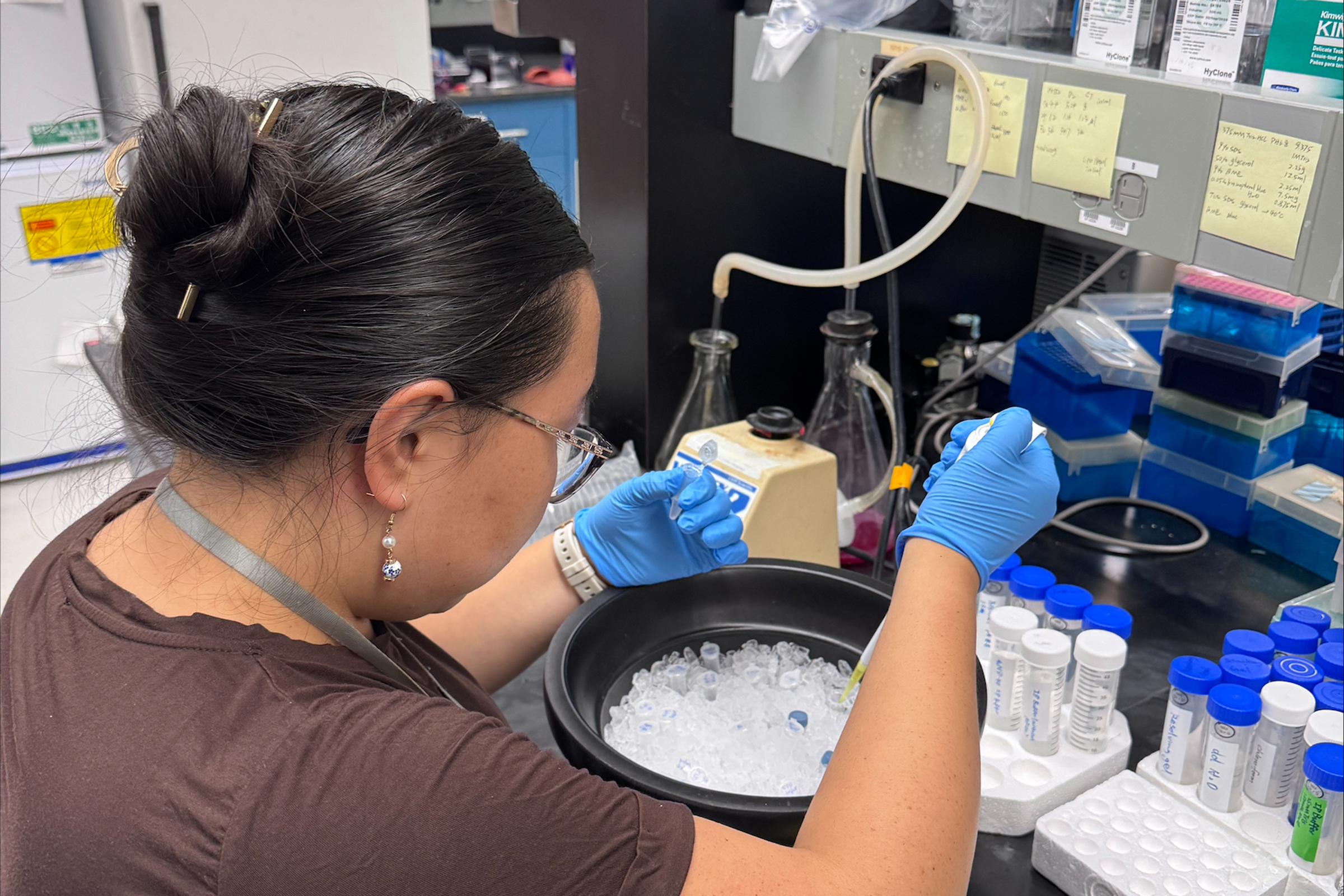
Juniors Alexandra Knight and Rachel Boktor were the two newest Liberty students to intern in the lab of Dr. Jiou Wang, a biochemistry and molecular biology professor at Johns Hopkins Bloomberg School of Public Health. Their work marked the fourth year that Liberty School of Health Sciences has partnered with Johns Hopkins to provide the undergraduate internship program.
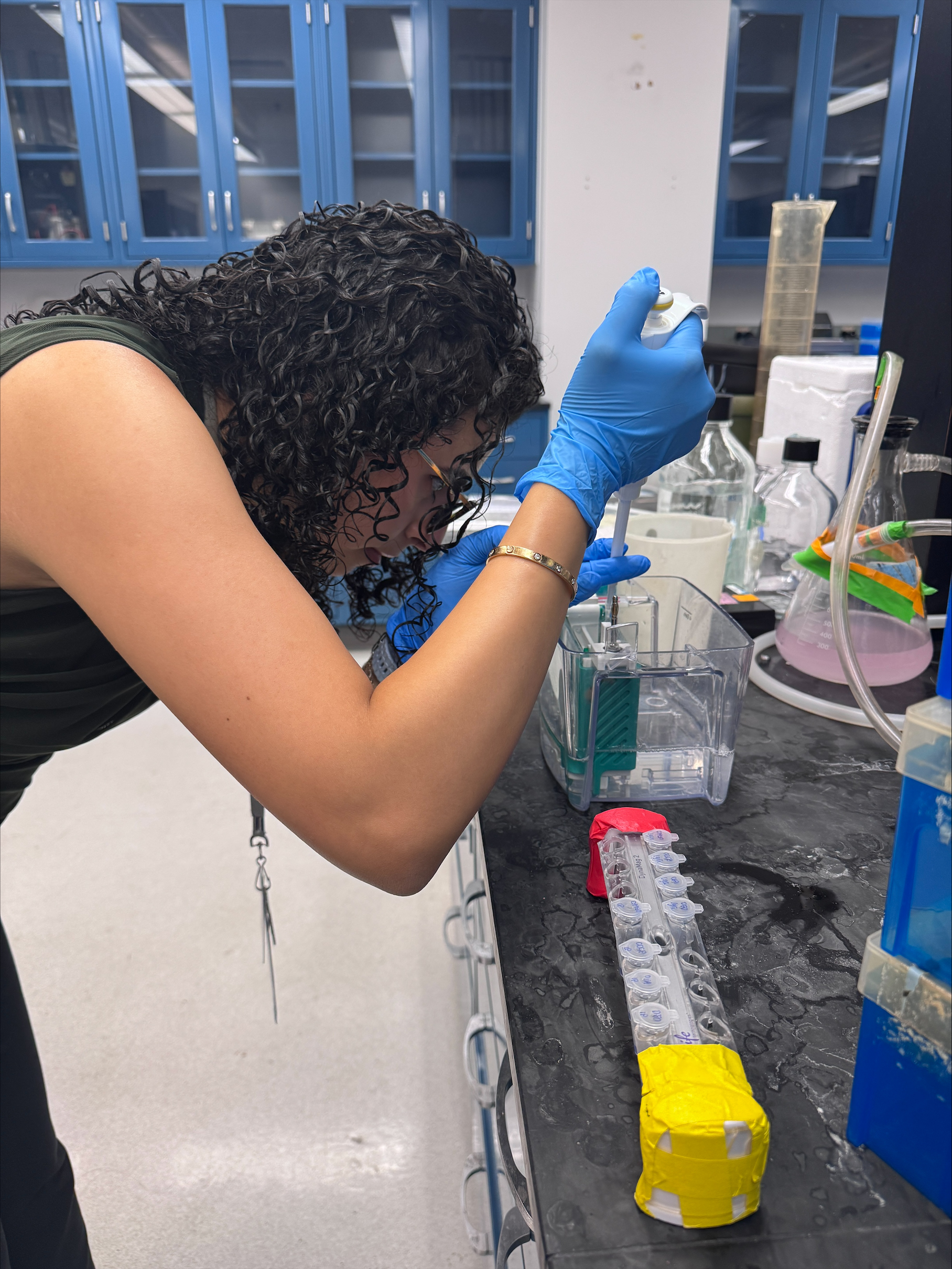
Over their nine weeks in Wang’s lab, the students studied the interaction of specific proteins connected to the development of neurodegenerative diseases like Alzheimer’s and dementia.
“It was a great pleasure to have them both in the lab over the summer,” Wang said. “Alexandra was a thoughtful and motivated student who approached her summer research experience with curiosity and enthusiasm. She was eager to learn new concepts and techniques and grew in both confidence and independence during her time in the lab. Rachel brought great enthusiasm and dedication to her work in the lab. She was highly engaged and showed a strong interest in learning.”
Knight, a biochemistry and molecular biology student, said she appreciated the opportunity to work in a lab the scale of Johns Hopkins’, with multiple concurrent, full-time projects happening within the same facility.
“It was helpful to see firsthand how a working graduate cell biology lab operates, and everyone there was so gracious in explaining their projects,” she said. “They have a lot of cool research going on there, and it was a really great opportunity for me to experience something other than Liberty’s own lab culture, to branch out a little. It was different seeing full-time lab work versus smaller projects like we have here at Liberty, where every week you use whatever amount of time that you can. I felt like God really opened up the door for me to do the internship.”
Boktor, who is studying biomedical sciences, was also taken aback by the size and activity of the lab.
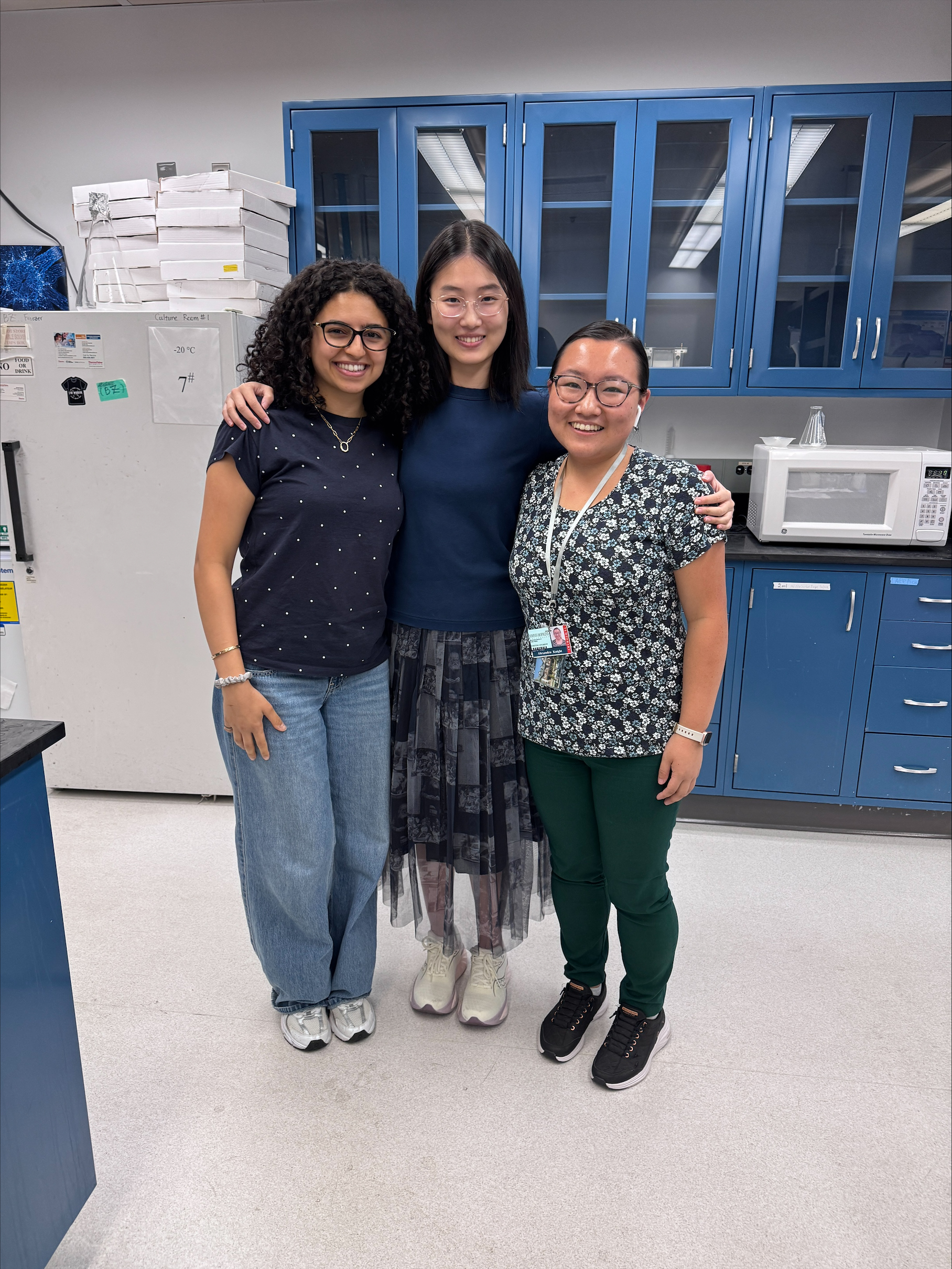
“It was so interesting to see how each one of the projects was directly pouring into and involved in the ultimate goal of the lab,” she said. “Doing research that is directly impacting and benefiting people who have these aggressive neurodegenerative disorders and diseases, thinking about the rapid decline that I’ve seen of people in my life who have had dementia or Alzheimer’s, it gave me a feeling of responsibility.”
Boktor said she will share the techniques she learned this summer with her fellow researchers at Liberty.
“I’ve come to appreciate Liberty’s labs even more after going there,” she added, “because I think we foster such a special lab environment filled with the Holy Spirit and a love for one another.”
Both students have aided Liberty professors in research. Knight has conducted chemical education research under Adjunct Professor of Chemistry Dr. Michael Korn and biochemistry work under Professor of Chemistry Dr. Gregory Raner. Boktor has participated in forensic chemistry research with Dr. Chad Snyder, director of Liberty’s forensic science program and a chemistry professor.
“Researching with Dr. Raner gave me a solid chemical background, and then I was able to build off of that this summer, when I was able to do a lot of cell biology research,” Knight said. “Coming back (to Liberty), as I go into (Dr. Raner’s) research project that I already had ongoing, I think it’s given me new insights.”
Biomedical sciences senior Manasi Joshi sought out a summer opportunity to gain more lab experience prior to applying to medical schools. She was already involved in research under Professor of Biology Dr. Gary Isaacs at Liberty, analyzing a single-celled yeast called Cryptococcus neoformans — the cause of the brain infection Cryptococcal meningitis, and wanted to continue researching in the genetics field. A native of Scranton, Pa., Joshi connected with Dr. Jong-Hyun Son, a biology professor at University of Scranton, and joined his lab for eight weeks.
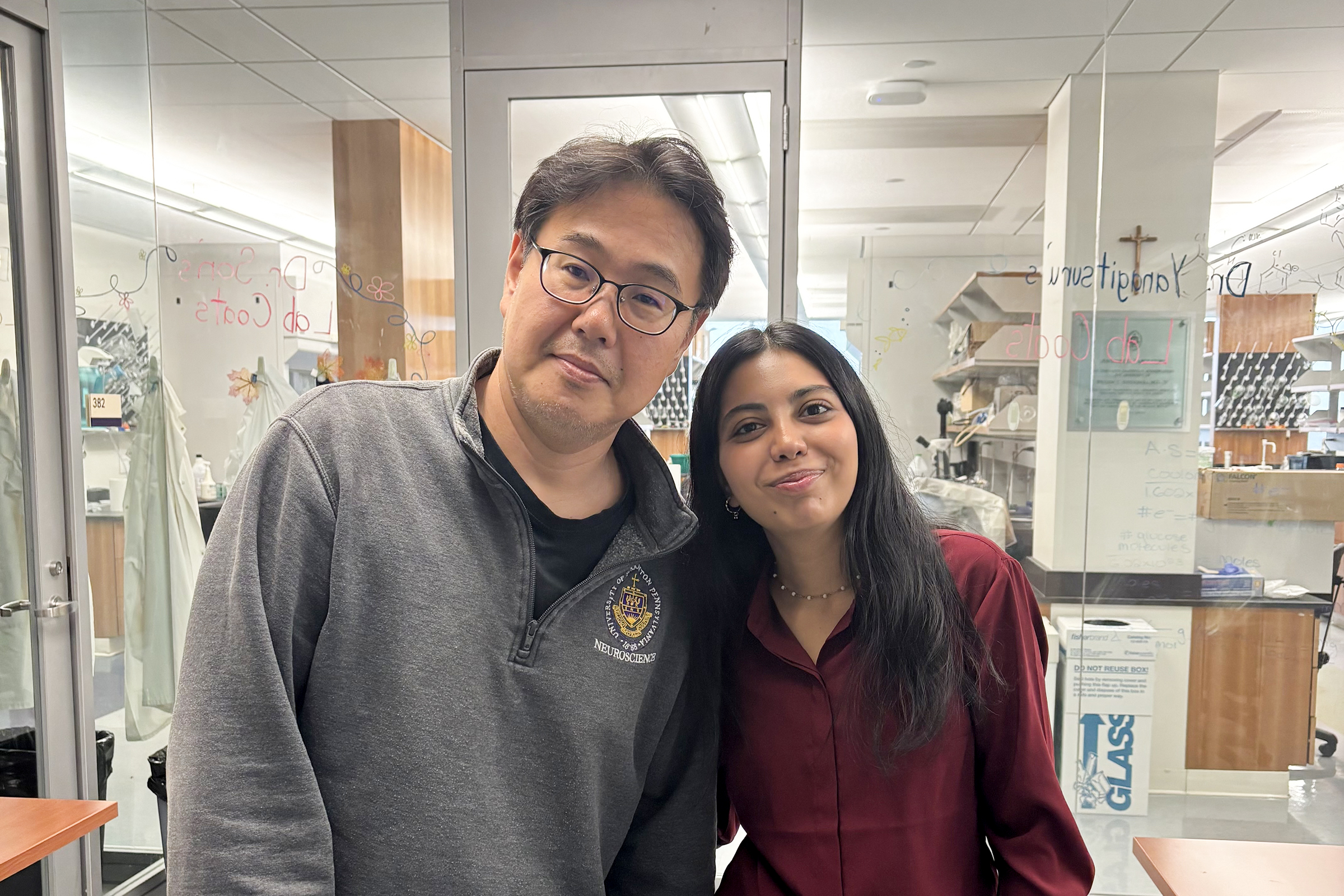
Under Sun, Joshi used zebrafish to investigate how low oxygen levels during early development in premature infants may affect brain formation.
“Because they have underdeveloped organs, (the babies) can’t really take in the oxygen in their environment well enough to be able to build their neurons,” Joshi said. “We were trying to see how that translates into anxiety-like behavior because, based on previous studies, the neurons that are underdeveloped actually lead to anxiety-like behavior even up until their adulthood. We were trying to see what kind of specific neurons cause this anxiety-like behavior, and the best way to do that is to look at it in an animal model, such as zebrafish.”
Zebrafish share roughly 70% of their genes with humans, and their larvae are nearly transparent, making these small freshwater fish a valuable animal model for biomedical research. Their transparency allows researchers to observe developing organs and neural activity in living animals in real time. Joshi said studying the species was a “huge jump,” but it allowed her to broaden her skill set and knowledge base, and she now feels more prepared in applying to Ph.D. programs in genetics.
“This internship expanded my horizons, going into a lab with a completely different organism and learning completely different techniques,” she said. “There are so many things that I learned that I think, as a student applying to Ph.D. programs this fall, will help me so much by giving me diversity and well-roundedness, and I was able to gain that through both Liberty and Scranton.”