A philosophy for authentic Christian education
On His last day with the disciples, Jesus commanded them to be zealous teachers of the faith. We call this command the Great Commission:
“Go therefore and make disciples of all nations, baptizing them in the name of the Father and of the Son and of the Holy Spirit, teaching them to observe all that I have commanded you. And behold, I am with you always, to the end of the age” (Matthew 28:19-20).
The church was founded to be, among other things, an educational movement. It is therefore not surprising that Western universities historically originated in the monasteries and cathedrals of Europe. For centuries, most scholars studied the world as the product of God’s creation, history as the outcome of God’s providence, and ethics as rooted in God’s goodness and justice.
In America, most of the original universities were dedicated to the propagation of God’s truth, often with the bold intention to develop an educated clergy. Columbia University, for example, was originally founded as Kings College by a group of New York leaders to train ministers. Brown University was founded by Roger Williams, the Baptist who founded Rhode Island for a broader freedom of religion. Dartmouth College was originally founded to train Native Americans in theology, hence its original motto “A Voice Crying in the Wilderness” pointing to John the Baptist’s “crying in the wilderness” to prepare the way for Christ.
Notice these other founding mottos:
- 1654, Harvard University – “For the Glory of Christ”
- 1746, Princeton University – “Under God’s Power She Flourishes”
- 1754, Columbia University – “In Your Light, We See the Light”
All of these schools (and many more) in varying degrees have diluted their original Christian missions with a faculty and curriculum that undermines the truths they were originally established to explore and propagate.
Liberty University is different. The very first standard in our university’s Philosophy of Education confesses that all truth is God’s truth:
“God, the infinite source of all things, has shown us truth through Scripture, nature, history, and above all, in Christ.”
In service to this standard, we boldly take the challenge to reconcile science and Scripture, mathematics and miracle, health and holiness, ethics and righteousness. As God is the source of all that is, everything must ultimately be united in God’s purpose, plan, and providence. There is not one truth of which God does not claim to be the Author. This is Liberty University’s confession, and this guides all of our academic initiatives and practices.
Years ago, when I was studying the historical origins of the Christian and Jewish religions in a secular university, I was often confronted with a tide of scholars who challenged my Christian faith in the inspiration and inerrancy of the Bible, the deity of Christ, the uniqueness of the Christian religion, the divine creation of man, the current relevance of traditional Christian morality, and a host of other essential Christian doctrines. At that point in my scholarly development, with a mix of trepidation and faith, I aspired to live by a motto of my own: “Those who are interested in the truth should not be afraid of facts.” I must admit that at times some of the data presented as “facts” by my secular professors and peers was hard to reconcile with the doctrines I had been taught since I was a child.
Thankfully, in those days I was a junior member of Liberty’s faculty and had full access to our broadly read scholars in Bible, philosophy, and theology. By their personal examples of faith and scholarship, they enabled me to work out resolutions to the challenges I faced. Our students at Liberty who are studying the sciences, history, the arts, business, medicine, law, etc. will find the same kind of support in their faculty.
At Liberty University, we have a twofold standard for our faculty. Not only must they be experts in their disciplines, but they must also understand how the Christian faith informs their discipline. We do not shut down the conversation when difficult questions are asked. We accelerate the conversation with careful and broadly gathered insights from Scripture, science, history, literature, and all the arts which God has given to mankind. Liberty is root and branch an institutional personification of the Great Commission, not only to teach all things that Jesus commanded but also to teach, explore, discuss, and apply all the truths of which God is the Author. This is why we exist.
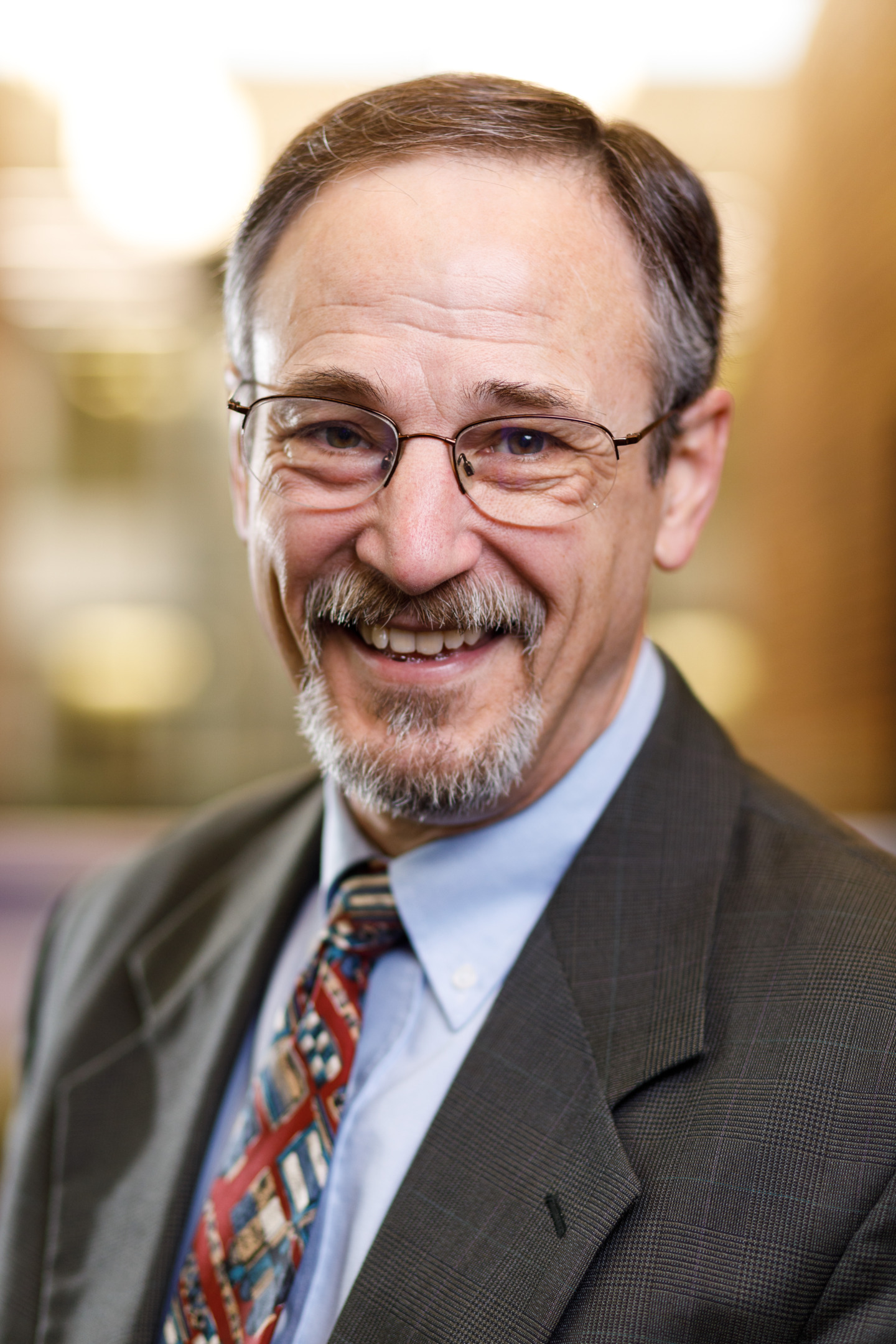
Dr. Gaylen P. Leverett is in his 42nd year at Liberty University and currently teaches in the John W. Rawlings School of Divinity. He has spent most of that time as faculty chaplain with an effort to promote the integration of a biblical worldview into every academic discipline. He holds graduate degrees from Liberty University and the University of Virginia and a Ph.D. in New Testament from Southeastern Baptist Theological Seminary.